The line dropped a little from St Erth eastwards and it curved around the estuary rising again to cross the Hayle viaduct. Hayle was once an important industrial location, served quite early by a railway line and incline from the mining areas of Camborne/Redruth to the harbour – taking out ore and bringing in coal through a safe, if silt-prone, port. A foundry near the viaduct also smelted and worked metals, making equipment for the mines. My father made a point of showing me horse-drawn shunting before it disappeared, and we frequently passed through the town by car, back and forth under the viaduct, and over the level crossing of the spur up to the mainline station. My most enduring memory is drinking a can of “Top Deck Shandy” with the rail track behind and bladderwrack covered rocks before, down by the water. Sometimes we were held in a queue of cars at the crossing, and I can remember steam train smoke or diesel horns, even if we were too far back to see much of any train as it crossed between the quay and the main line.
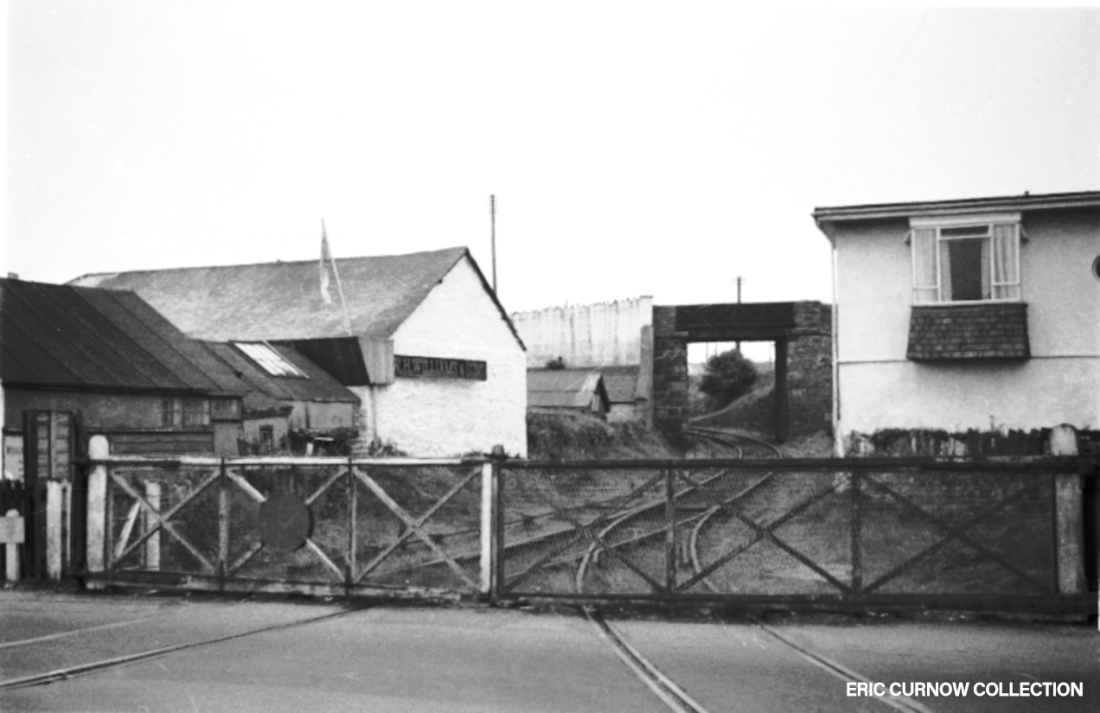
The line under the bridge leads up hill to Hayle Railway Station – the steepness of the line necessitating a set of catch points ut of sight just below the bush. The crossing gates cover the track to the left heading towards the power station quay and the right to the gasworks. It is 1963 and I was only six, but I still remember the gates holding up the traffic on several occasions. 63###AK01-HYL-CRSNG-VI__S
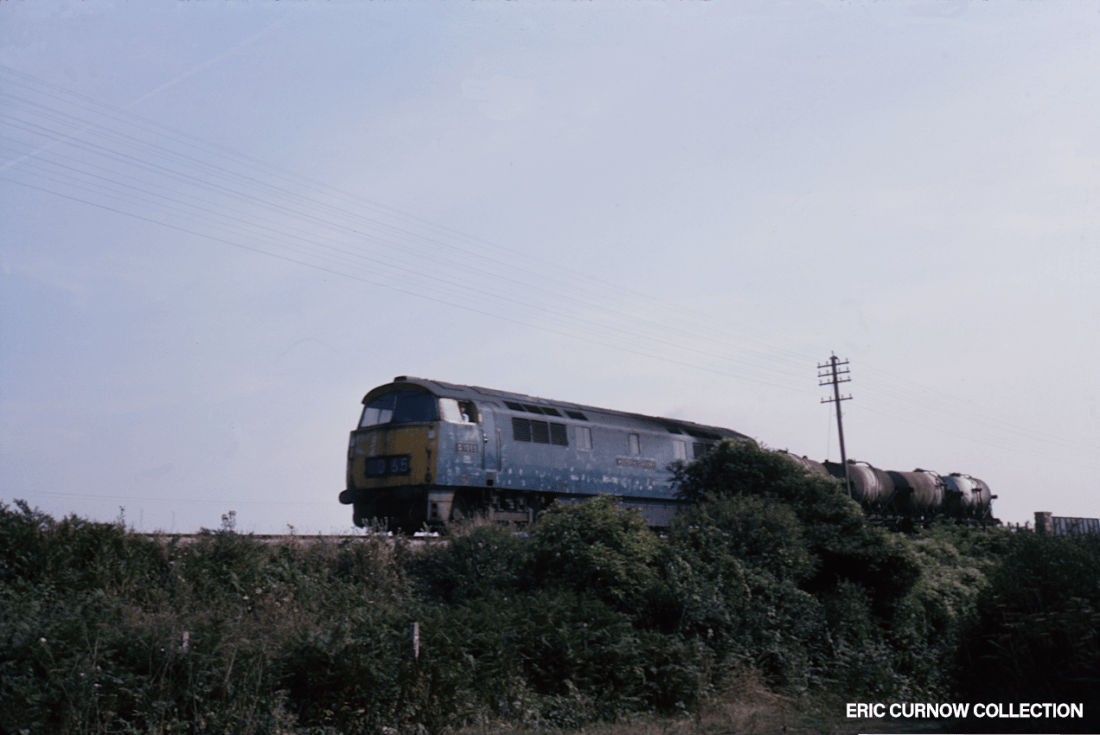 D1065 “WESTERN CONSORT”, in poor external condition, tows four milk tanks from St Erth Creamery eastwards across an embankment close to Hayle. Gorse and brambles choke each other on the earthwork’s slopes, though a couple of boundary fencing post still protrude from it. The bridge behind the construct crosses Chenhalls Road to St Erth village. Photo: Bruce Oliver. 76###AO01-HYL-D1065-TNK_M
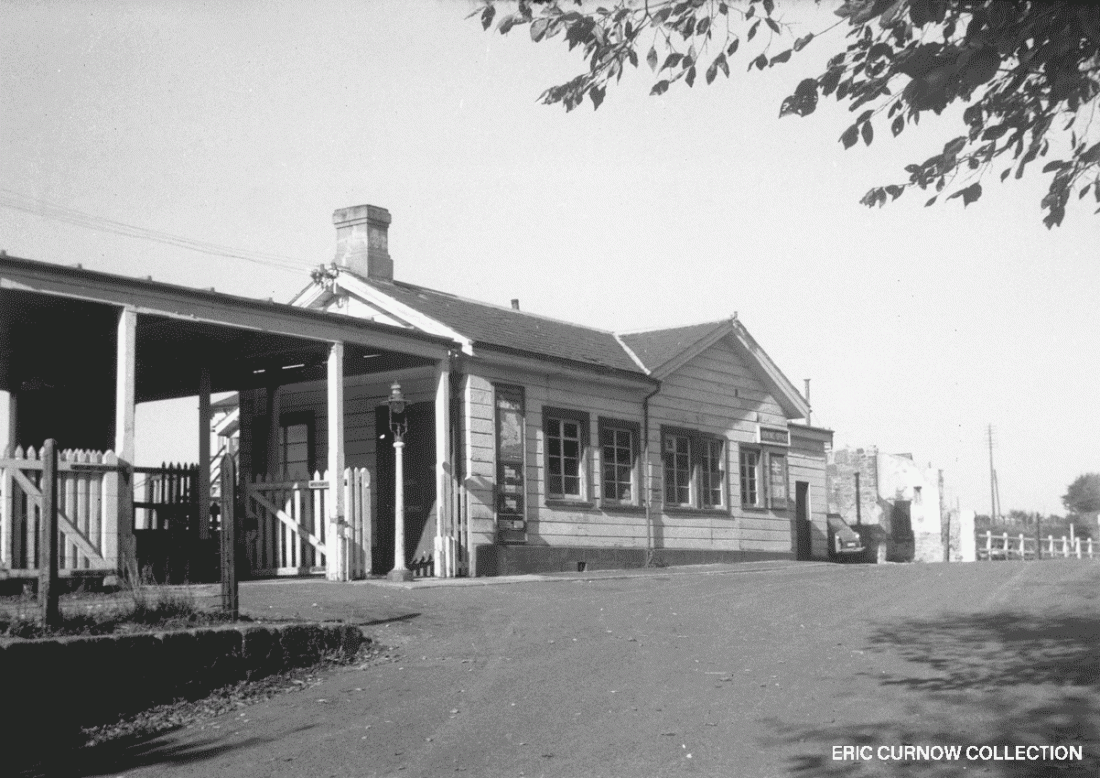 The station buildings were on the “down” side, fairly close to the viaduct on its north eastern flank. A footbridge crossed the track to the opposite platform, a signal box and waiting shelter. The signal box lasted until the branch to the quay closed in the early 1980s. 6####EJ01-HYL-S_BLG-VI_NE
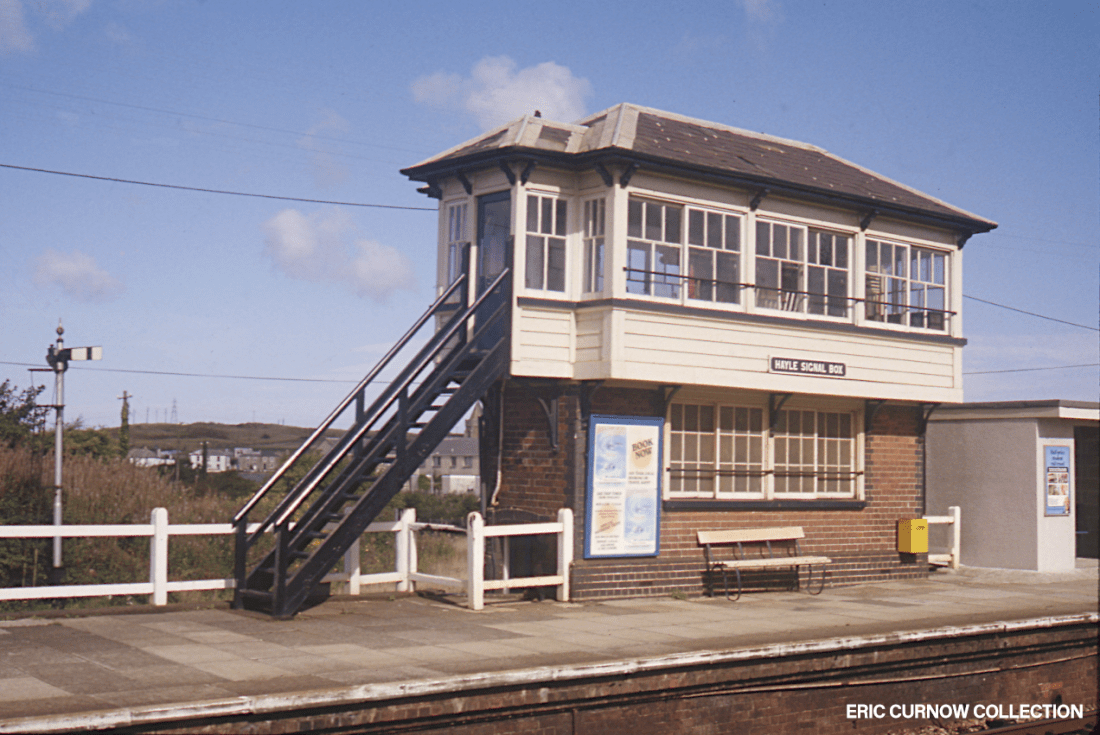
Hayle Signal Box on a pleasant day – the Towans and Phillack village in the background. The building is in good order, but its days are numbered as the siding behind to the harbour is sparsely used and the height of the undergrowth around the signal also indicates. The narrow base to the box optimises platform space for loading from trolleys. 800914A01-HYL-S_BOX-VI__N
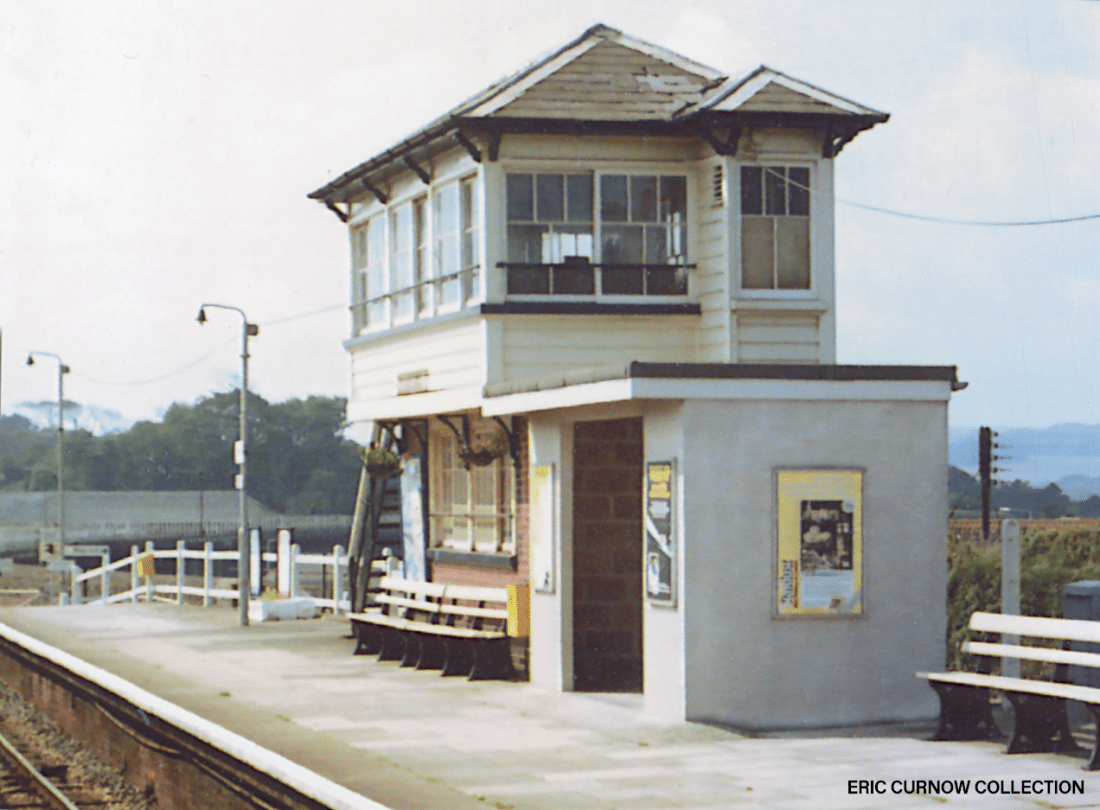
The distinctive signal box at Hayle as at 5th September 1982, Before it is a very basic waiting shelter and typical ex-GWR benches. Behind the nearest seat are metal uprights for a wire fence preventing people from falling off the far side of the platform that once had a loop line against it, handy for assembling goods trains serving the docks just out of sight below to the right. 820905A05-HYL-SIG_B-VI-NW
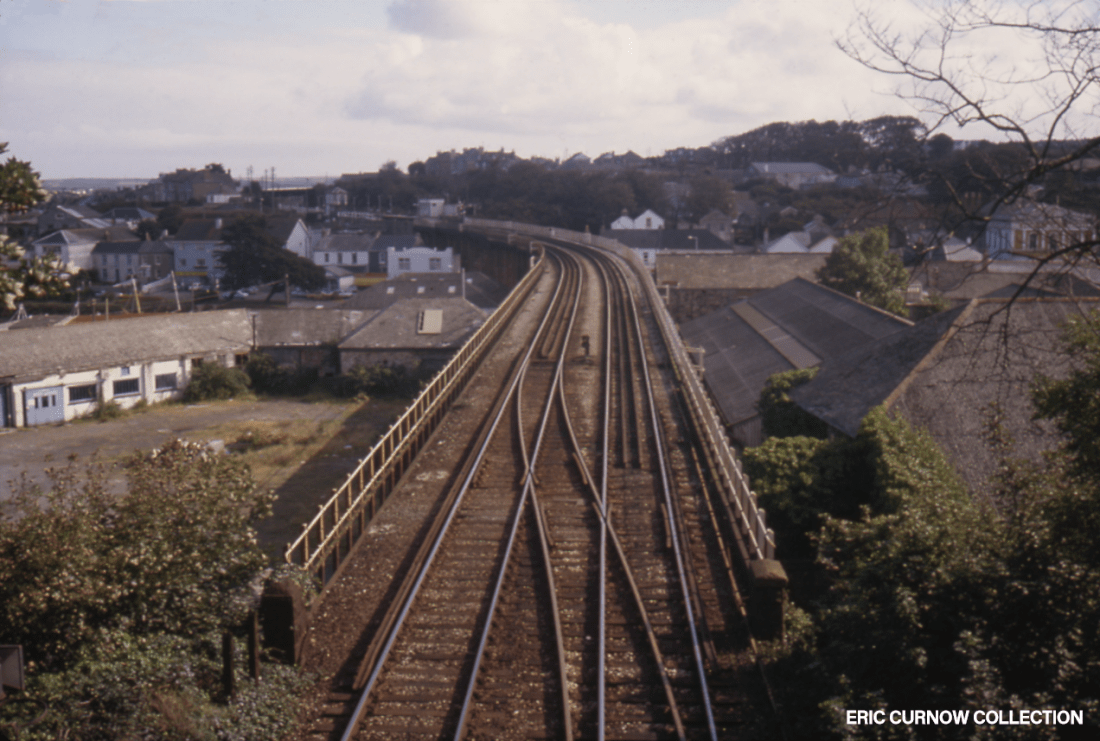
Hayle railway viaduct is viewed from the footbridge slightly to the west of it, showing the crossover for trains coming up from the docks, and check rails to limit any damage from derailments. Either side of it are buildings associated with the former famous foundary here, and it looks like a westbound train is signalled at the station that is still staffed at this time. 800914A02-HYL-VIADT-VI__E
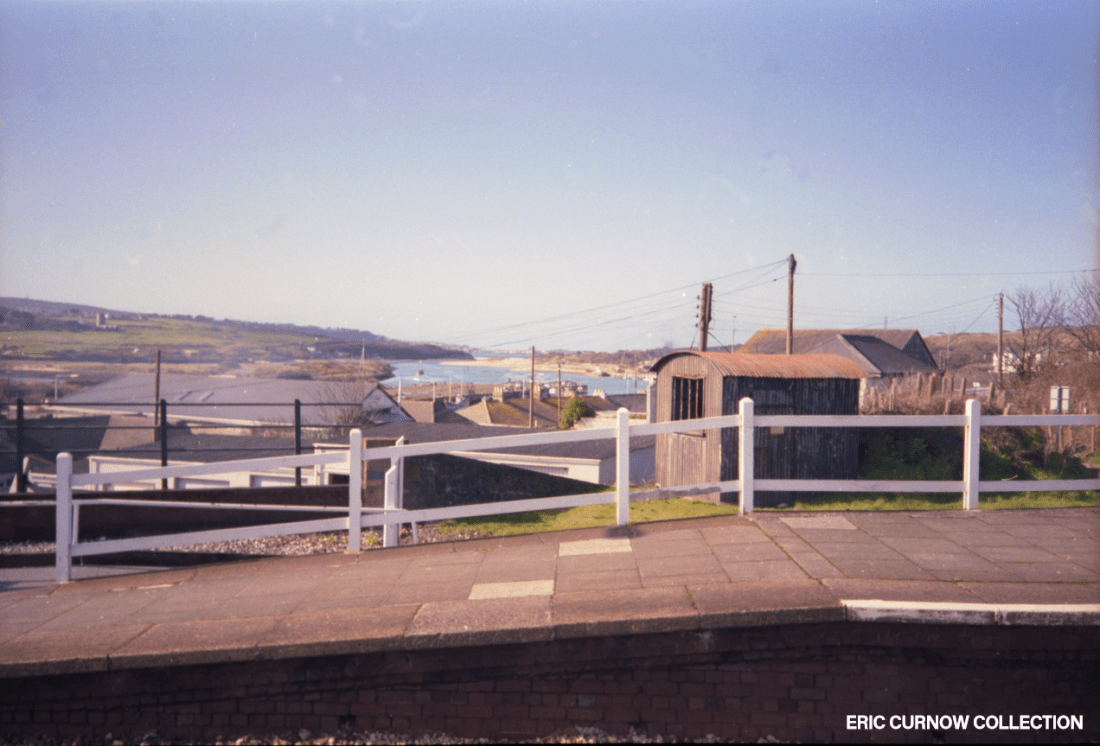
I took this view down the Hayle estuary in the 1980s when on holiday. The foot crossing was still in operation just outside the left of the picture, and a bell and flashing light warning board deterred people from crossing when a train was approaching the boardwalk. Just beyond the wooden fence is a rusty corrugated iron lamp hut, and trackbed to the harbour. 8####BZ01-HYL-PLTFM-VI_NW

50019 with an acs service behind crosses Hayle Viaduct westwards towards Penzance on 22nd July, 1978. Since I first saw it, the locomotive has gained a metal headcode panel with marker light insets, and has been named, “Ramillies”. The A30 buzzes with cars and the low stone wall between them and the viaduct hides the sight of the first Hayle Station. 780722A01-HYL-50019-PAS_D
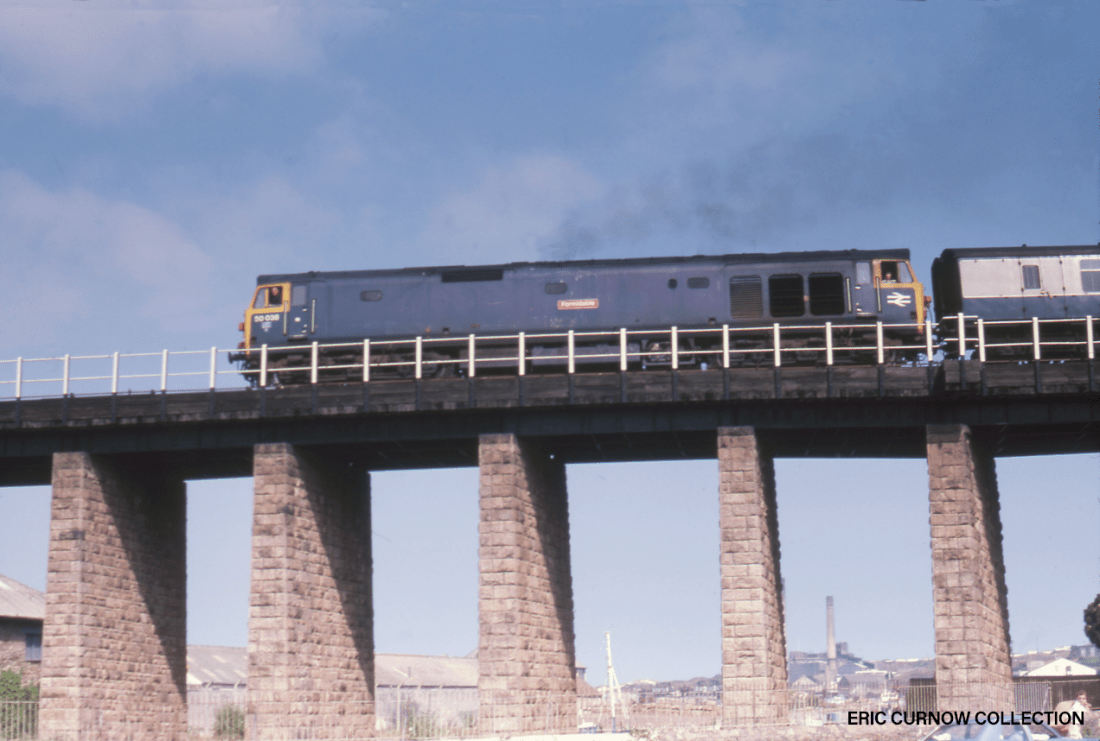
Both cab windows of 50038 “Formidable” are occupied by staff as the engine pulls away west from Hayle over the viaduct in the Summer of 1978. In the background are the “Towans” – the huge sand hills between the town and the sea – and the chimneys of the former coal-fired power station. A refuge for track workers can be seen above the right hand pillar. 780713A01-HYL-50038-PAS_D
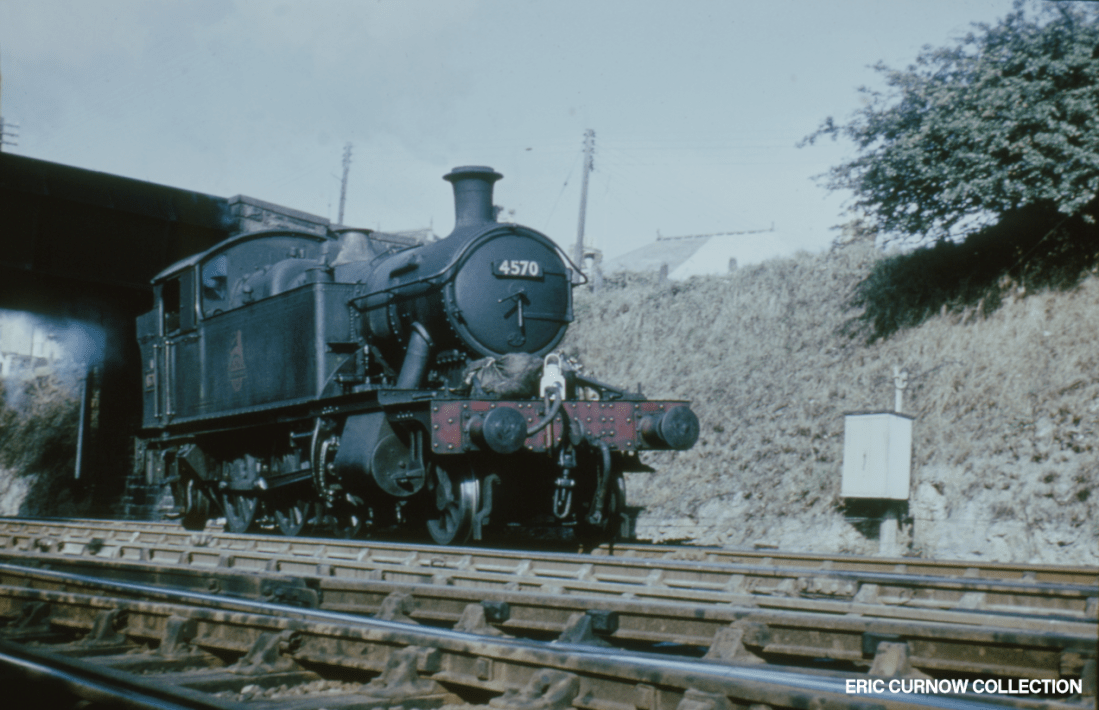
With bundles wrapped in sacking on its front end, 4570 clears Hayle Station light engine on the up main line. A turn-out leading to the siding to the goods shed is front left, and beyond the smoke cloud below the overbridge is a signal with (out of sight) a refuge track that skirted the opposite side of the up platform. The grey box by the embankment side is a telephone box. 6####IN01-HYL-s4570-LGT_U
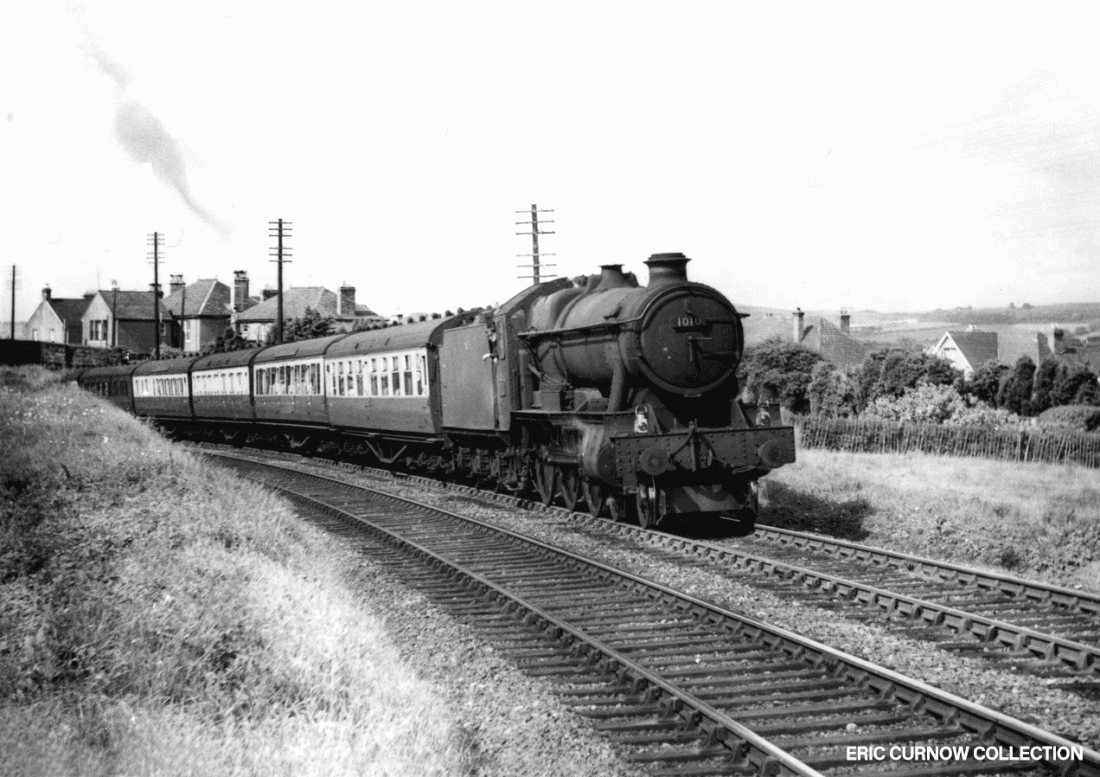
The driver hangs over the side of the cab of 1010 “COUNTY OF CARNARVON” as it begins the climb from Hayle Station towards Angarrack and Gwinear Road with an up express passenger service. The hills on the skyline are actually huge sand dunes between the town and the sea. Photo: M L Boakes 530801A01-HYL-s1010-PAS_U

With a Paddington-bound train D1028 “WESTERN HUSSAR” climbs Angarrack bank on 8th June 1974. I was often puzzled by the wider sweep of railway land on this bend, now covered in waste ballast, and put it down to lessening the severity of the curve – now I suspect it formerly fed the Cornwall Railway wooden viaduct, before its rebuilding. A ‘Modern Image’ slide. 7406##A01-HYL-D1055-PAS_D
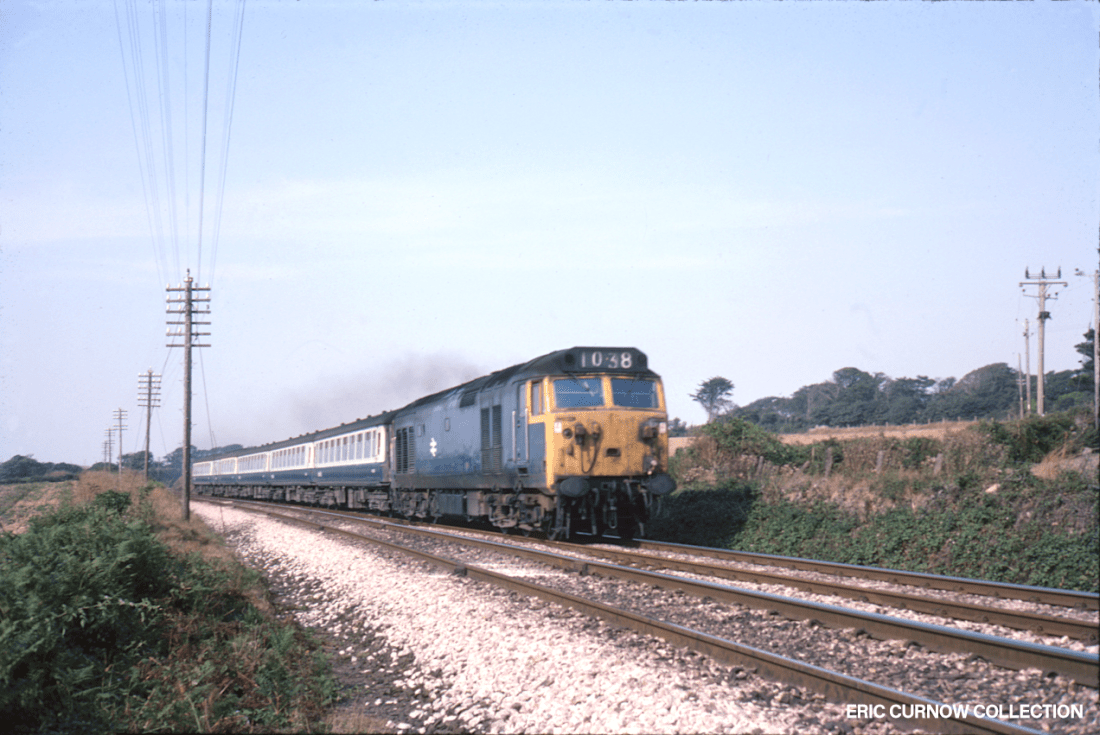
With a headcode nearly reflecting its fleet number, 50038 is somewhere near Hayle on an up passenger service of Mk2 carriages in August 1976. Despite the green of lush ivy fringing the line, the landscape around seems parched. Telegraph masts are apparently still in use, and the track bed ballast is fairly recently laid, with some browning from oil. Photographer Bruce Oliver. 7608##A01-HYL-50038-PAS_U
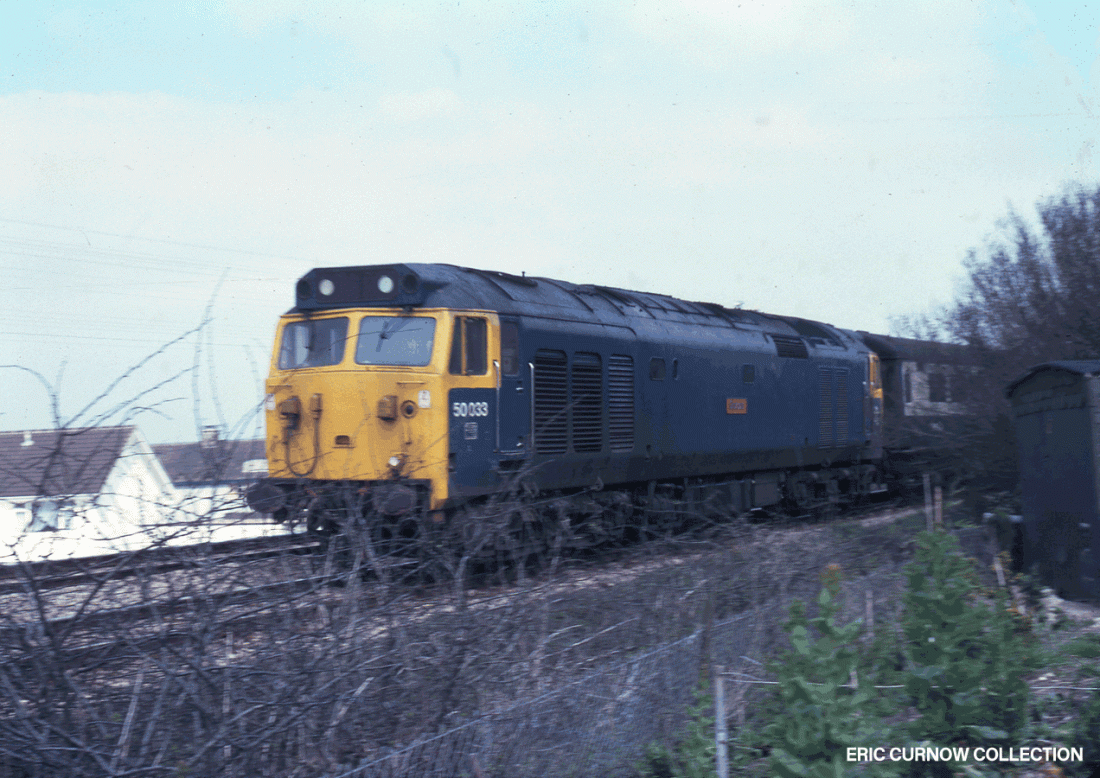
50033 heads a down acs passenger service past gardens through Hayle, now modified with a purpose-built domino headcode infill, and named “Glorious”. Without these additions, 50033 looks just as it did when I first saw it on Long Rock depot, six years earlier. 8005##A01-HYL-50033-PAS_D
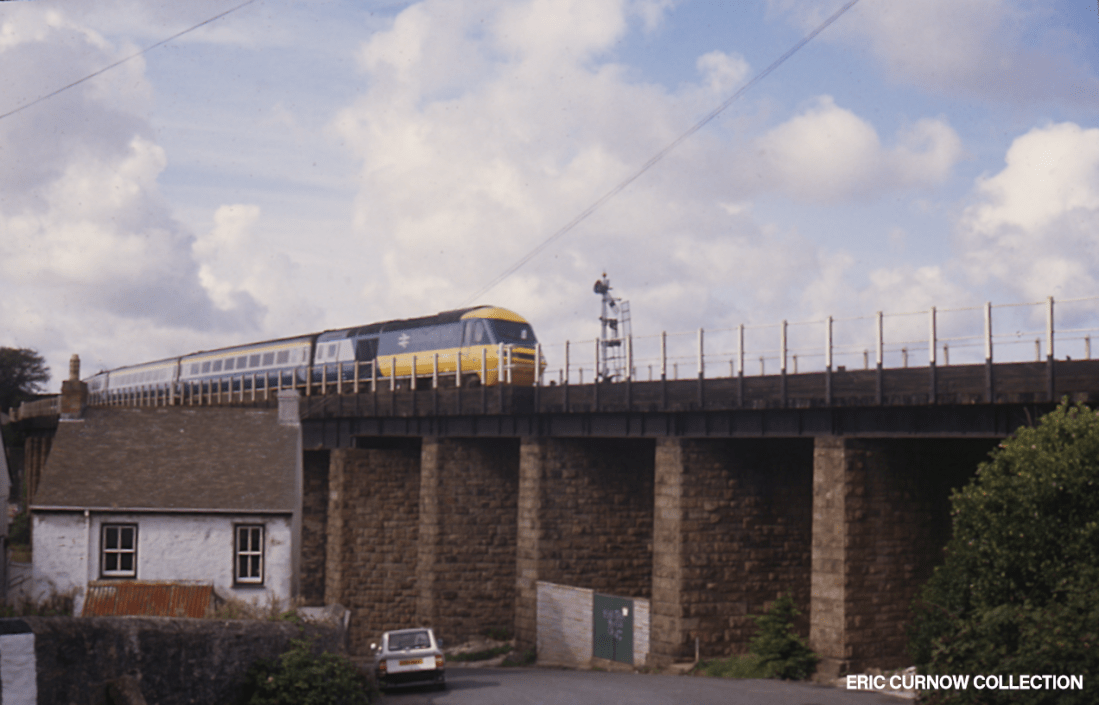
25315 approaches Hayle Station on 14th September 1980 with an up service, As can be seen, the viaduct stands in granite piers topped with metal spans, built by the GWR several decades earlier. Sited below one is an electricity sub-station, and above it a signal that has had additional safety guards added due to its precarious and exposed position. 800914A03-HYL-VIADT-VI_NW
 The Eric Curnow Collection