
Railways of Penzance and beyond in the GWR and British Rail eras
In early 1969 in my early teens I developed an interest in railways local to me at Penzance in West Cornwall. During this period, the locomotives normally to be seen were diesels peculiar to the Western Region of British Rail known as ‘diesel hydraulics’, but some of these had already been scrapped, and the others were steadily withdrawn over the years until 1977 – the year I left the county. My story is told in ‘Sightings’, where text is interspersed with photos and captions, and that pairing is continued on the website’s other pages. ‘The Gallery’ are the photographs I took myself and ‘The Collection’ acquisitions of others pertinent to this story.
Recently acquired images appear temporarily below as a visual indication of recent website changes – the newest added at the top. They also appear, or will soon appear, definitively on appropriate pages. Please use the ‘Search Aids’ to find what you are looking for across the whole of the website.
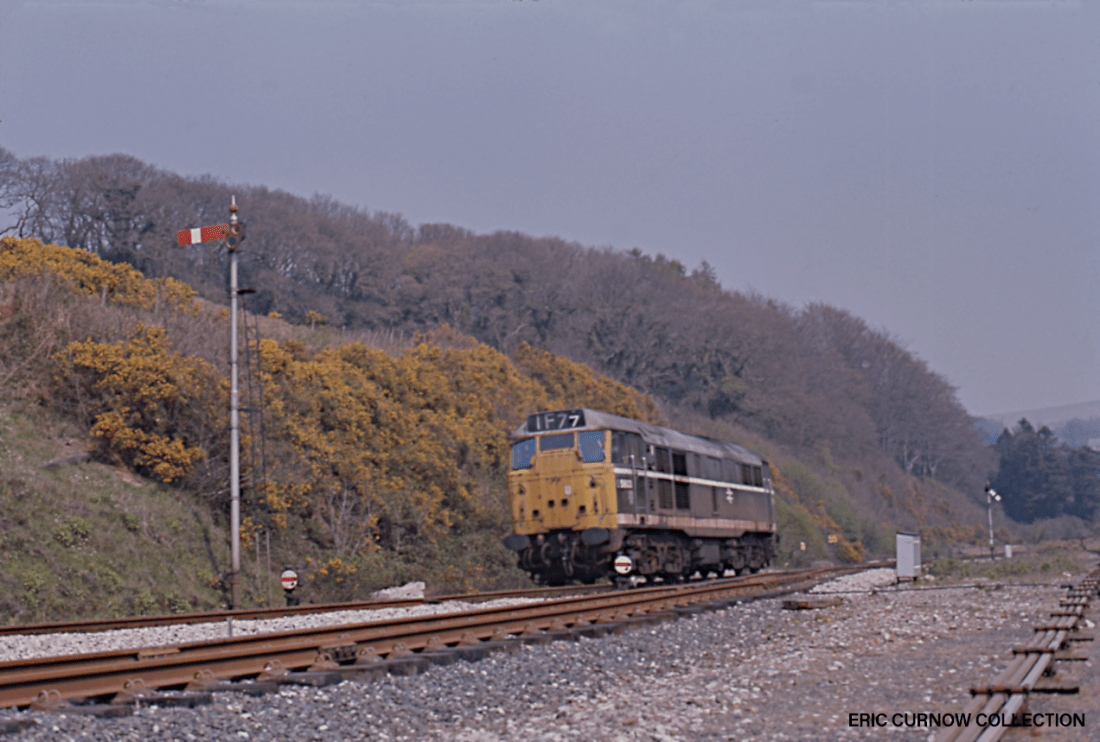
Green-liveried D5803 powers towards Plymouth at Ivybridge on 26th April 1973. The gorse behind matches the loco’s front end warning panel and it has a white roof and bodyside stripes, now rather tarnished. At this time only the signal box and a siding remained, plus a nearby old china clay dry that was at that time used by Western Machinery Ltd., prominent from the lineside.730426A01-IVY-D5803-LIGHT
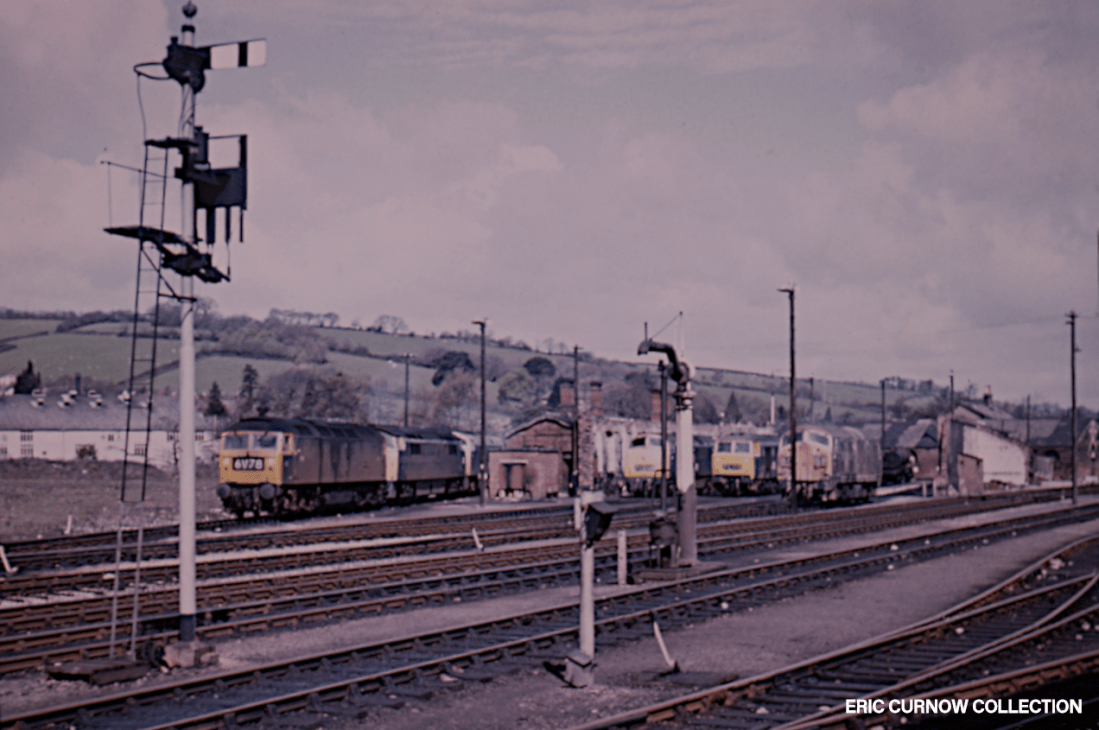
An April 1971 view from Exeter St David’s Station platforms north across to the Stabling Point – now a de-roofed shed of walls and ancillary buildings in red brick. A steam age water column still exists in the mid foreground and among the locos in view are two Warships, a Western, Brush Class 47, Hymek and D63XX – the latter two engines especially sought by me at that time. 7104##A01-EXD-S_PNT-VI__N
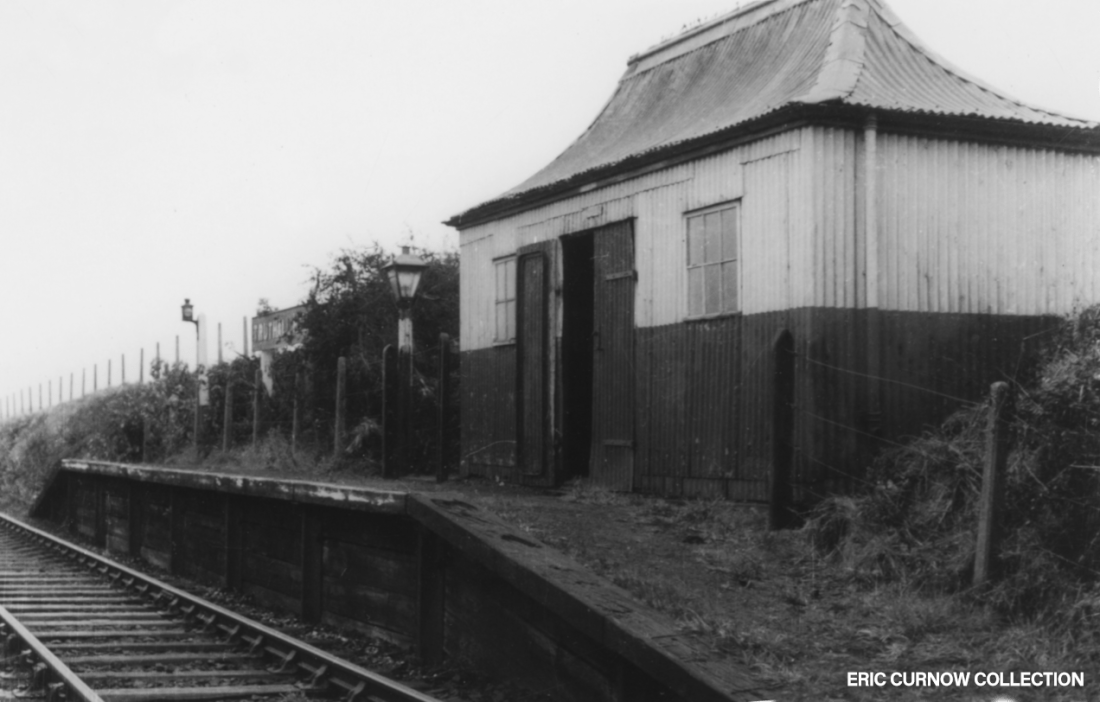
Truthall Platform on the Helston Branch – a very isolated spot on the line adjacent to an overbridge and a scattering of farms a mile or two from the centre of Helston. The platform is of wood construction backfilled with soil and surmounted with a corrugated iron ‘Pagoda’ shelter, gas lamp, running-in board,. and rather unusual bulls eye lamp directed at Gwinear-bound trains. 6####KB01-TLL-STATN-VI_NW
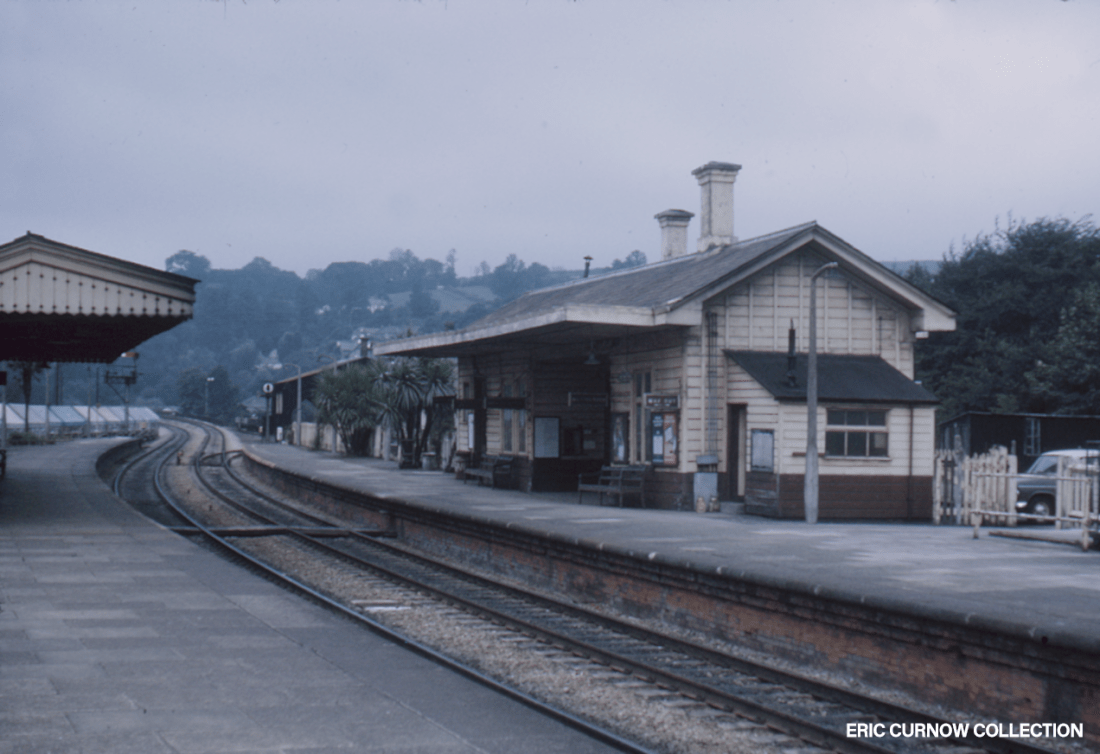
Lostwithiel ‘up’ platform in 1975. The trains I travelled on seldom stopped at this station, and my attention was normally to the ‘down’ side where seeing a locomotive was possible. The building here seemed “flimsy” as it wasn’t built of brick, and as you can see was in poor condition. Interesting old GWR signs still existed, and beyond the palm trees is the Goods Shed. 7508##B01-LWL-STATN-VI__W
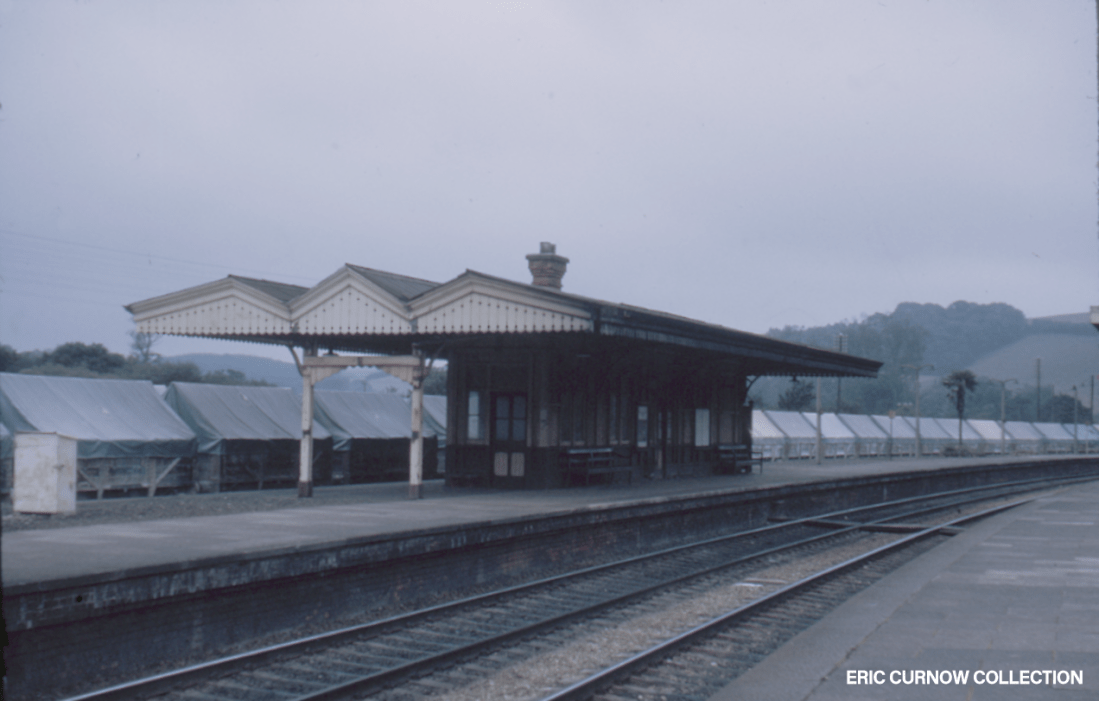
A healthy number of “clay hoods” wait beside the bay platform at Lostwithiel, previously used by the Fowey branch service. Between the mainline tracks is a staff walkway, as there was no footbridge, and the crossing behind the photographer was not always accessible – you still needed to be reletavely agile to mount the platforms. All buildings were sadly rationalised away. 7508##B02-LWL-STATN-VI__W

Whenever we travelled by car on the A30 back to Penzance, after crossing Chyandour Brook and following the road around the tight bend, semaphores like these would appear on the left and always attract my attention. The red arm was the ‘home’ signal requiring an immediate stop, and the yellow was the ‘distant’ warning of the need to stop at the next signal. 7#####B01-UNK-SGNLS-SEMAP
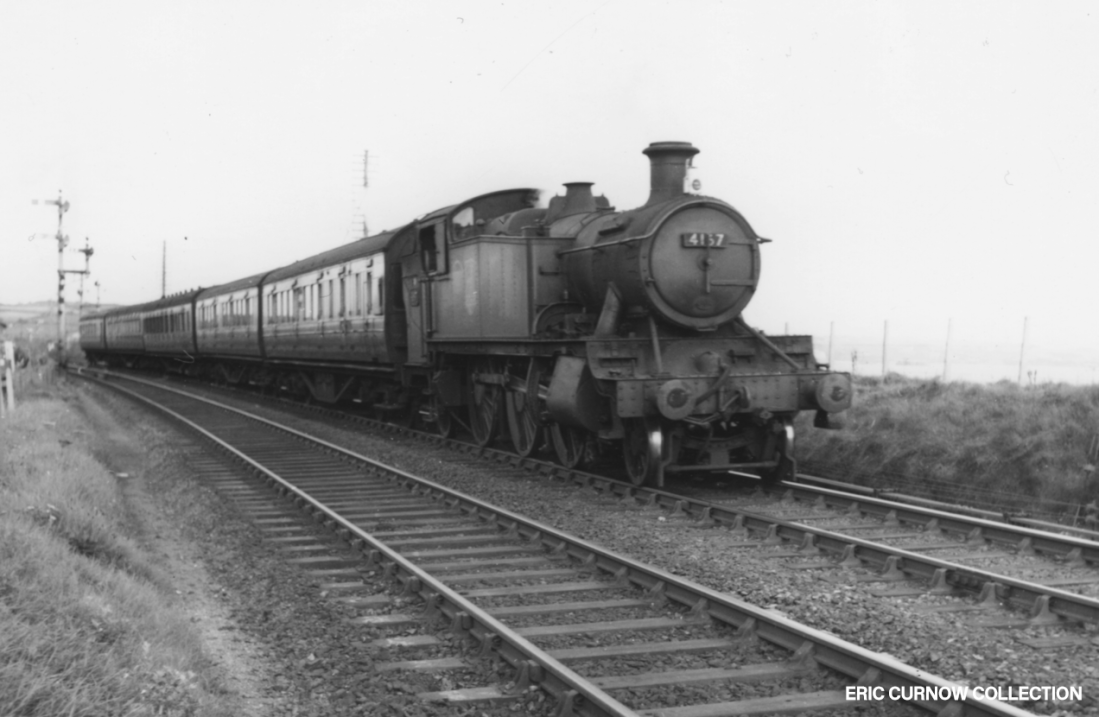
2-6-2T 4167 pulls away from Marazion Station towards Long Rock Crossing with a 5-coach train on 2nd September 1952. Close to the middle of the train a signal has uncharacteristically been painted with black and white patches that might be indicative of the hidden foot crossing behind. On the banks is marram grass, typical of sand dune typography. Photograph: L R Peters. 520902A01-LRK-s4167-PAS_D
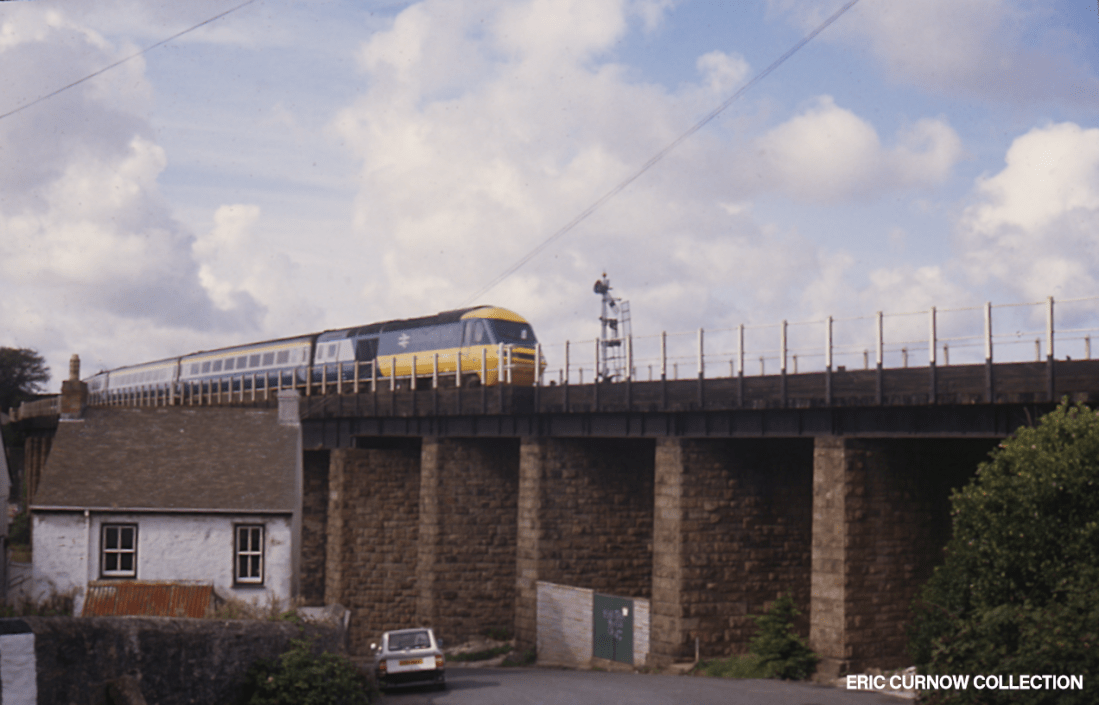
25315 approaches Hayle Station on 14th September 1980 with an up service, As can be seen, the viaduct stands in granite piers topped with metal spans, built by the GWR several decades earlier. Sited below one is an electricity sub-station, and above it a signal that has had additional safety guards added due to its precarious and exposed position. 800914A03-HYL-VIADT-VI_NW
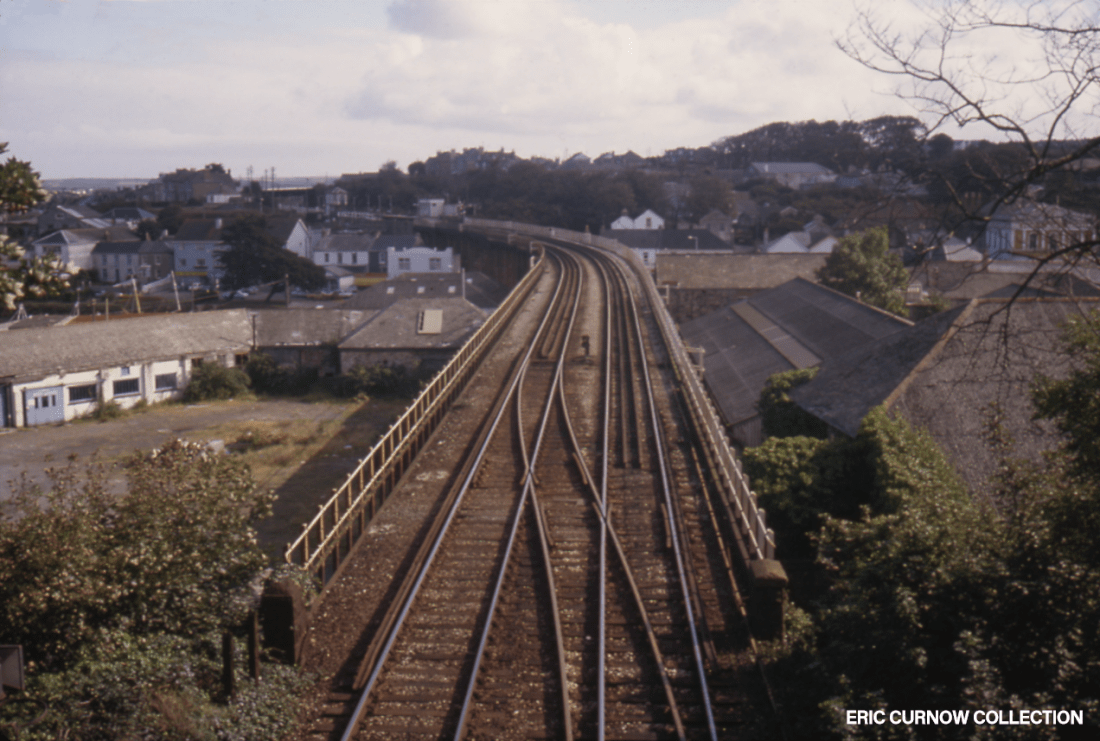
Hayle railway viaduct is viewed from the footbridge slightly to the west of it, showing the crossover for trains coming up from the docks, and check rails to limit any damage from derailments. Either side of it are buildings associated with the former famous foundary here, and it looks like a westbound train is signalled at the station that is still staffed at this time. 800914A02-HYL-VIADT-VI__E
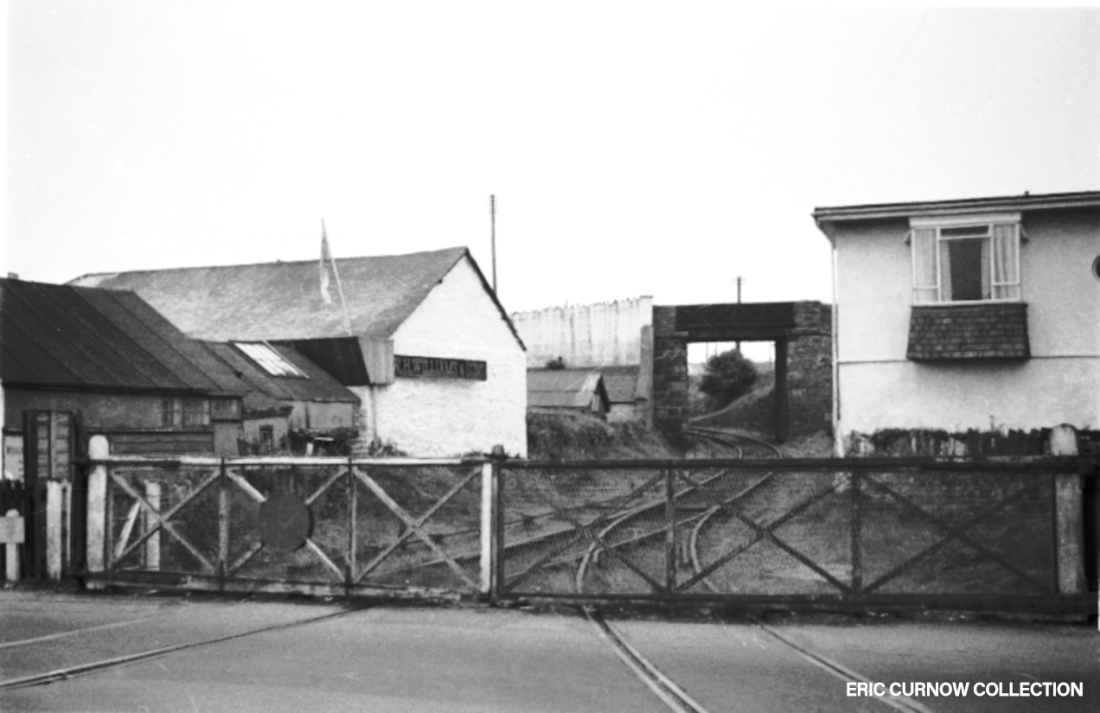
The line under the bridge leads up hill to Hayle Railway Station – the steepness of the line necessitating a set of catch points ut of sight just below the bush. The crossing gates cover the track to the left heading towards the power station quay and the right to the gasworks. It is 1963 and I was only six, but I still remember the gates holding up the traffic on several occasions. 63###AK01-HYL-CRSNG-VI__S
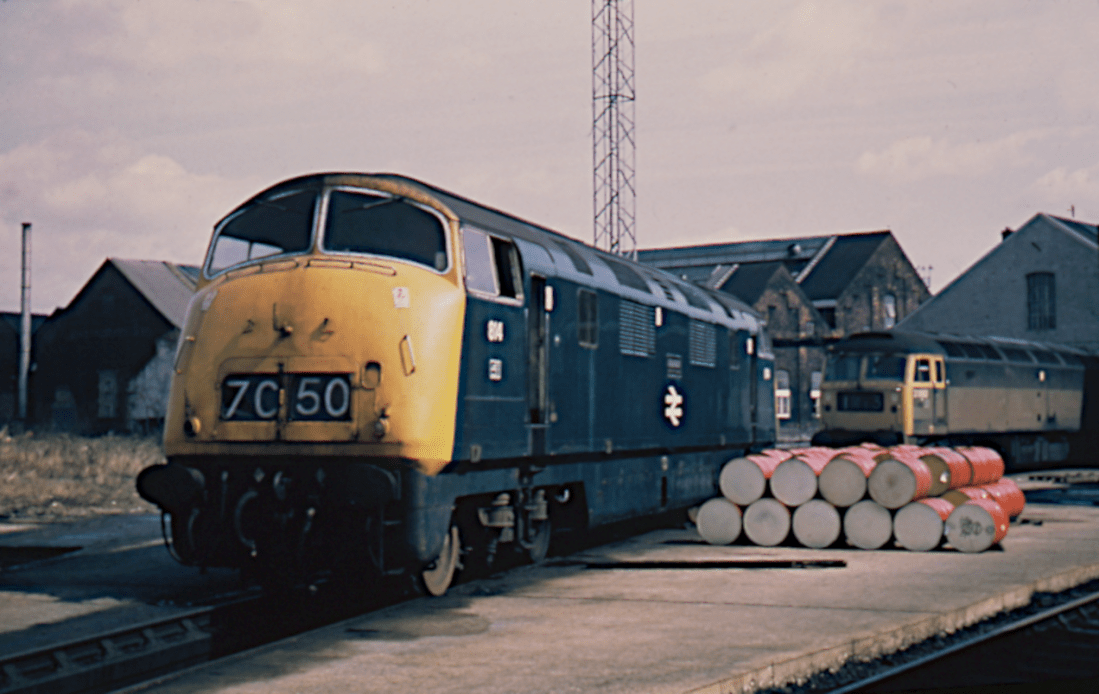 814 “DRAGON’ is parked up on line from Old Oak Common’s turntable area in the company of a ‘Brush’ Type 3 locomotive. Beside it is a stack of loco fuel drums and in the background old buildings including white paint on a wall where a building once stood before it. The leading nearside bogie displays a little oval builder’s plate, wheres the NBL locos were diamond shaped. 6####JG01-OOC—814-PARKD
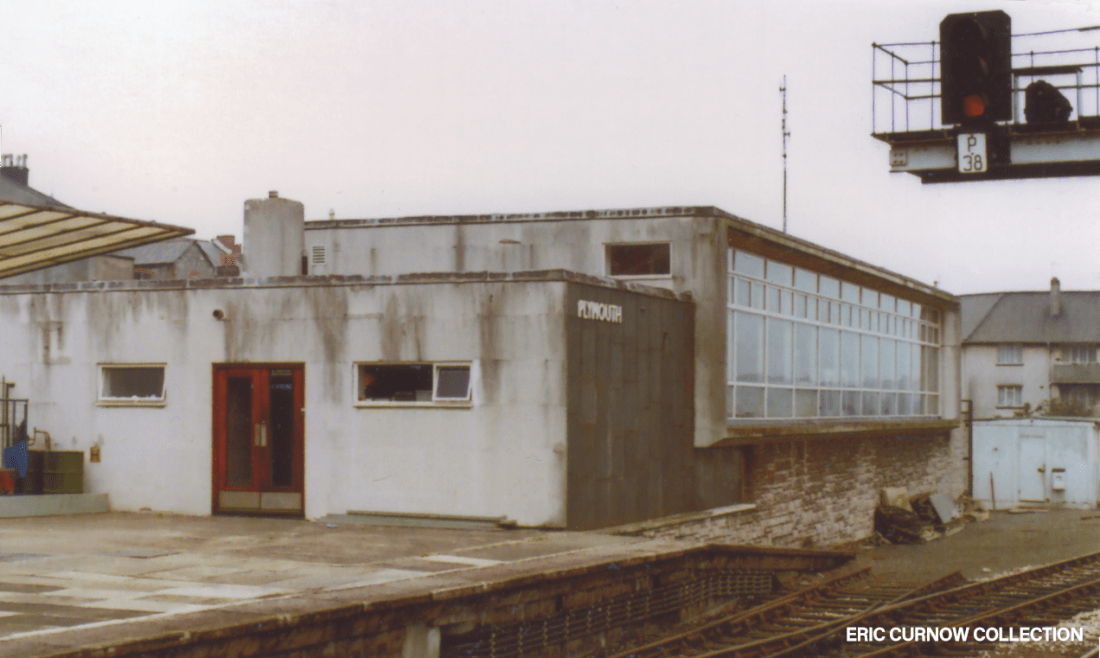 Not a very flattering image of Plymouth’s Power Signal Box at the west end of the station, built out from the end of Platform 1. It always seemed to me as a bit too ‘futeristic’ for the railway of the time, and the architectural style a bit too ‘brutal’. Still, as I was familiar with semaphores for most of my train spotting II found so many electric signals together very interesting. 820906A07-PLY-SIG_B-VI_SW
 50019 “Ramillies” is about to take the 11.10 Plymouth to Penzance on 5th September 1982, as a railman comes off duty. To the left behind the metal fencing is quite a drop to the field, where the ‘Kingdom Hall’ was built. Beyond the loco is the up refuge siding that was still in use at this time. The low starter signal enabled it to be seen below the footbridge on approach. 820905A06-SER-50019-PAS_D
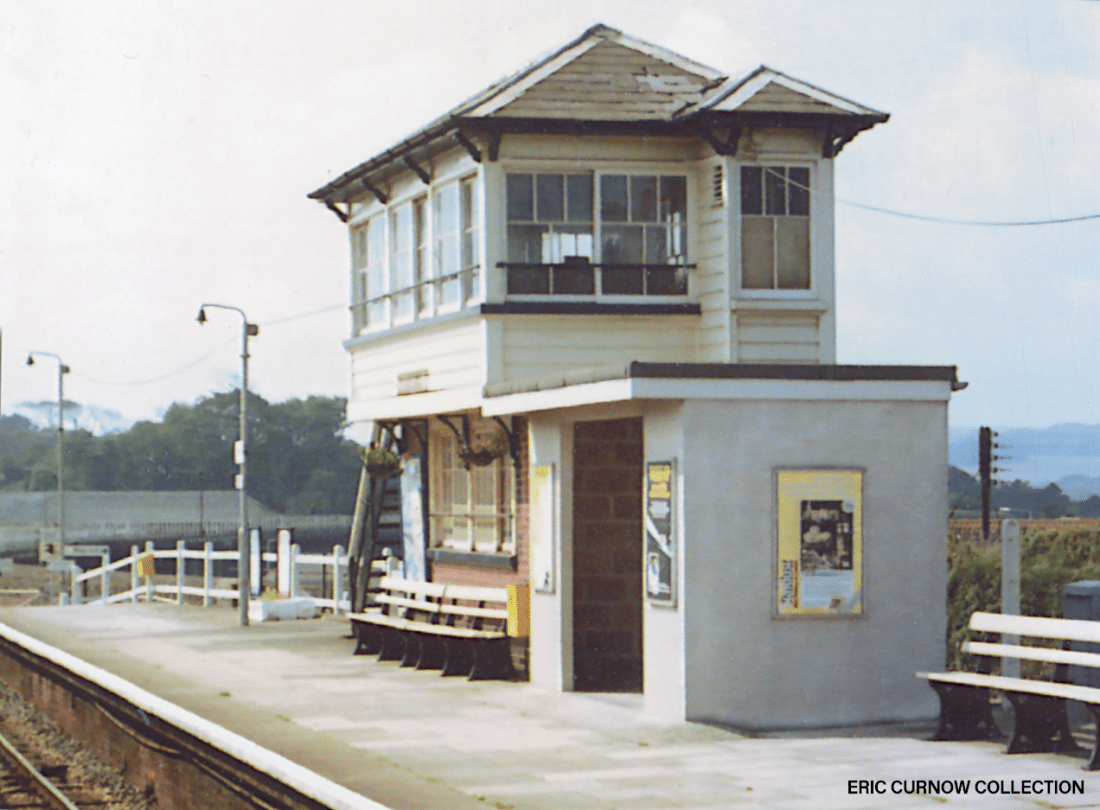 The distinctive signal box at Hayle as at 5th September 1982, Before it is a very basic waiting shelter and typical ex-GWR benches. Behind the nearest seat are metal uprights for a wire fence preventing people from falling off the far side of the platform that once had a loop line against it, handy for assembling goods trains serving the docks just out of sight below to the right. 820905A05-HYL-SIG_B-VI-NW
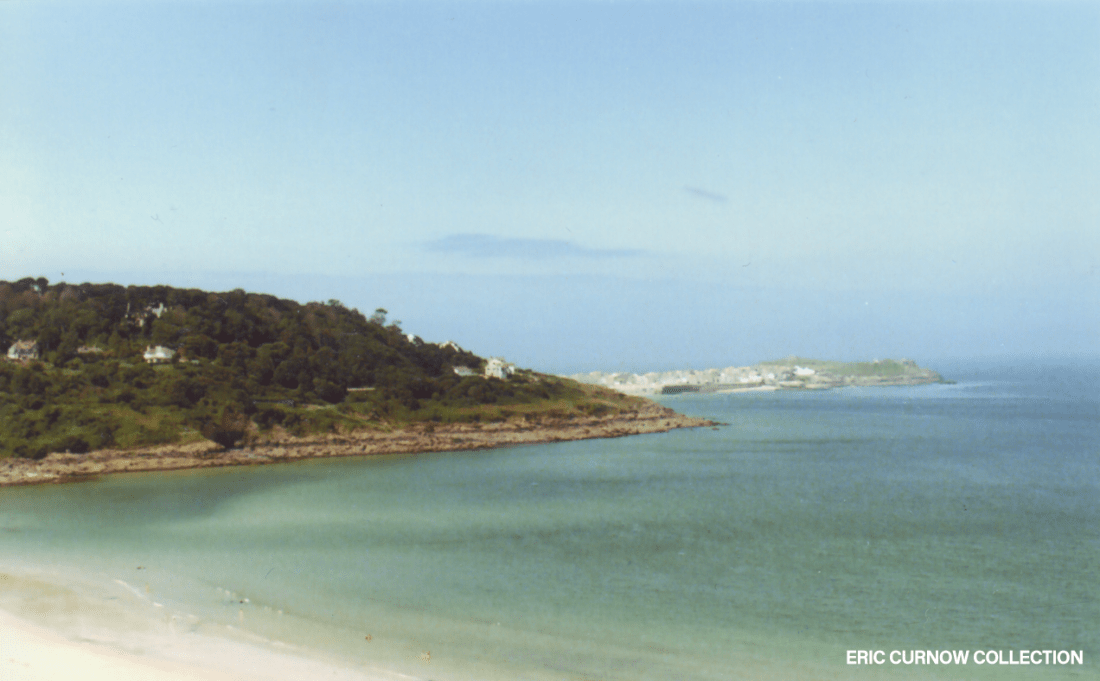 Beautiful Carbis Bay, looking NNE towards St Ives in 1982. The beach is wide, shallow and rock free, with shell sand – ideal for bathing. The railway line runs just below the tree line and above the raised beach remnants, and the bark of the DMU diesel motors and squeel of flanges on the curves in the quiet environment attracts attention frequently as a train passes. 820905A04-CBB-BEACH-VI__N
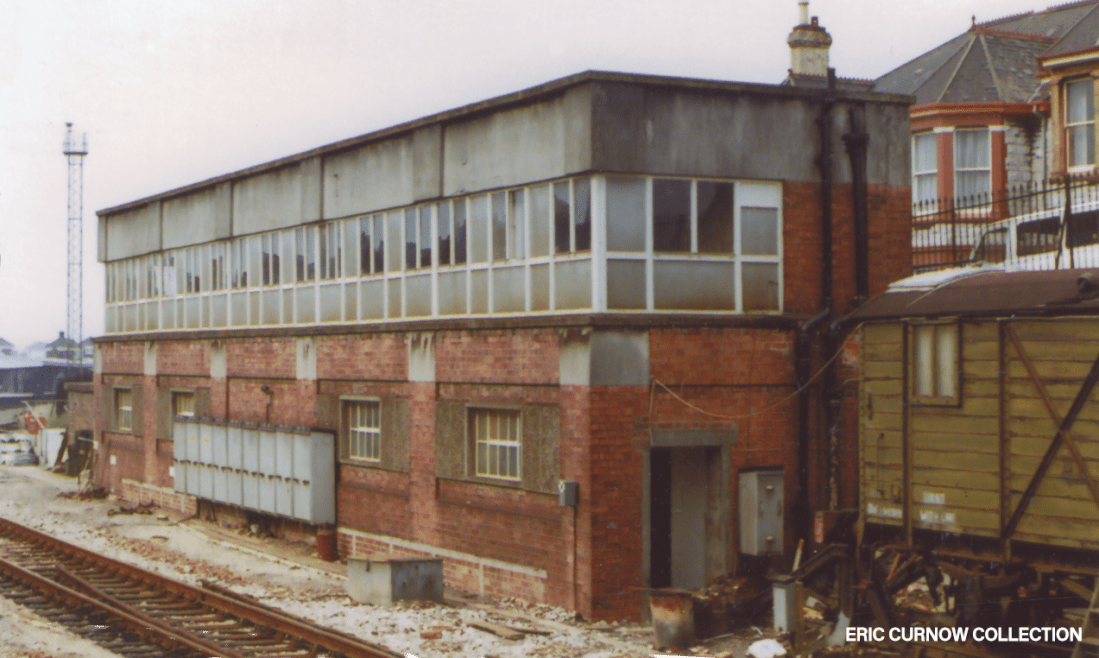 A familiar sight to me, and a shock when removed for the Plymouth Multiple Aspect Signalling programme, was the station’s East Signal Box, standing close to the Royal Eye Infirmary. Not being in traditional GWR style, it was probably constructed after war damage or the rebuild of ‘Plymouth North Road’ in the early 1960s. The van nearby seems wired to it for some reason. 820905A03-PLY-SIG_B-VI_SW
 Single unit DMU W55026 is at St Erth heading the 13:52 to St Ives on 5th September 1982, a beautiful “Indian Summer” day. Extra ‘Bubble Cars’ like this were added to help cope with Summer surges of passengers, although at this time of the day, visitors would still be in St Ives or on the beaches. Beyond the driver, taking the air, the horticultural business is still intact. 820905A02-SER-4XDMU-PAS_O
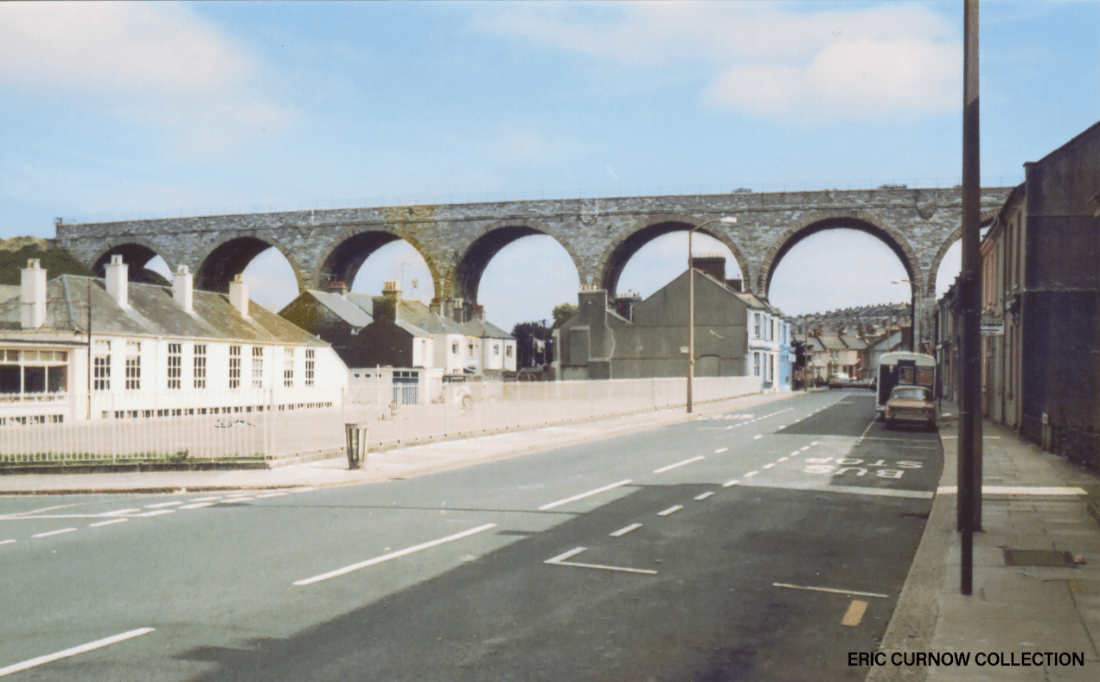 I was very sad as I saw this neglected viaduct being demolished at Keyham, Plymouth – once carrying the London & South Western Line skirting the north of Dartmoor – realising that any attempt to reinstate the line would now be far harder. The viaduct seemed sound, and I can only think that its demise was due to people below being fed up with its unneccesary presence. 820905A01-PLY-VIADT-VI__N
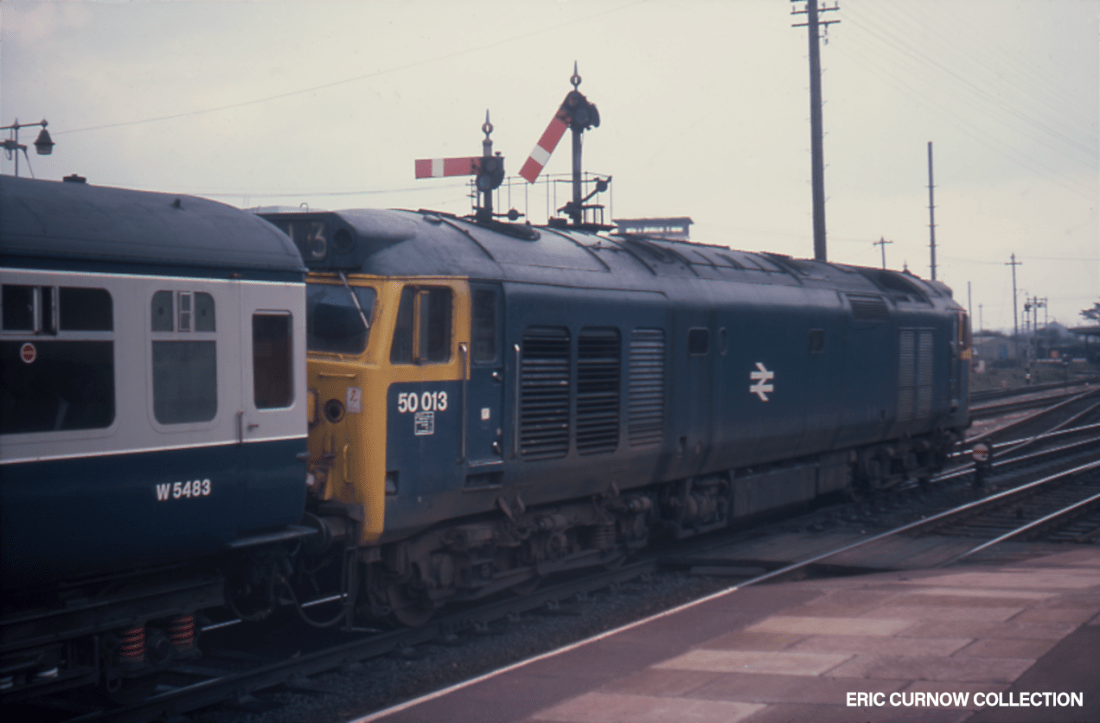 With its class number wound up in its destination blind, 50013 gets the “All Clear” signal at St Erth in October 1976, heading the 16:10 Penzance – Paddington or “School Train” as we called it, taking school children from Penzance as far as Hayle, having dropped the St Ives cohort. Nicknamed ‘hoovers’ because of their distinctive compresser sound, the engine pulls away. 7610##B01-SER-50013-PAS_U
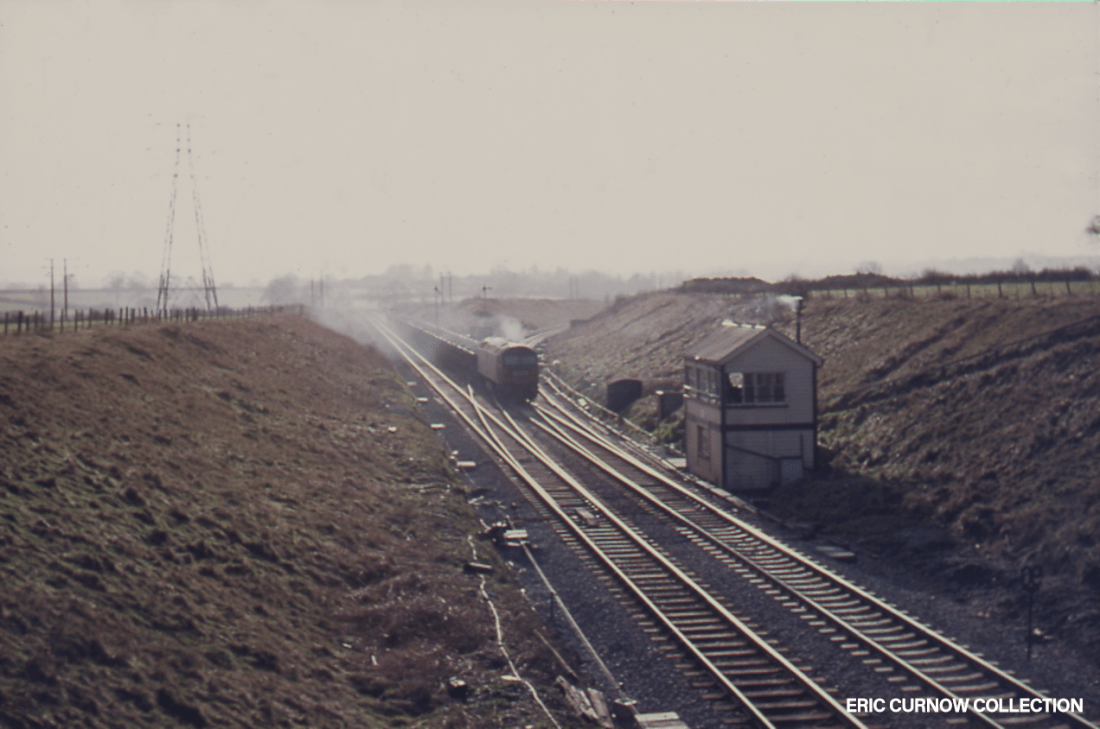 D1613, a W.R. allocated Brush Type 4, powers a train of emptiy wagons eastwards across Clink Road Junction, perhaps from nearby Merehead Quarry – the track deviating to the right being a cut off serving the town of Frome, and beyond this the coalfields of Radstock. I only passed through Frome on the odd occasion when engineering works blocked the Main. 7#####A01-FRO-D1613-MINLS
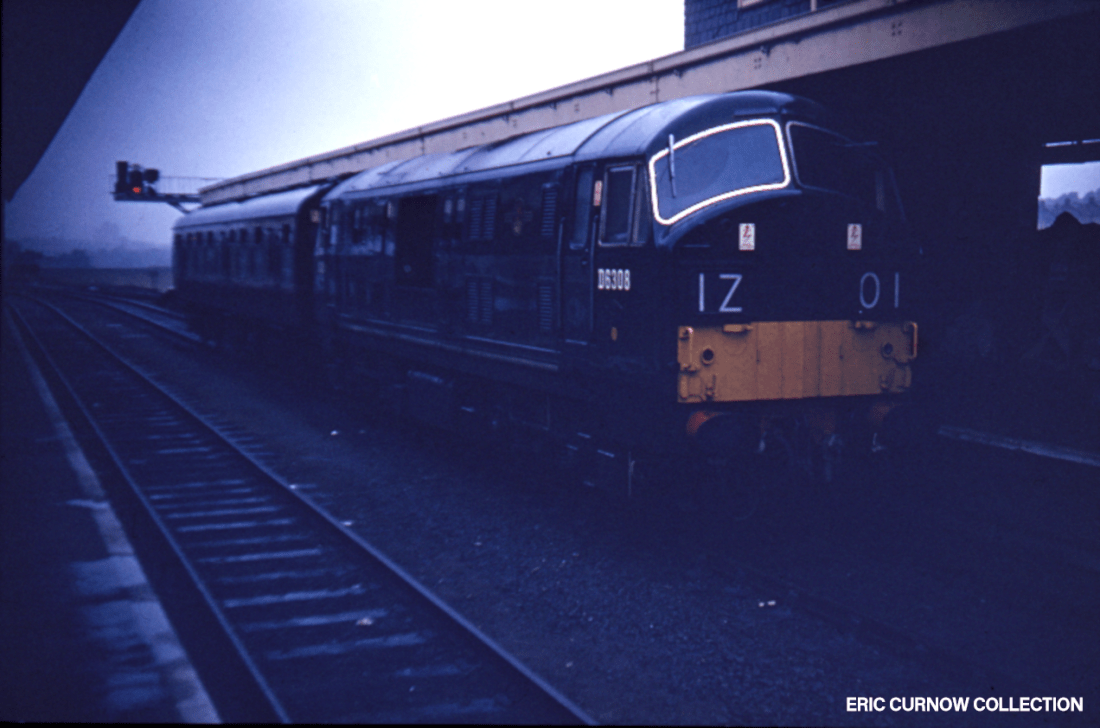 A very smart looking D6308 waits in the mist at Plymouth Station with a carriage, perhaps to be added to or recently removed from an up service. It has had a small yellow warning panel painted on its front end and as it is 1966, some time after being built, must have received a repaint recently. It is difficult to know whether the camera or the weather is the cause of the darkness. 66###AH01-PLY-D6308-PARKD
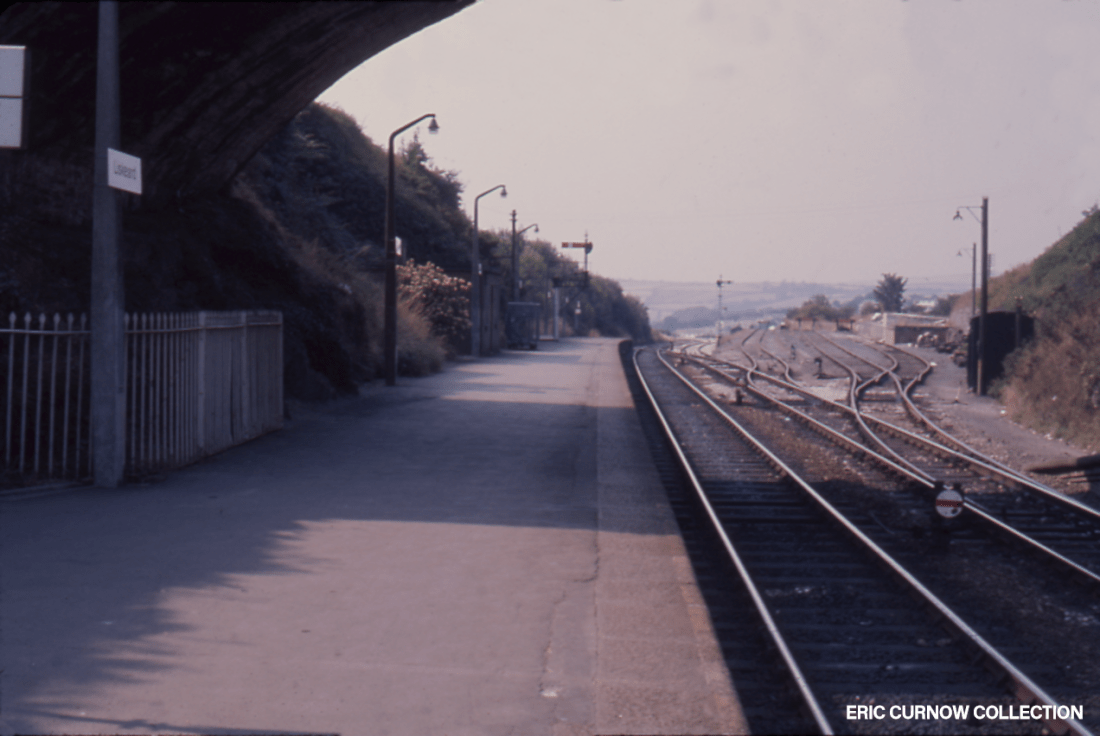 A shot westwards from the middle of the down platform at Liskeard showing the sidings once serving the wooden goods shed situated at the far end. The main line dips down to the viaduct to the left just out of sight, and above is the bridge carrying the road into Liskeard to the right. Today the up platform has been extended back across the sidings, and a carpark put in behind it. 7609##A01-LKD-STATN=VI__W
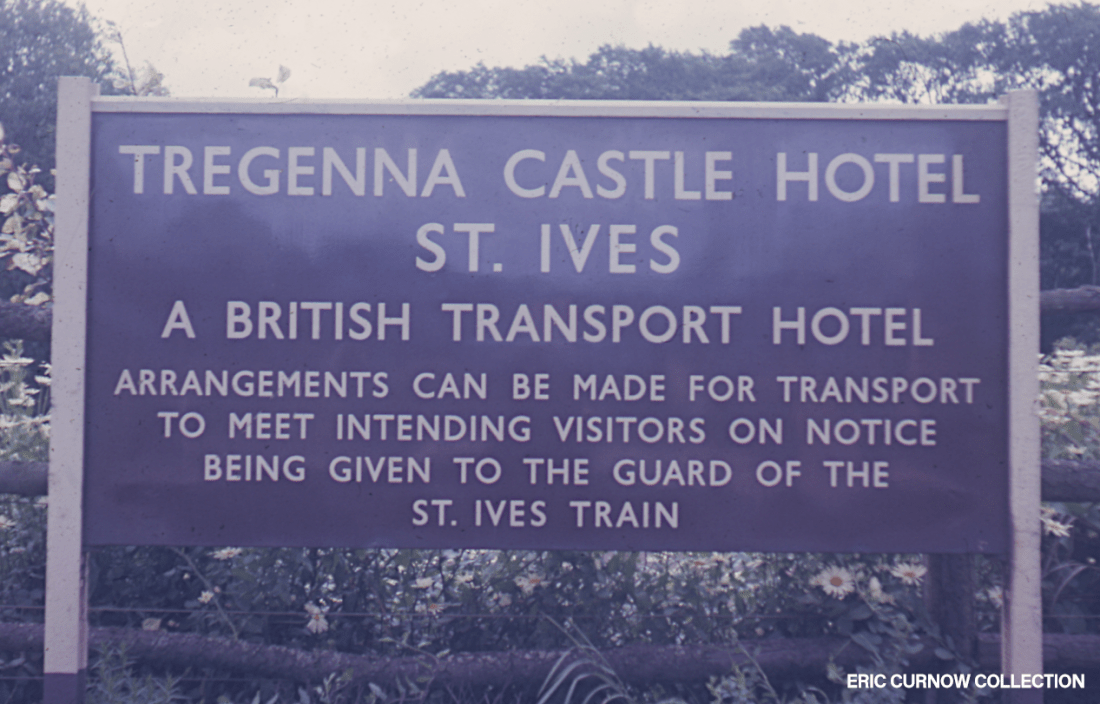
This sign was positioned fairly close to the eastern end of the down platform at St Erth Station so that as a passenger train slowed to a halt, all disembarking would notice it while looking for orientation and guidance. It was produced in maroon stove-enamelled paint – the lower wording emphasised – on a steel panel, hanging from a frame slung between two pieces of redundant rail. 630812A01-STE-P_SGN-VI__S

D820 “GRENVILLE” is half way along a platform at Plymouth Station with what seems to be an up perishables train. Although the top of its roof is exhaust deposit coated, and its front is dulled with a little grime, its sides and side windows are still reflective, suggesting a fairly recent repaint. At the western end of the adjacent platform sits a D63XX loco, in similar livery. 6608#BA01-PLY–D820-PCL_U
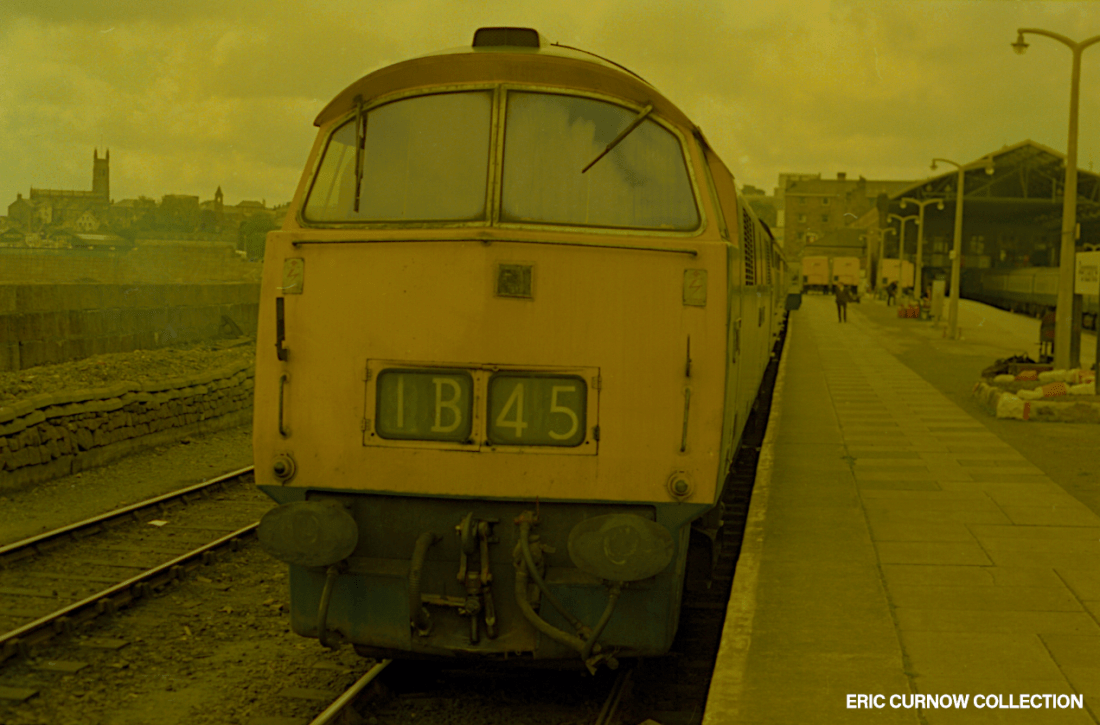
A ‘Western’ diesel heads a Bristol area passenger train at Penzance Station. Not quite central on its front end is that added air intake that so disfigured these locos appearance, in my estimation, and above it its distinctive huge windscreens. To its left are clearly seen the layers that built up the crane road – concrete beams, granite blocks, old concrete castings and ballast. 7####HW01-PNZ-D10##-PAS_U
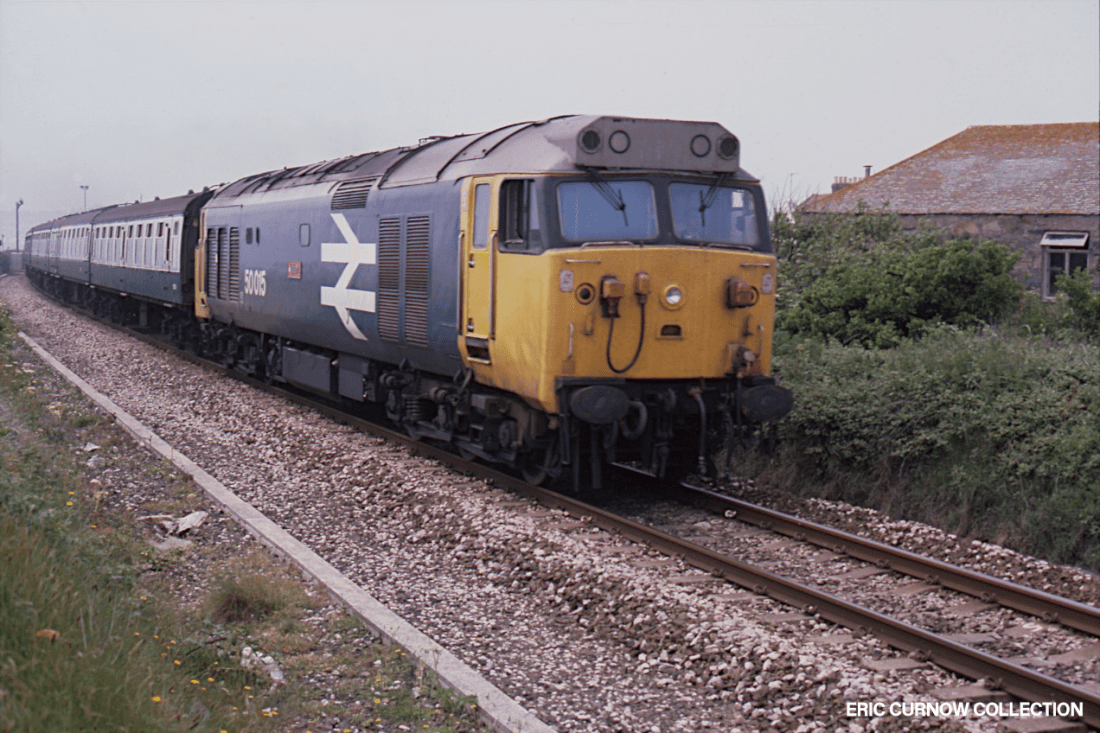
In June 1986 50015 “Valiant” accelerates on the stretch of line between Long Rock and Mexico crossings, with an up passenger service of Mk1 stock. I’ve often wondered why this short stretch of line was singled, because frequently my westbound train was held at the eastern end of the section while the line was blocked by outward movements, and no doubt vice versa. 8606##A01-LRK-50015-PAS_U
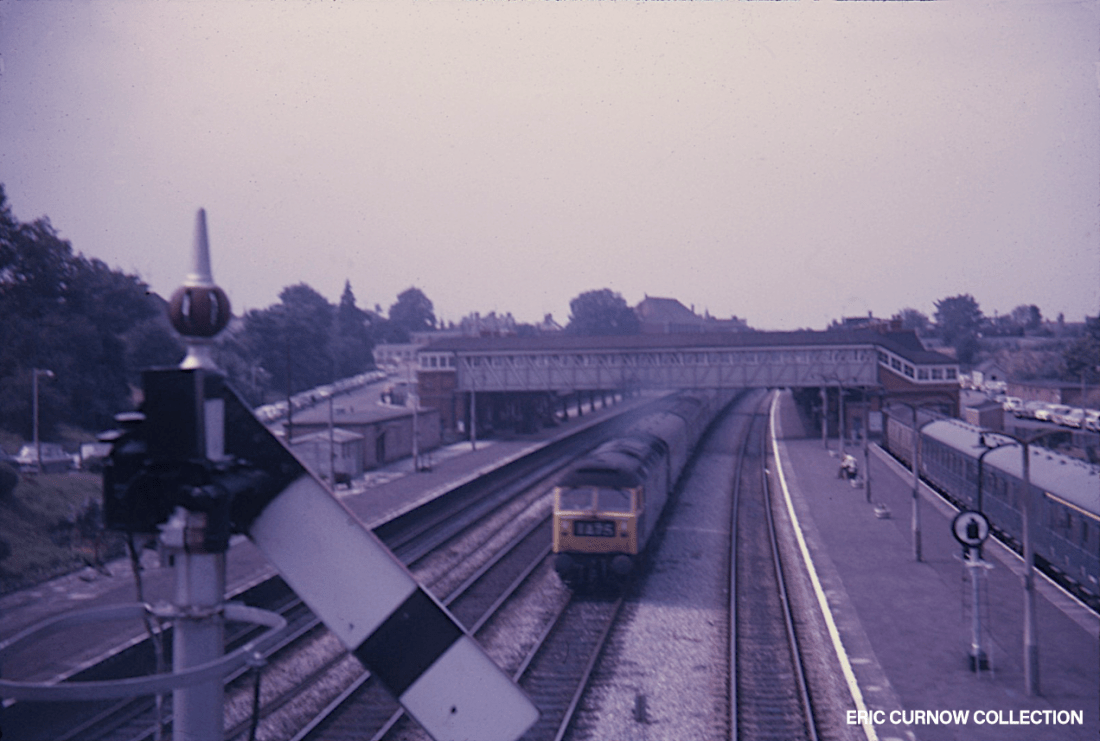
The signal arm indicates ‘All Clear” for a Class 47 to run at speed along a through road at Newbury with a London area passenger train in 1971. A local service DMU waits at a platform, presumably to follow in the wake of the Brush’s train, and the streets either side of the station are completely lined with cars, many awaiting the return of commuters at the end of the day. 7108##B01-NBY-47###-PAS_U
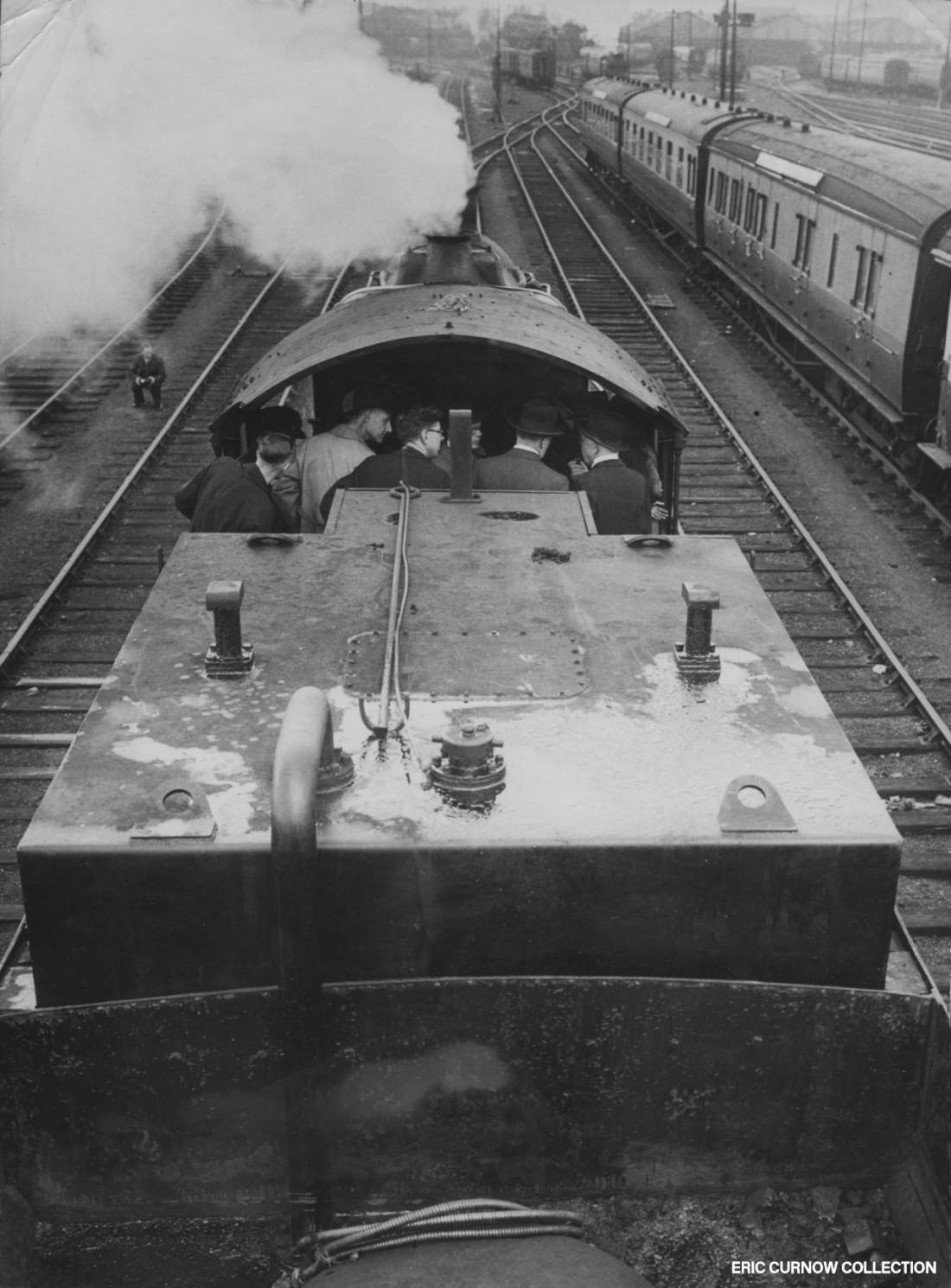
This ‘Planet News’ photograph shows 5955 “GARTH HALL”, the GWR’s first oil-burning passenger locomotive, following its trial run from Paddington to Old Oak Common on 8th August 1946. The caption intimates 25 Castle Class locos and 19 freight locos are to be converted; each tank load permitting 250 miles of travel; and the change will save 50,000 tons of coal yearly. 460808A01-OOC-s5955-PARKD
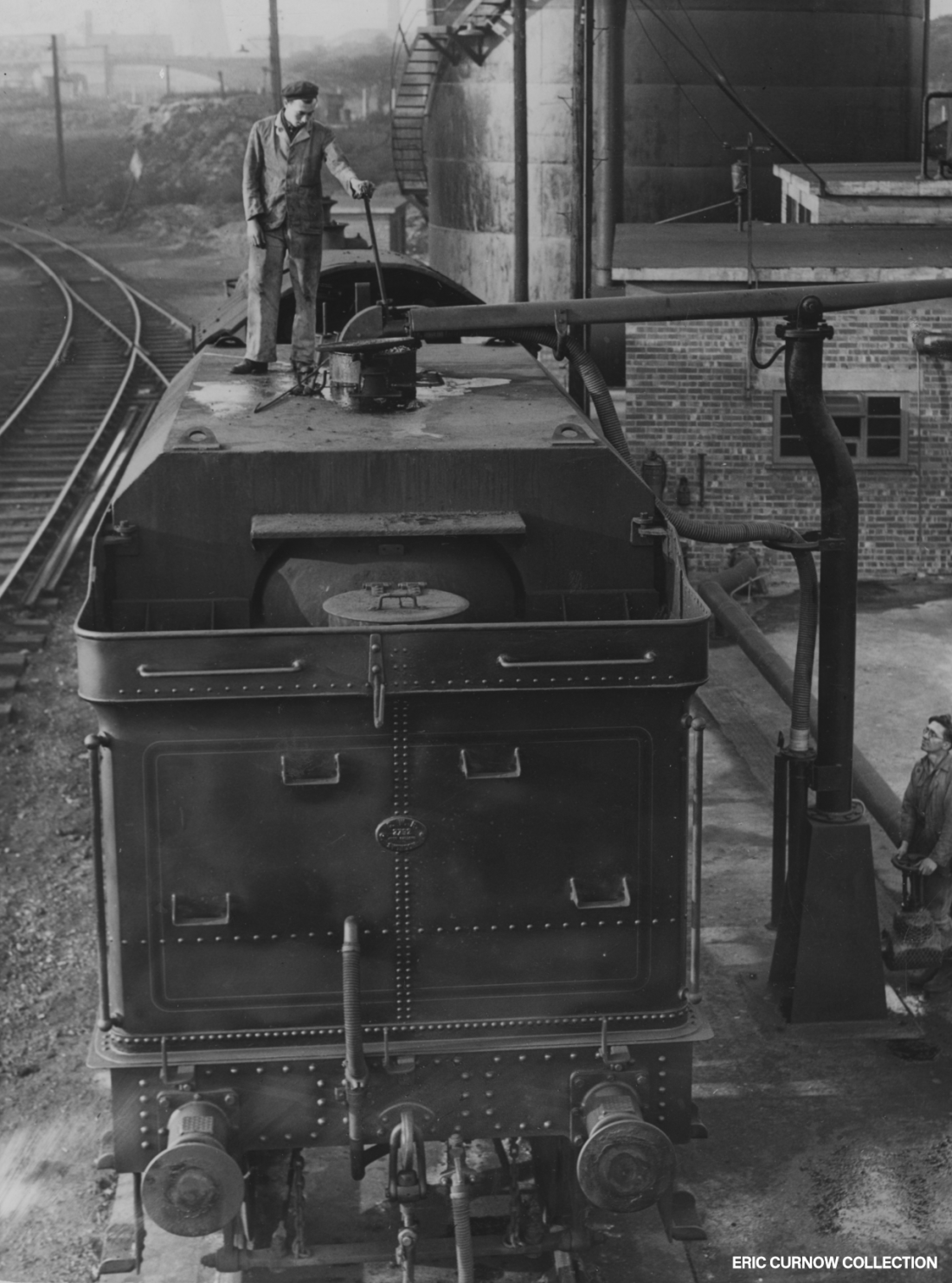
This 1947 rear view of a locomotive’s tender shows it being fuelled with oil at Old Oak Common, now it has a tank that has replaced its coal storage area. The Fox photo print has a caption pasted to the reverse saying sixteen plants are to be built for conversion from coal to oil, Old Oak being the largest, with two 175,000 storage tanks, one of which is seen in the background. 471112A01-OOC-S_LCO-FUELG
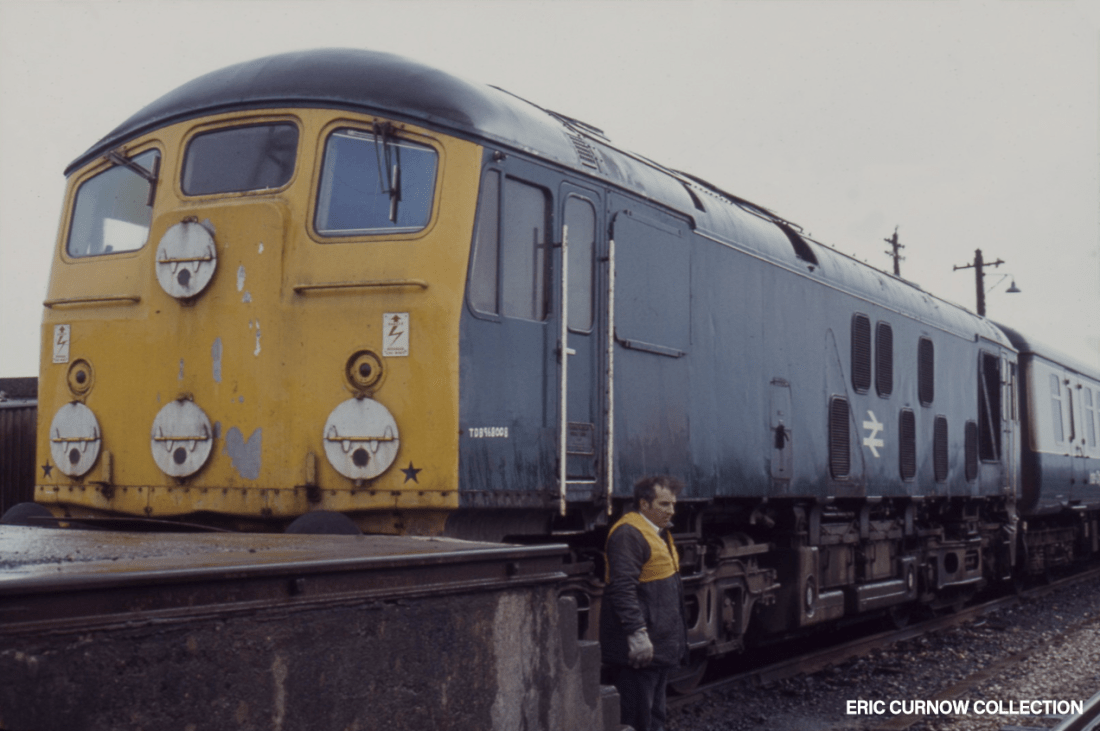
With very presentable blue bodyside paintwork, but scuffs and scrapes on the former connecting door area at the front of the locomotive, TDB968008 (ex-24054) is pressed hard against the buffers for steam-heating purposes, even though in this position it couldn’t serve many carriages, as the rake would foul the connection line into the yard that was still in use at that time. 770317A01-PDN-TDB24-PARKD
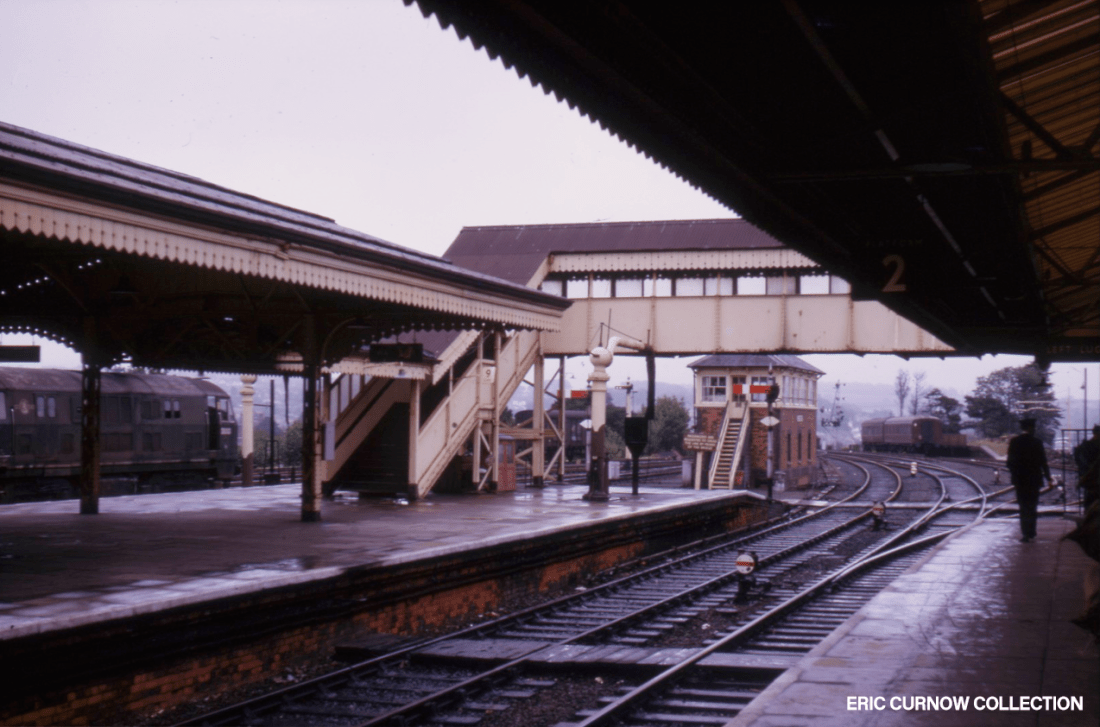
This eastern end view of Truro Station in the mid to late 1960s shows D6313 parked in a siding with a variety of artifacts of the time: maroon enamel signs; water columns; the short loading platform beside the parked vans; and a loading gauge – beside the Signal Box, tooth-edged station canopies, bridge windows, and a liberal application of GWR chocolate and cream everywhere. 6####KA01-TRU-STATN-VI_NE
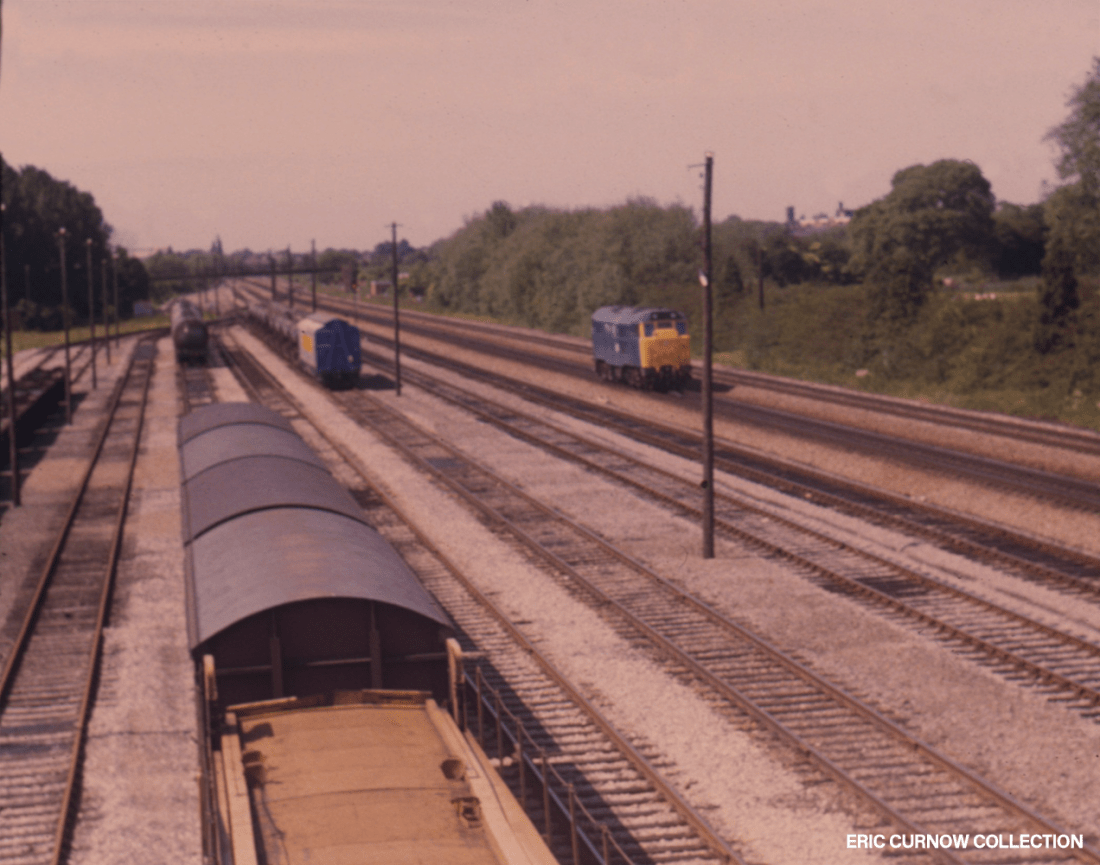
A Class 31 diesel runs south along the main lines beside Hinksey sidings south of Oxford in 1983. I only passed this site a dozen or so times during my 1970s visits to the city, but it was always a magnet because of the possibility of locomotives among the stock in the yard. The 31 is in pristine blue livery, with domino headcode, and engineers trains include hoppers and oil tanks. 83####B01-OXF-SDNGS-VI–N
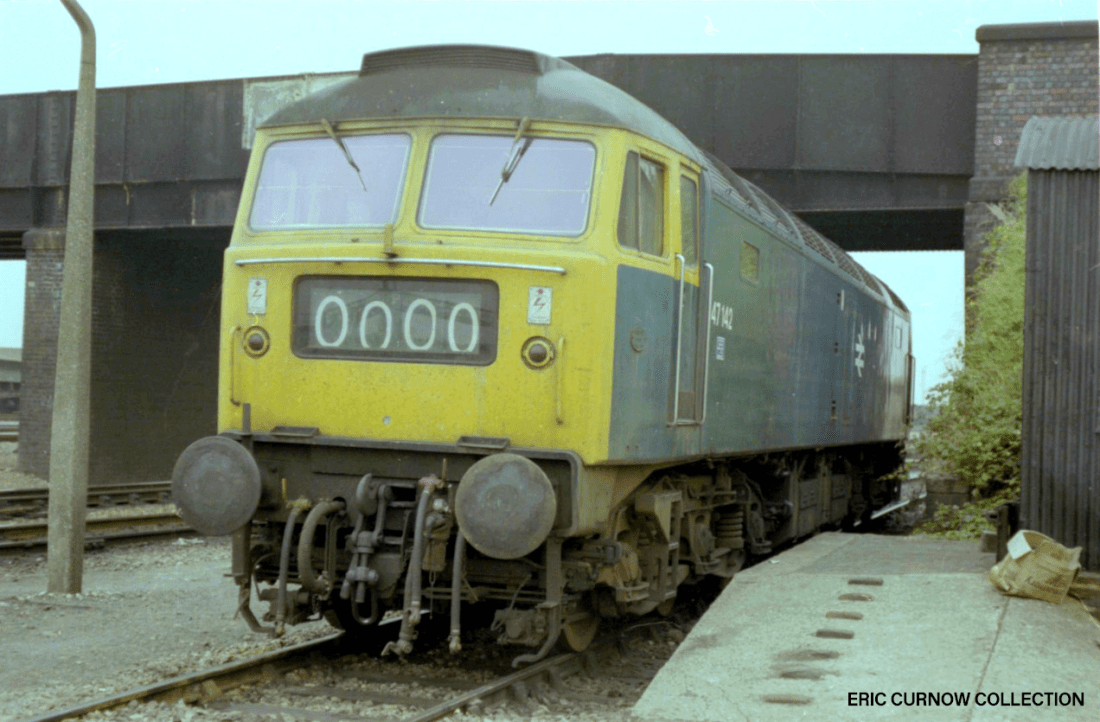
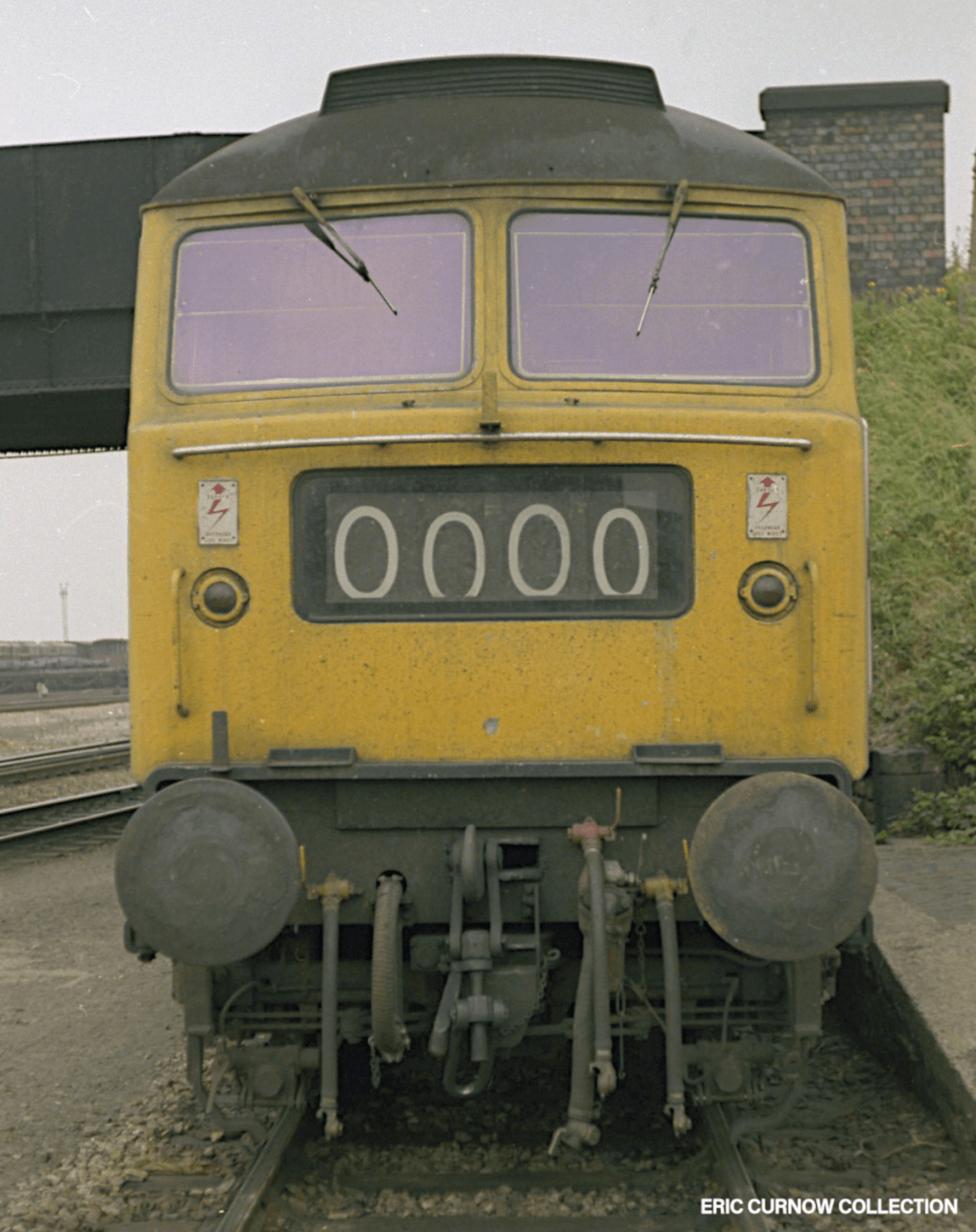
On 9th June 1977 47142 is at Severn Tunnel Junction, parked by a short staff platform near an overbridge, looking towards Cardiff. The loco has four zeros wound quite neatly up in its headcode, and has an oval builder’s plate on the cab side – many 47s had rectangular ones. I thought the Class 47s were particularly handsome locomotives, and was glad there were many built. 770709A01-STJ-47142-PARKD
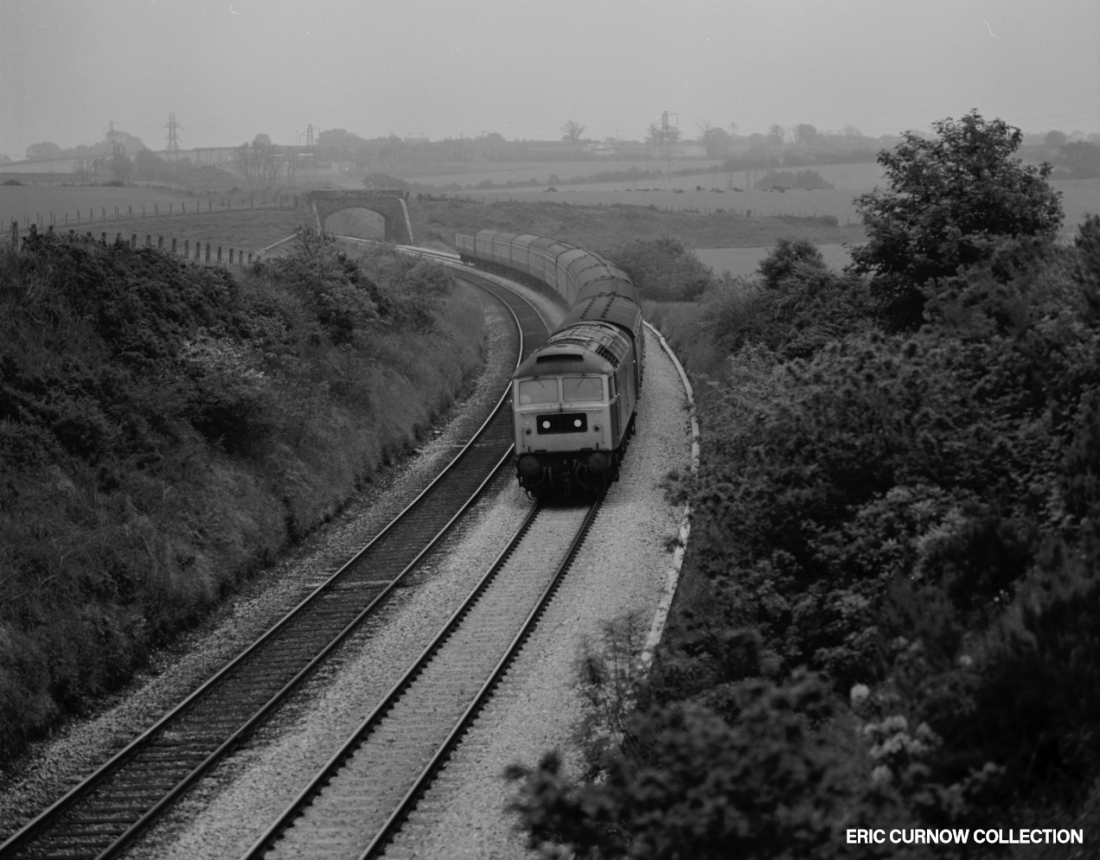
East Coldrenick is near Lostwithiel, and this image shows 47151 passing near on 13th June 1981. The graceful granite bridge in the background shows it and its access ramps have been added onto the landscpe, and the wooden boundary fence uprights seem remarkably free from overgrowth, despite their age. The Type 4 still has a glass headcode box, but with “dominos”. 810613A01-LOS-47151-PAS_D
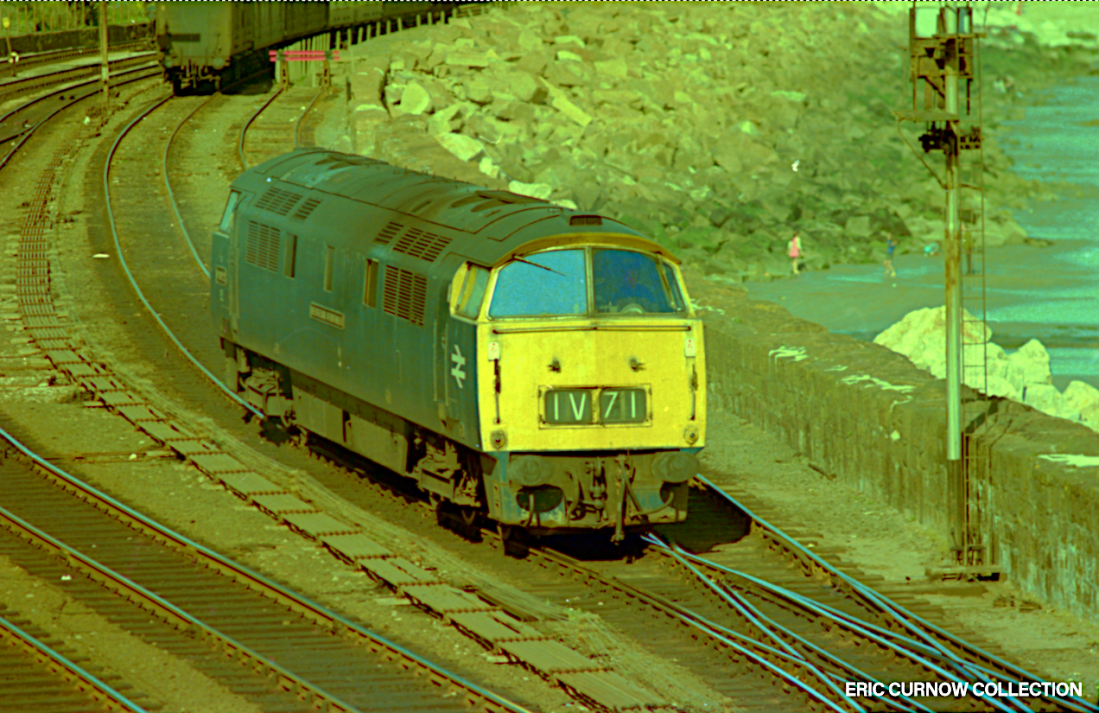
D1022 “WESTERN SENTINEL” ends a temporary lay-over on the Sea Sidings near Penzance Signal Box as it is just about to enter the scissors crossing to bring it into one of the station platforms for a service back east. It wears an inter-regional code on its front end, with a pair of headboard clips above, unused since much earlier days, if ever they were. Children play at the water’s edge. 7####HV01-PNZ-D1022-LIG_D
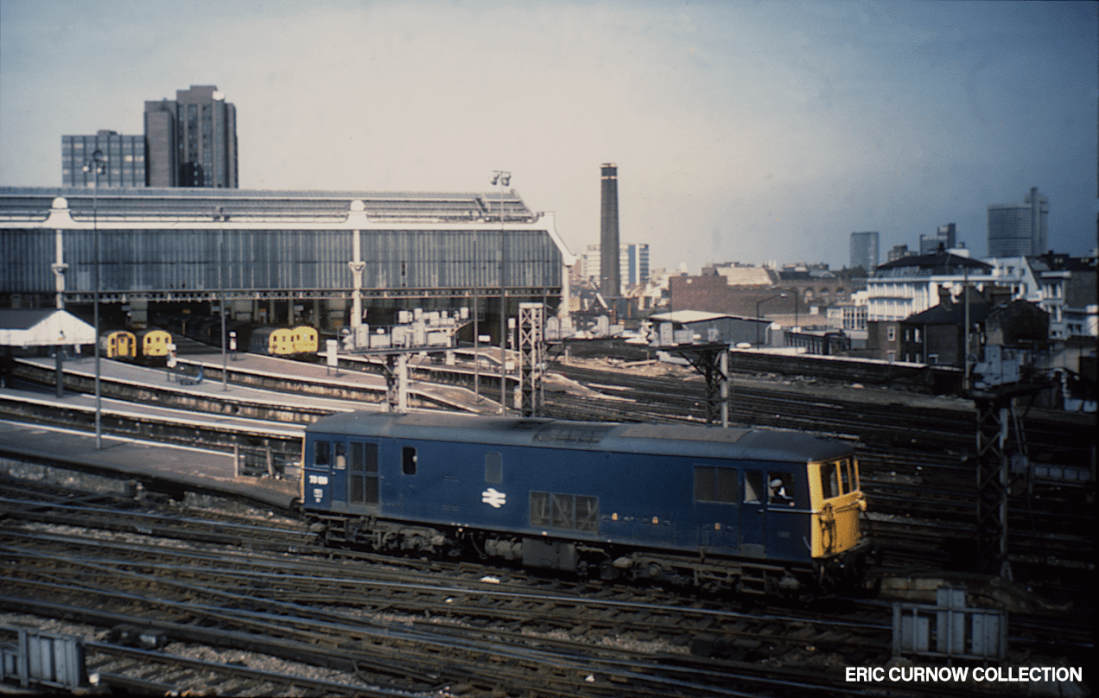
The second man guides electro-diesel 73126 as it reverses into Waterloo Station, light engine, in 1980 – able to work from third rail electrification where power was available, or run off a small diesel engine where “off grid”. In the background are suburban units and a mainline emu, with platforms separated by large clusters of trackwork and multiple signals on various gantries. 80###AJ01-WAT-73126-LIGHT
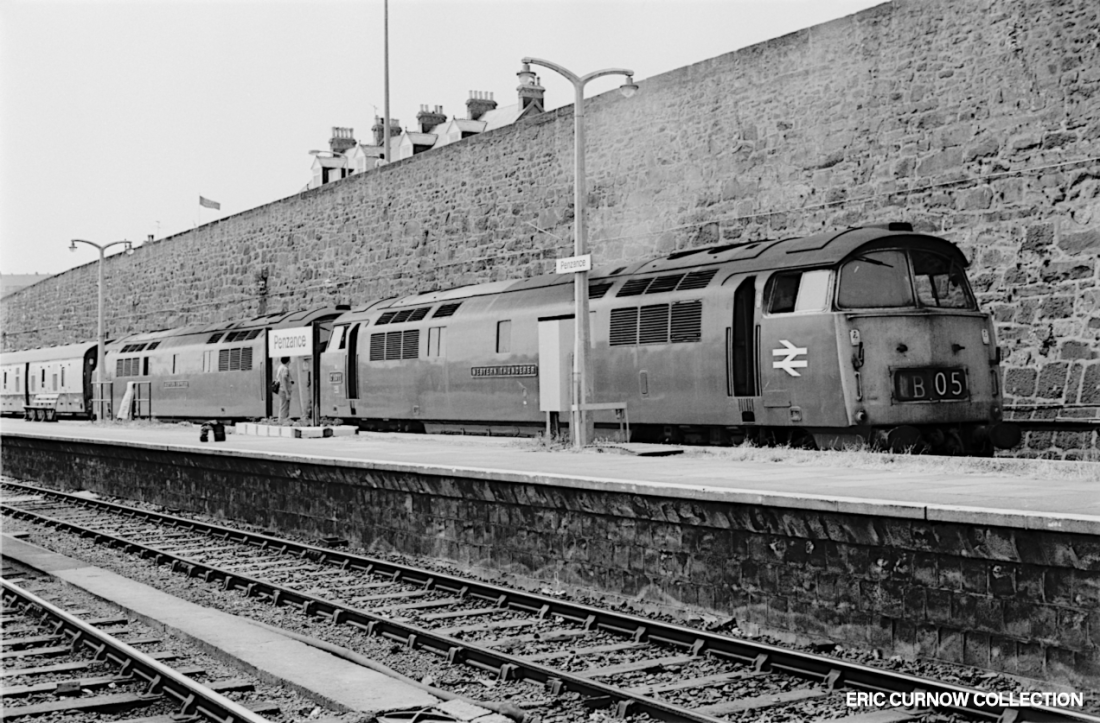
Double-heading of locomotives was relatively rare in West Cornwall, but here D1011 “WESTERN THUNDERER” (leading) and D1037 “WESTERN EMPRESS” (trailing) head a service to Bristol in 1973; 1011’s engine turns over but 1037 isn’t emiting exhaust. The platform has collected weeds down its centre, and plastic bags for rubbish hang over some railings nearby. 73###AH01-PNZ-2X52S-PAS_U
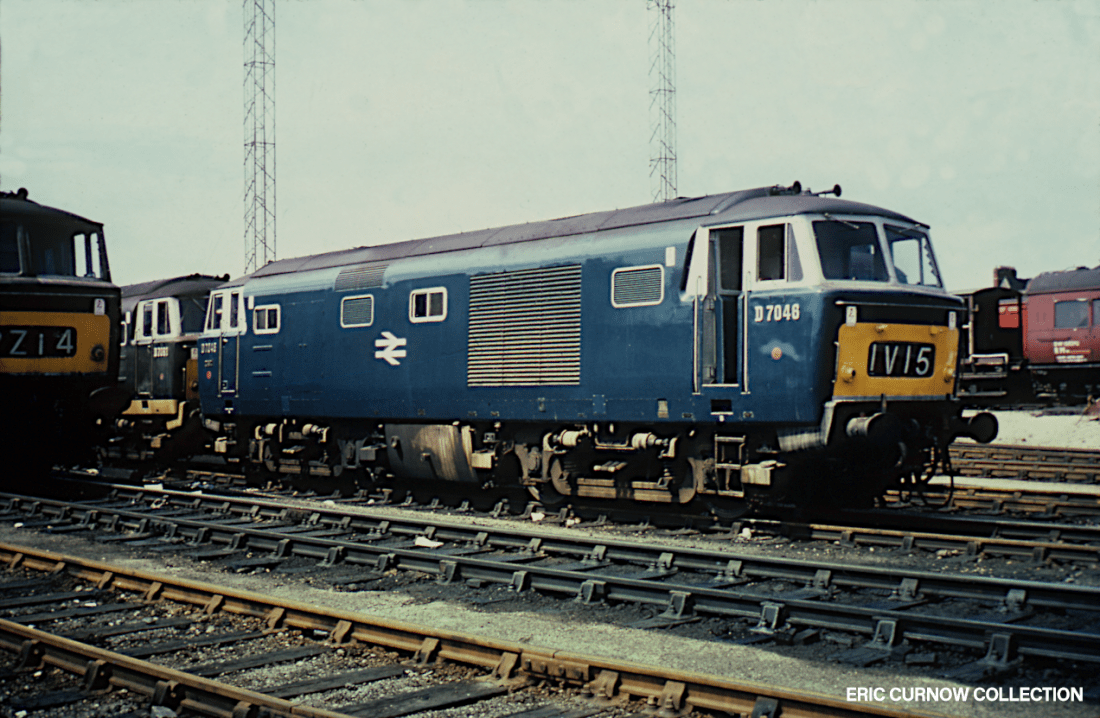
A cab door stands open while D7046 rests between duties, coupled to another Hymek in green livery. In the background is part of an engineering consist and two high lighting towers. 7046 is in blue livery with white window surround, but small warning panel; it has an inter-regional code wound up in the recess at the cab end, and the glossy finish suggests a recent repaint. 6####JD01-RDG-D7046-PARKD
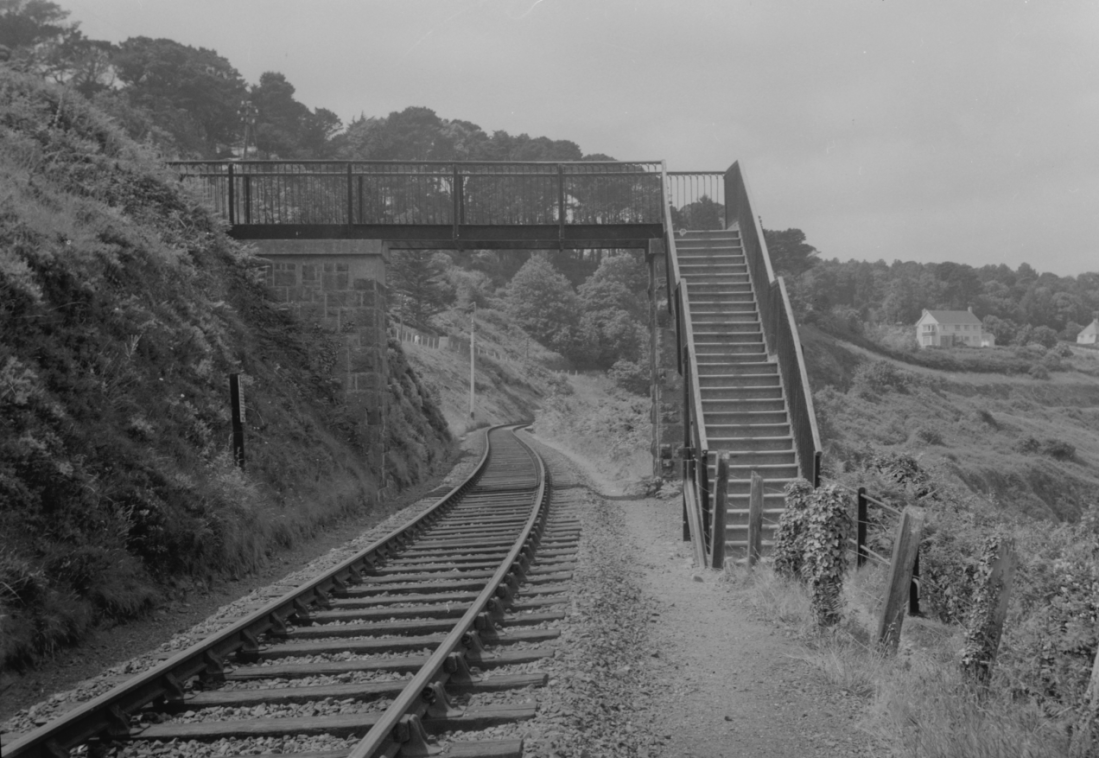
This footbridge is west of the Carbis Bay Viaduct, carrying the Coast Path across the railway line. As can be seen from a close look at the wooden boundary posts at the foot of the steps, the wires have been widened allowing fairly easy access to the track – this is where we placed pennies for the train to flatten them on Sunday School Treat days, far from being told off by anyone(!) 6####JE01-CBB-F_BDG-VIS_E
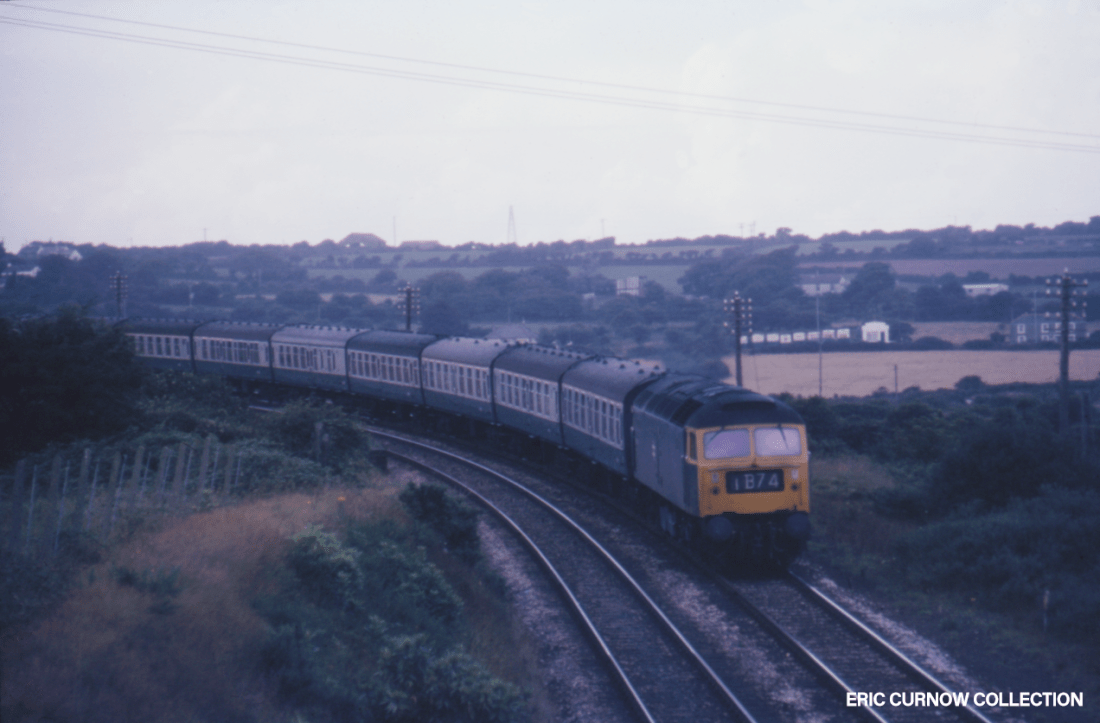
A Class 47 rounds a curve west of the Chacewater Station site with an up Class 1 passenger service to the Bristol area on 8th December 1974. In the background is a fringe of Blackwater village, and between there and the train, the remains of the earthworks of Blackwater North Junction that once took the line to Newquay – parts of which are still visible today. 741208A01-CWR-47###-PAS_U
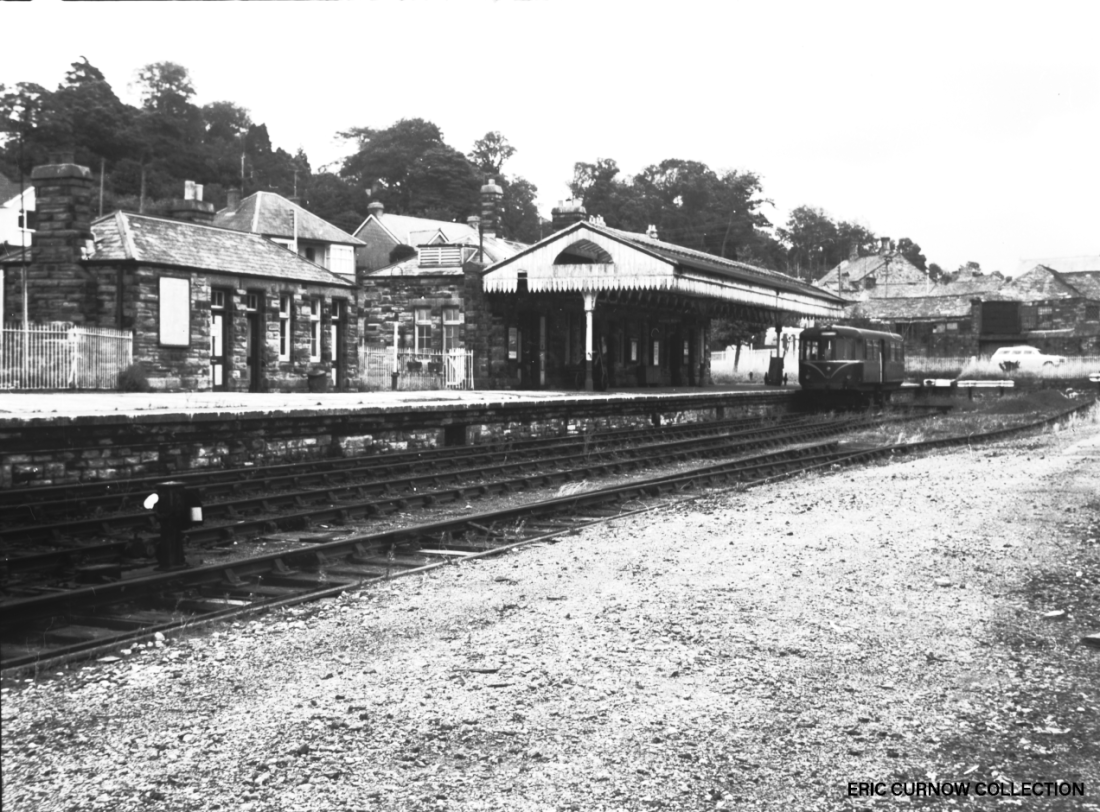
Lack of investment is evident in this image of Bodmin (North) station, with a section of missing awning, paintwork in need of attention, track cut back, and a proliferation of weeds behind the stop blocks. A railbus awaits passengers on a small crossover from the set-back set of butters for releasing a small loco if required. It is a shame nothing significant of this station remains today. 6####JC01-BNO-STATN-VI_NE
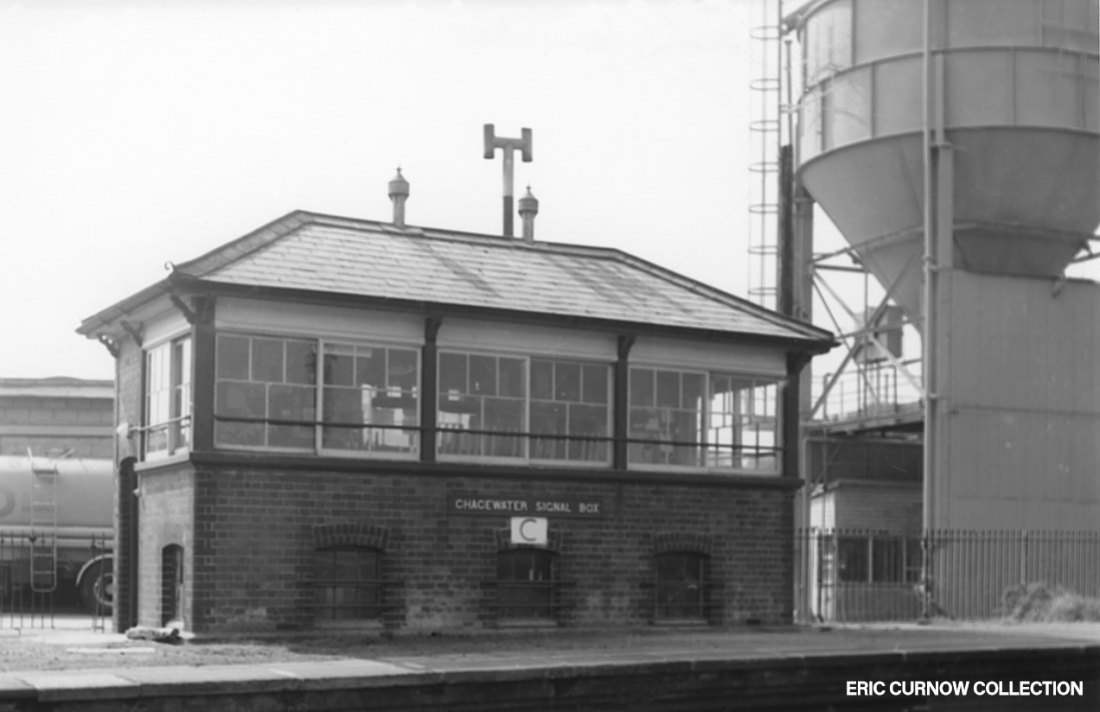
Chacewater Signal Box, probably sometime in the early 1980s. To the right is the huge Blue Circle Cement silo built on part of the former goods yard and further right was a spur off the down line to a couple of sidings, the closest of which ended just behind the signal box. The ‘Blue Circle’ corporate identity was held up as a good example of effective design when I started college. 8####CC01-CWR-S_BOX-VI__S
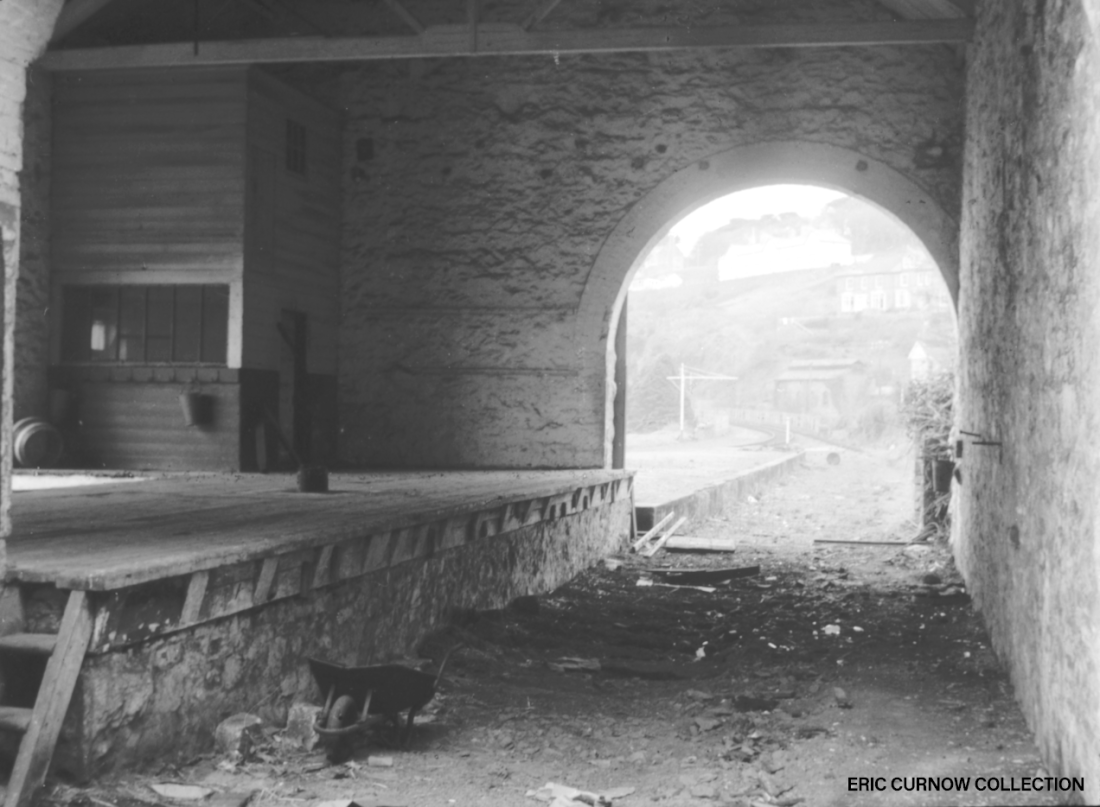
Terraces of houses, hotels, the Engine Shed, the end of the platform, and the Loading Gauge are faintly seen through the entrance arch of the St Ives Goods Shed shortly before demolition. The edge of one of the two doors is in view, and inside on the platform is an office of some sort. The track has been lifted, and the whole scene has an aura of ancient functional simplicity about it. 6####JB01-STI-G_SHD-VI_NE
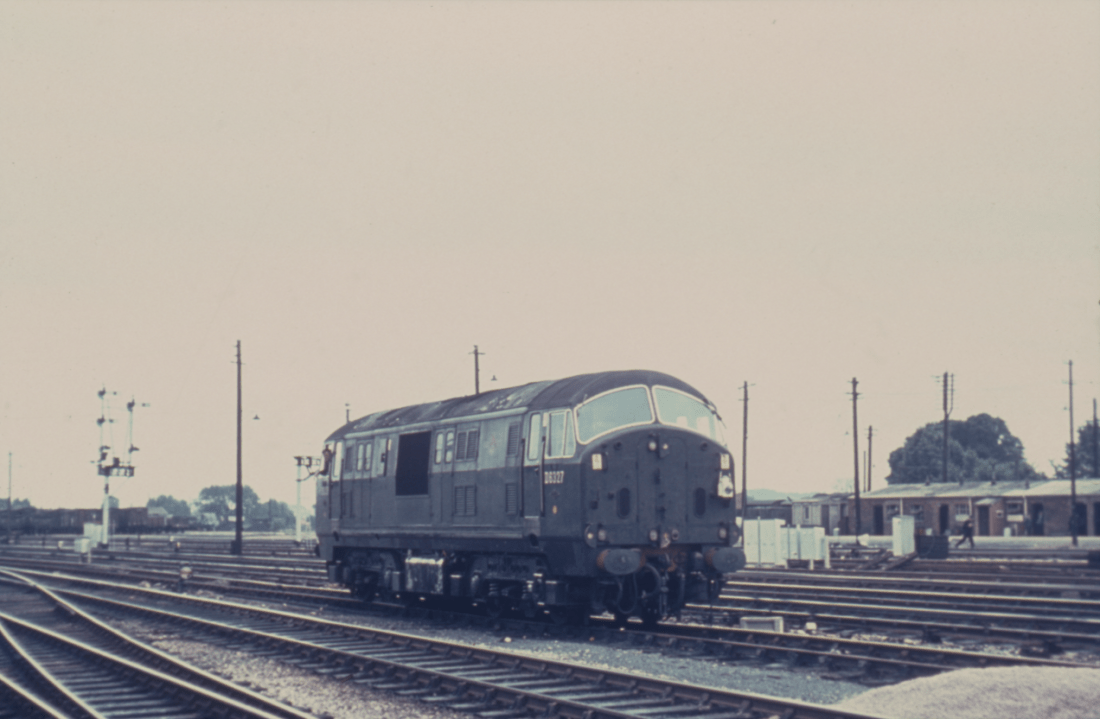
In early non-warning panel livery, D6327 is running light engine through Taunton Yard on 3rd September 1963. The Mess Huts to the right and very much all this scene have been swept away by rationalisation, and the dream of Taunton as the Freight Concentration Depot for the South West dying with the run down of freight carrying by the railways. Copyright: S. Blencowe. 630903A01-TAU-D6327-LIGHT
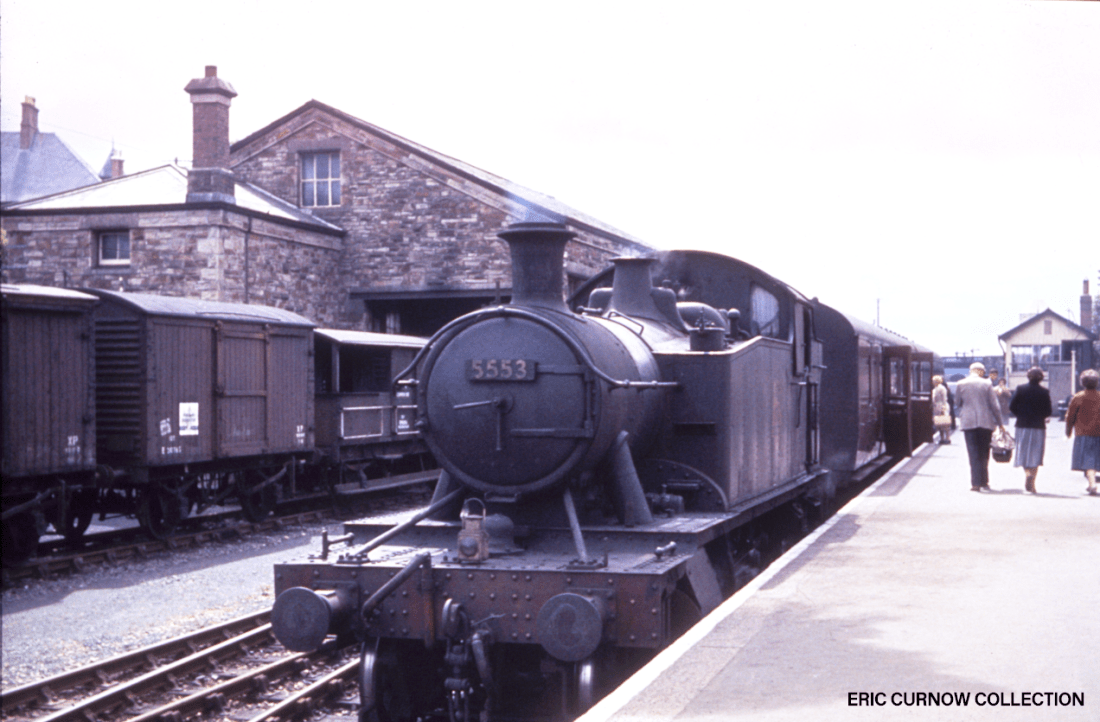
A peaceful scene at Bodmin General of 5553, recently arrived from Bodmin Road on the GWR main line. Its mere two carriage train and scattered passengers hint at why such services were financial drains on the BR budget, though even their limited operationss were appreciated by those without cars. The vans to its left show freight services were still fairly commonplace in 1961. 61####B01-BOD-s5553-PAS_O
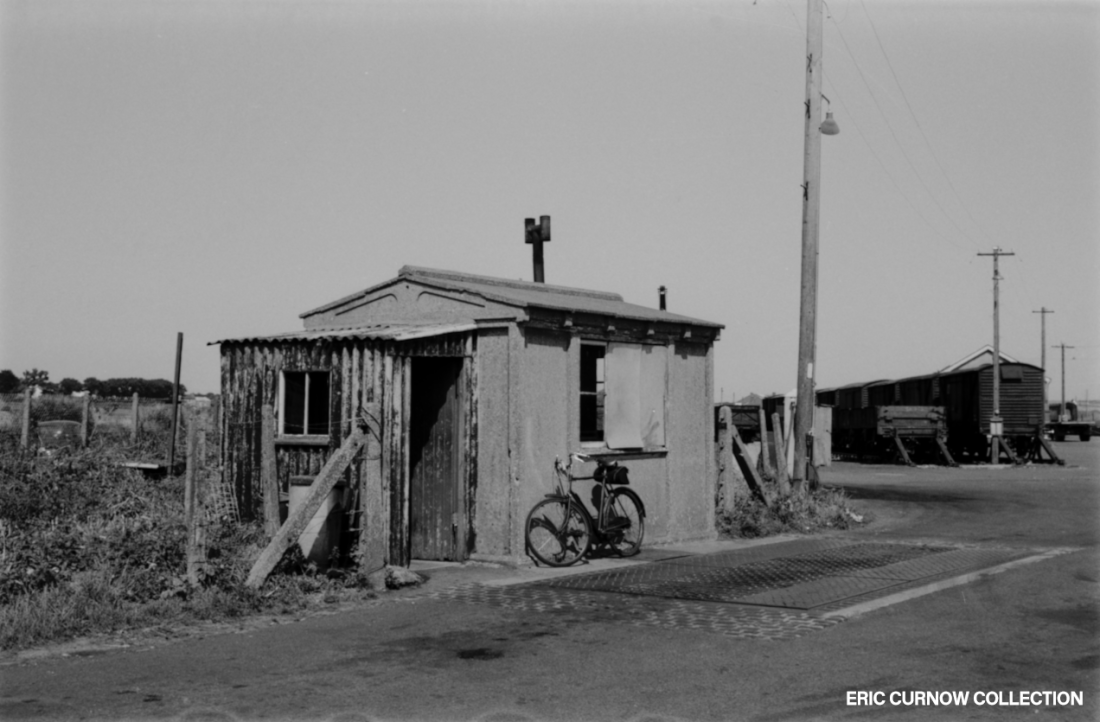
The weighbridge in Ponsandane Yard in the 1960s much as I remember it. The basic concrete panelled building has had a corrugated iron porch added and a stove has understandably been fitted at this fairly isolated and exposed location. To the left is a chain link fence and undergrowth, with St Theresa’s and the wood nearby it, and to the right, vans and the ridge of the Goods Shed. 6####JA01-PDN-WEIGH-VI_SE
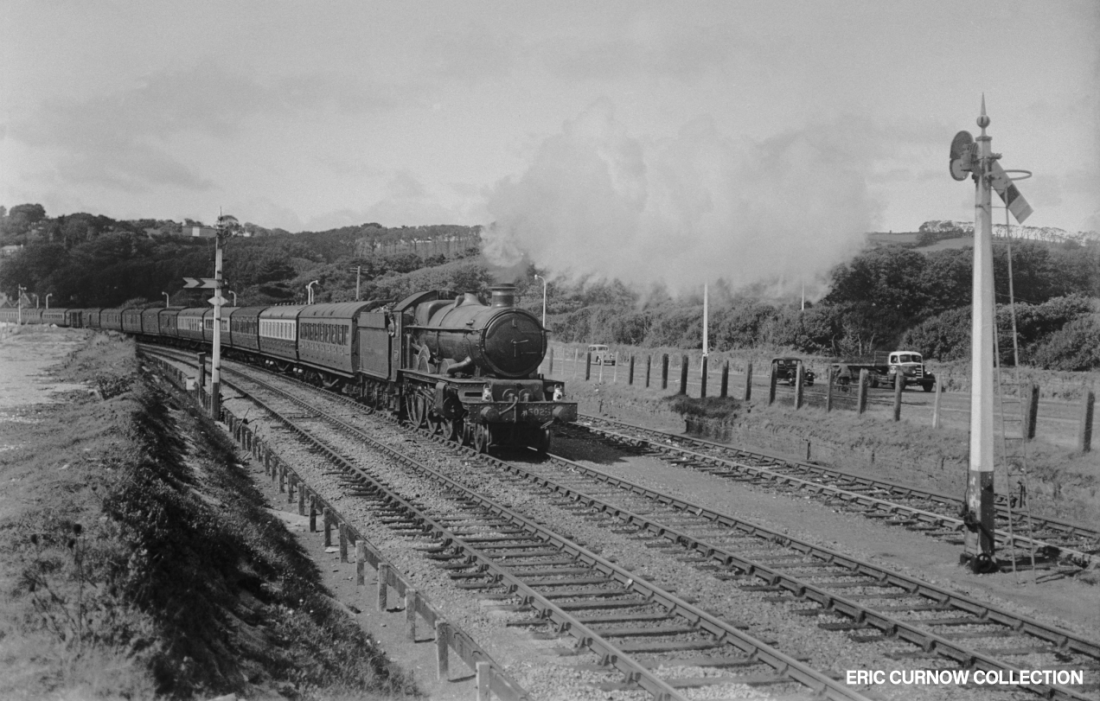
In the 1930s, 5026 “CRICCIETH CASTLE” approaches Ponsandane Crossing with a long mixed stock train, its exhaust creating a shadow that stretches across the A30 road beside it where several eastbound vehicles are apparently keeping pace. On the other side of the tracks, the scooped out sand dunes of the lineside have yet to receive concrete boundary posts and wiring. 3#####A01-PDN-s5026-MIX-U
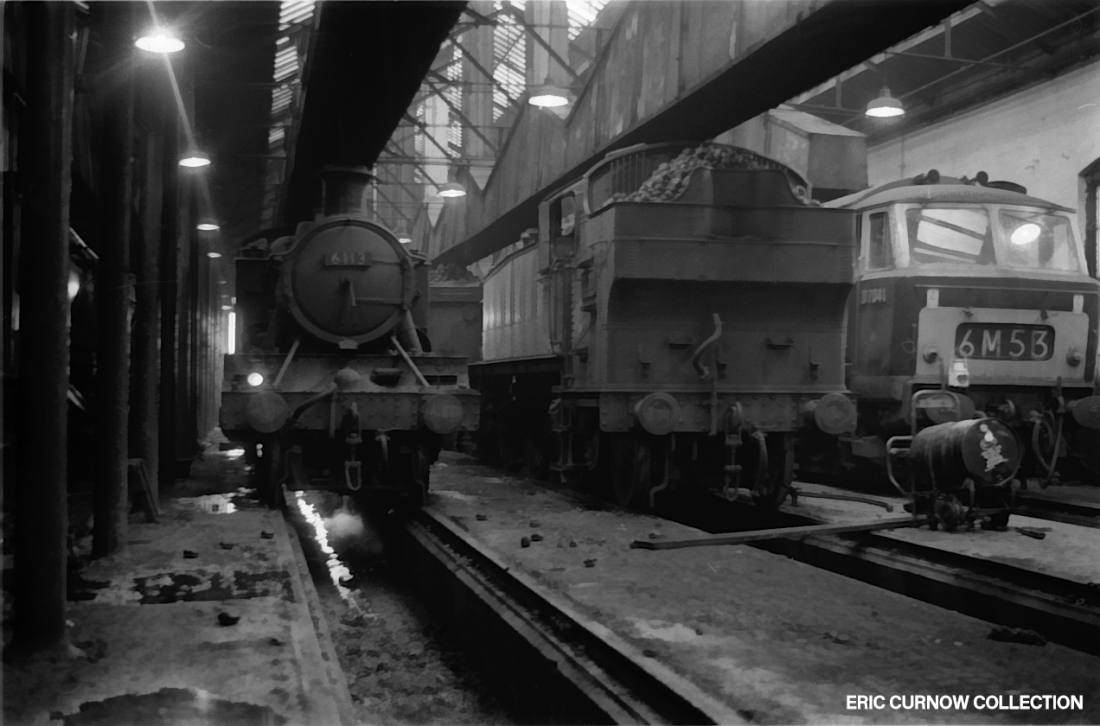
The interior of Gloucester Shed in 1965. Large Prairie 6113 is beside a classmate or two, with D7041 by the side wall. There is an oil drum for hand pumping diesel, but most of the scene is steam-era, with bricketes in use by now, rather than coal. The extensive skylighting above the exhaust shuttering was a surprise to me, after the comparative darkness of Long Rock. 65####A02-GHR-LOCOS-PARKD
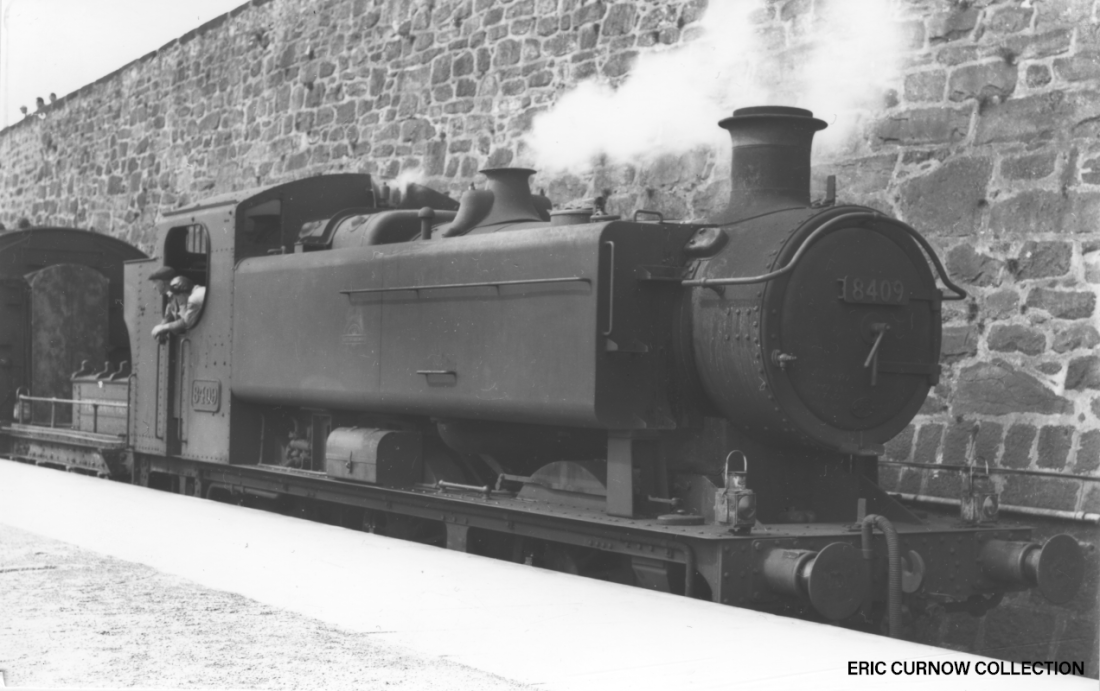
Faces peer over the sea wall and the loco crew lean out of their cab as 8409 gently steams away at the end of a rake of carriages it is soon to remove from Platform 1 of Penzance Station. Between the engine and the carriages is the shunter’s truck – a mode of transport for convenience of the shunting staff as they move from place to place, and their tool store. Photo: Norman Preedy. 510829A01-PNZ-s8409-SHNTG
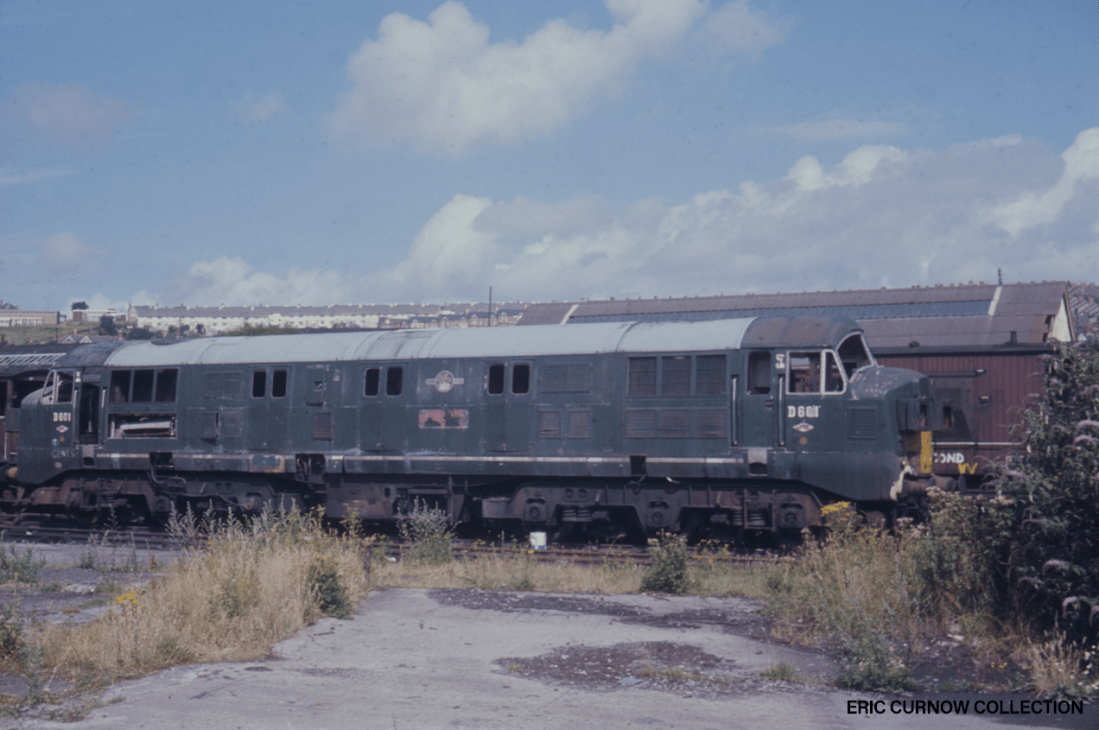
D601 languishes at Barry in South Wales, a plaything for local kids until its scrapping in the 1980s. It looks like the name and builder’s plates have left red oxide areas where they once were positioned, but the rest of the paint is still in good shape despite a decade in the open sea air. The roof panels seem to have been repainted at some point – perhaps while in Woodham’s Yard. 7####HS01-BRY–D601-SCRAP
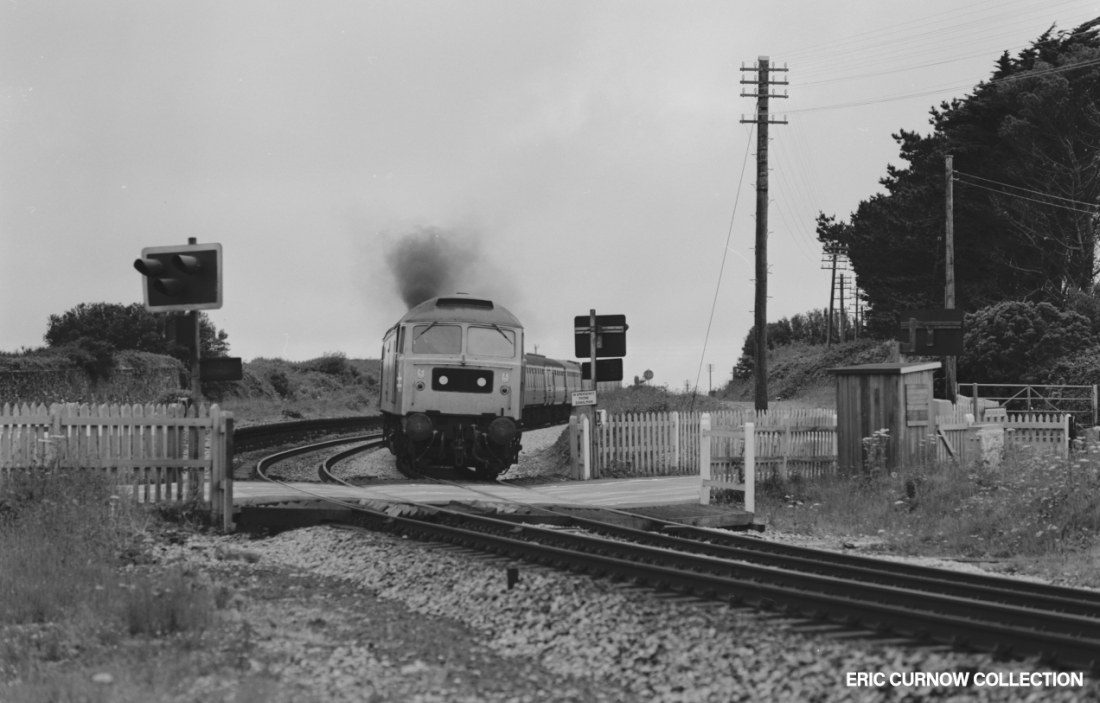
Now all seems clear at the crossing, the driver of 47478 applies power as tthe curve eastwards is rounded with a train of Mk1 carriages at the former Gwinear Road Station in 1981. The ’47 still has a glass headcode cover, and unusually carries a BR emblem on a cabside. To each side of the picture vegetation grows prolifically over the former platforms. 81####B01-GWR-47478-PAS_U
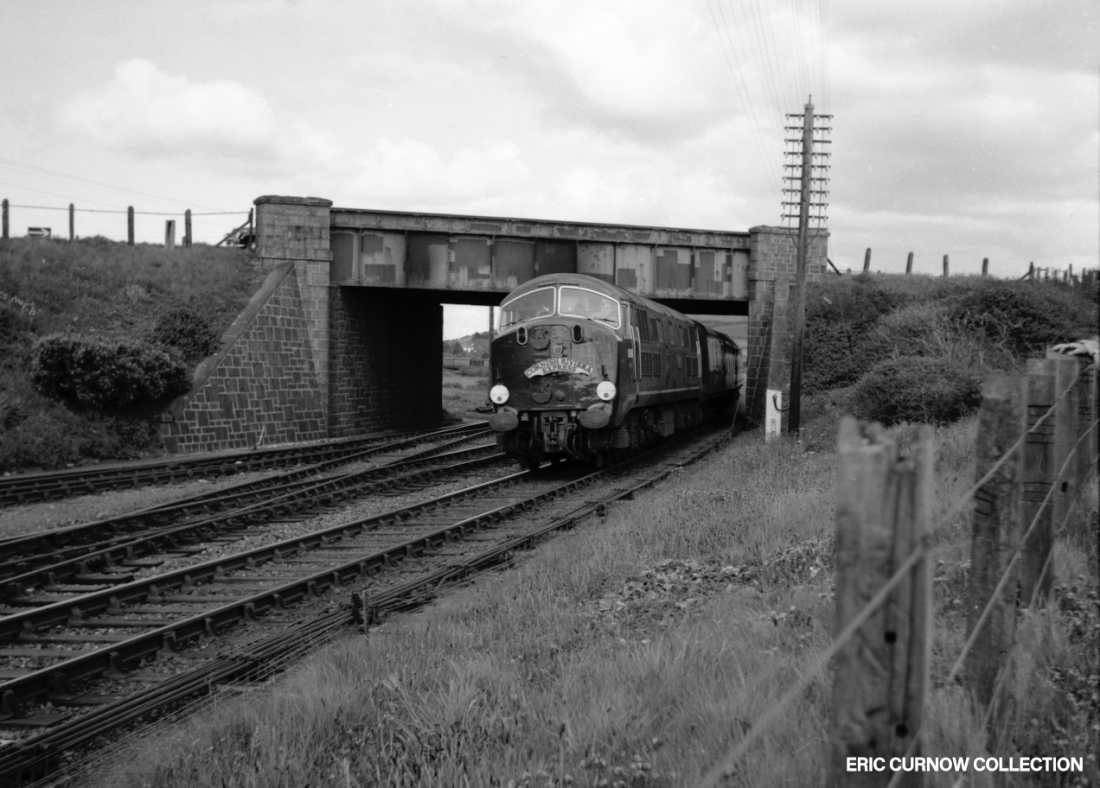
Only months after completion, rounding the curve from Marazion Marshes into the station is D600 “ACTIVE” on the down Cornish Riviera Express with a long train in May 1958, the tail end of which can be seen in the distance through the bridge. The skew bridge itself has been patch-painted, presumably to cover excess deterioration, but its granite piers are in A1 condition. 5805##B01-MZN–D600-PAS_D
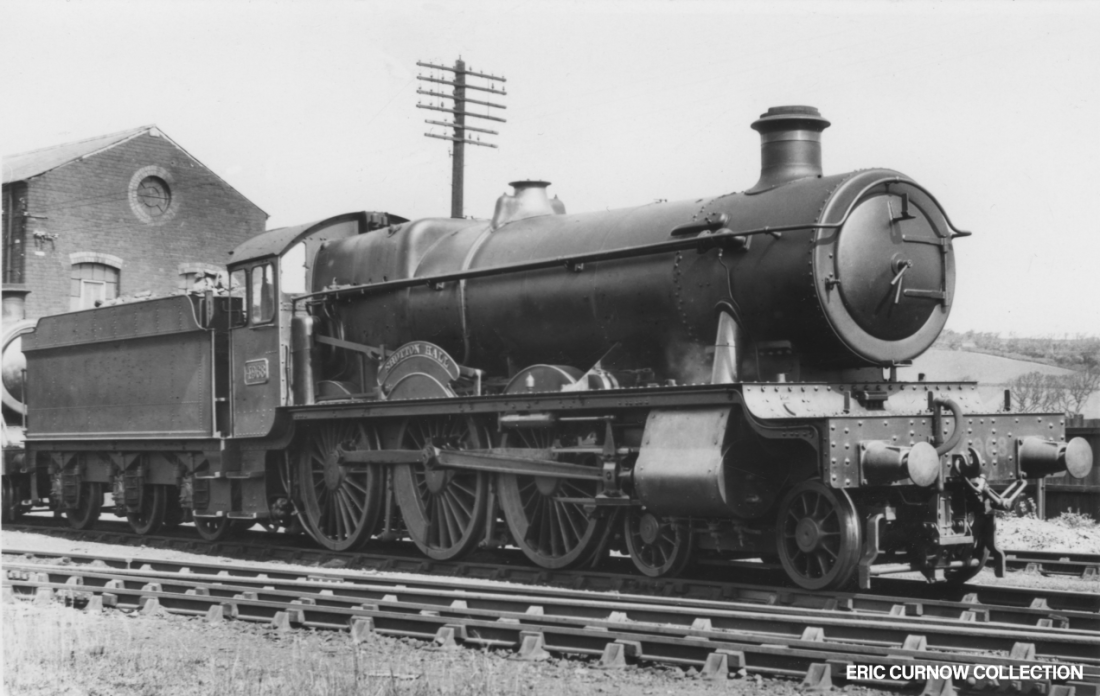
A sunny day finds 4968 “SHOTTON HALL” at Long Rock depot, coaled but without steam and as in the Fitting Shop road, probably awaiting attention. Behind the loco is a prominent telegraph pole loaded with insulators, and the calm scene towards the hills. Although the engine is in fine external finish, the numberplate looks slightly “out of true” – the first such fault I’ve ever noticed. #####AY01-LRK-s4968-PARKD
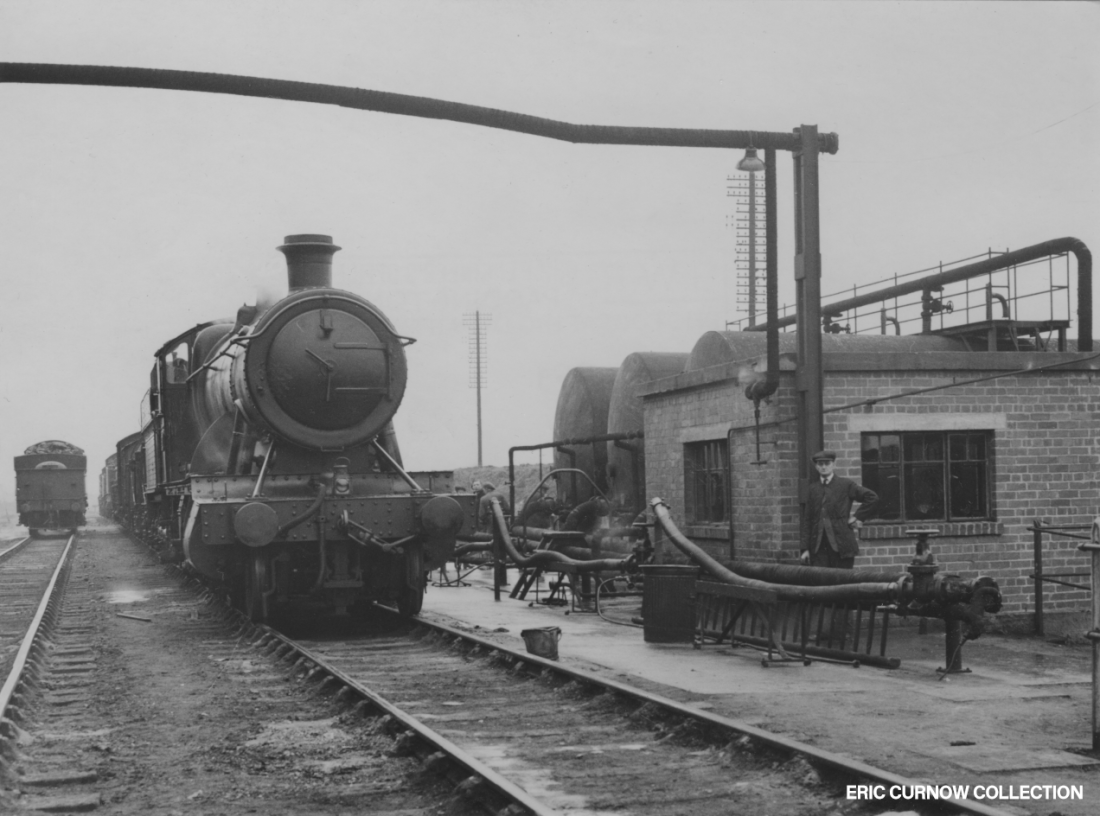
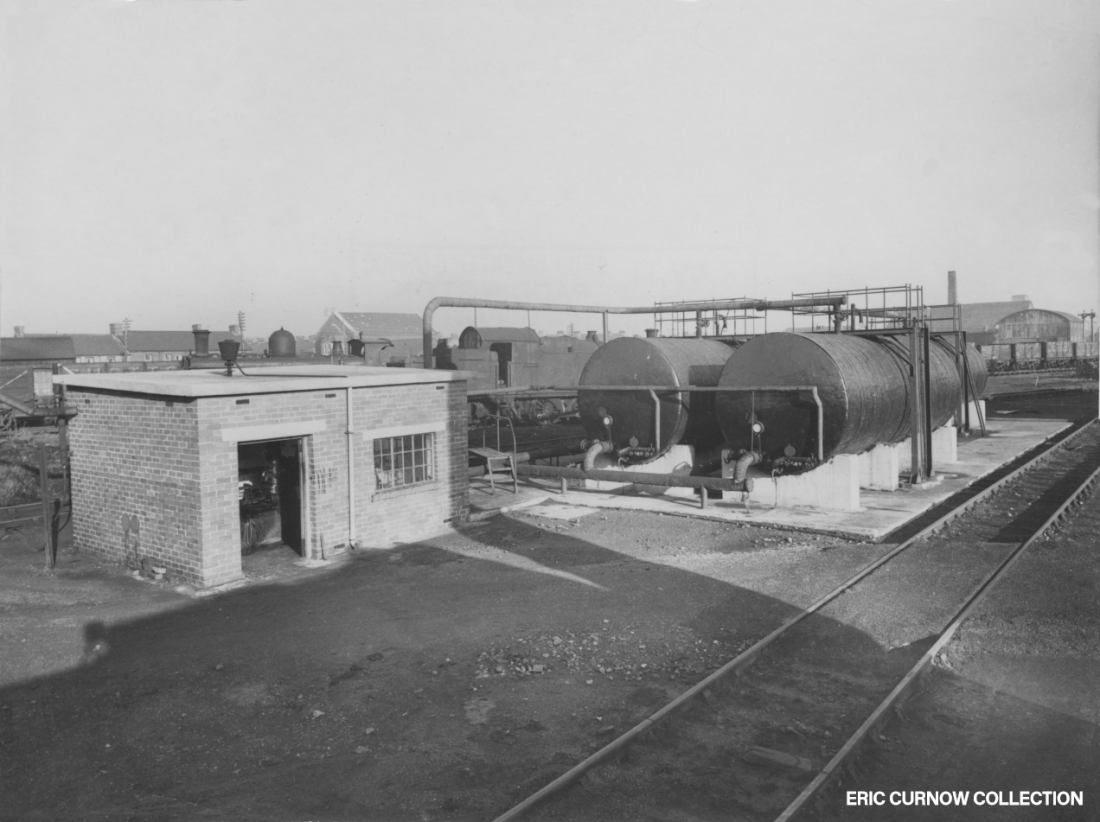
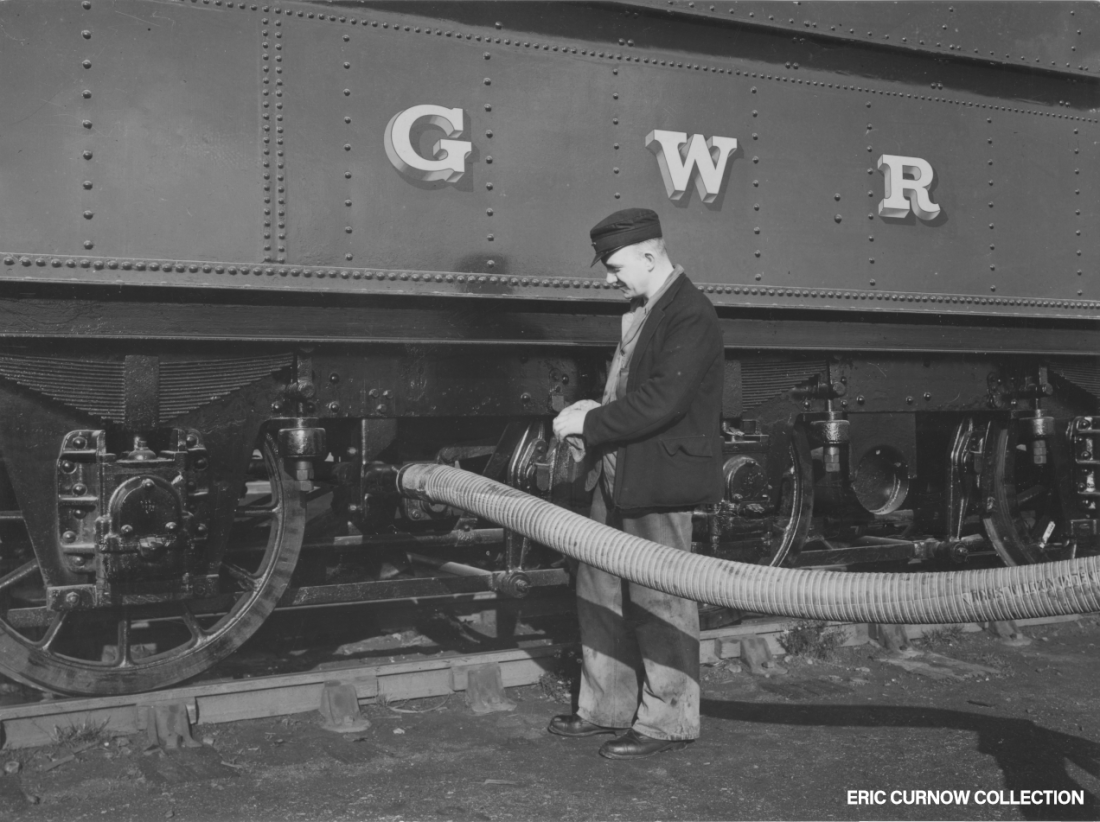
3 Official GWR images of Oil Fired Locomotive facilities in South Wales. One is marked Llanelly, one Severn Tunnel Junction and the last has no location. All measure 6 x 8ins, two are stamped on the back GWR Chief Engineers Office Paddington, and the other GWR Drawing Office Swindon (and dated 1946). Oil firing was successful, but not eventually adopted. 46####A01-STJ-s4968-FUELG
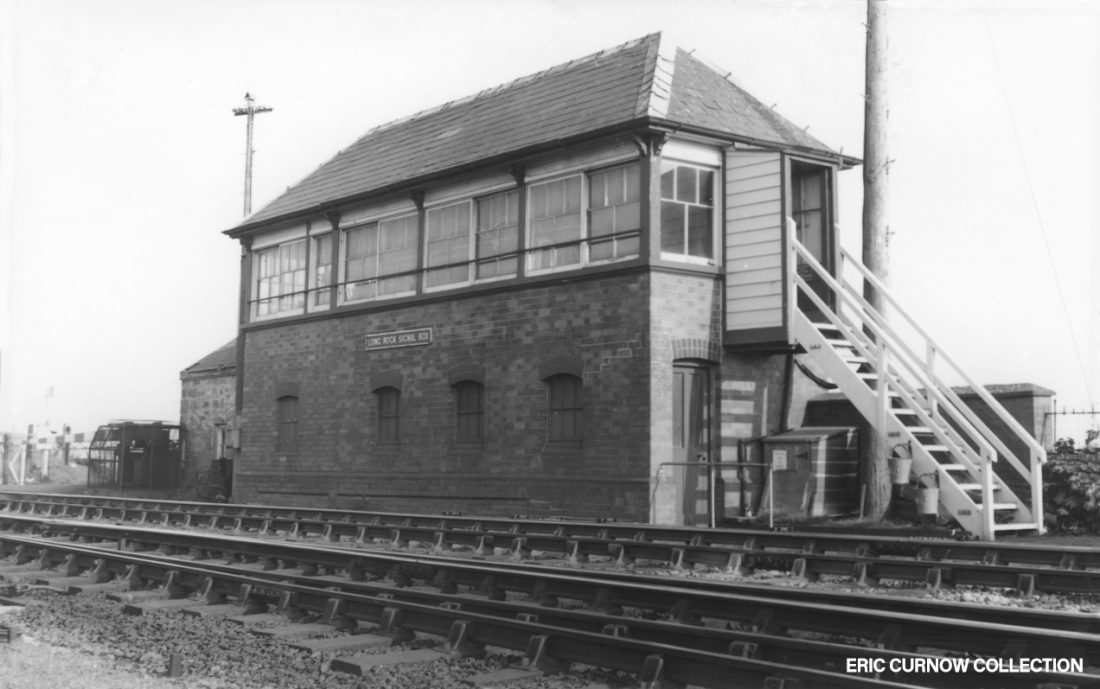
Long Rock Signal Box in the early 1960s after the crossing gates had been replaced by lifting barriers. The paintwork has been recently attended to, and although the building is old and “tired”, it seems quite serviceable – unlike the ancillary building behind to its left. It’s width corresponds to the number of levers it had, watching over the depot and main line. 6####IZ01-LRK-S_BOX-VI_SE
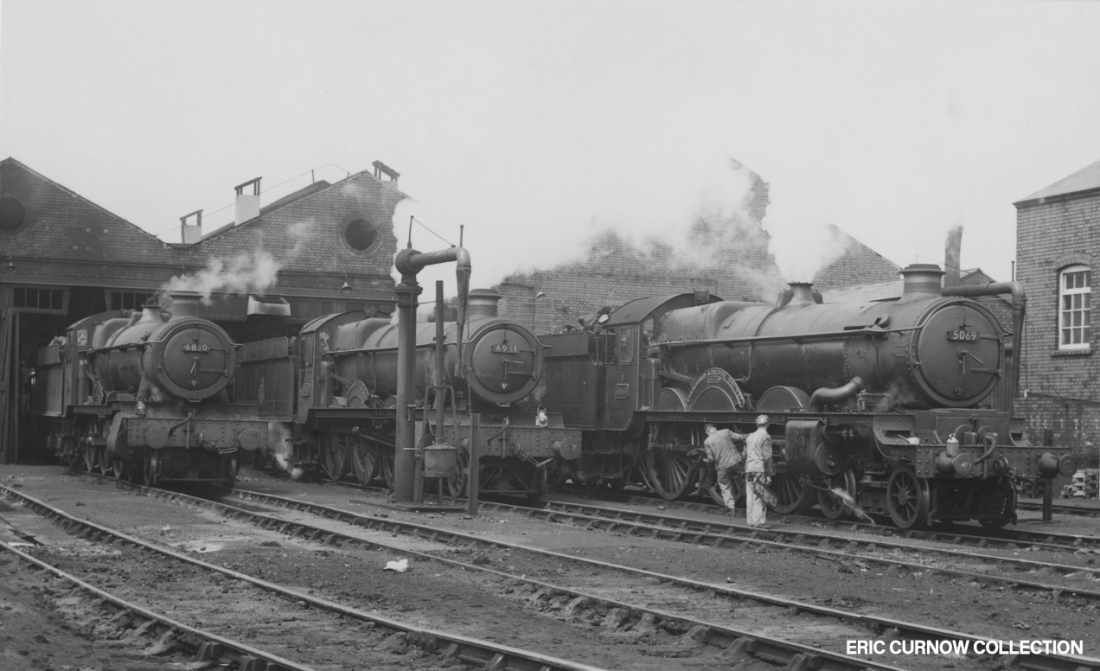
In this sharp and carefully composed picture, a locoman kicks the motion of Castle 5069 “ISAMBARD KINGDOM BRUNEL” as his colleague with him watches with a ‘NOT TO BE MOVED’ sign in his hand. Beside them are 6830 “BUCKINHILL GRANGE” and 6931 “ALDBOROUGH HALL” – the three locos’ steam hiding the depot building behind them. Copyright: J H Aston. 6####IY22-LRK=sLCOS-PARKD
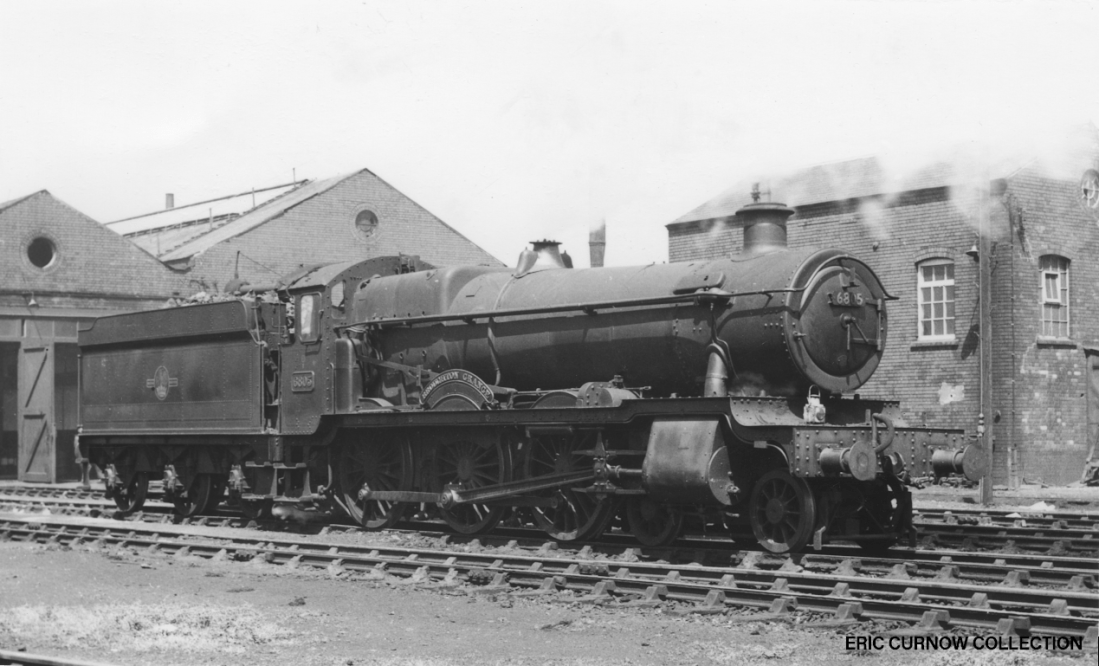
6805 “BROUGHTON GRANGE” sparkles in the sun before the sheds at Long Rock depot, ready for service. Penzance had a reputation at this period for well-finished locomotives, and the up Cornish Riviera Express usually had a buffed-up ‘Castle ‘ at its head – it was even said a withdrawn Grange was cleaned up to this standard even though it was withdrawn and destined for scrap. 6####IY21-LRK=s6805-PARKD
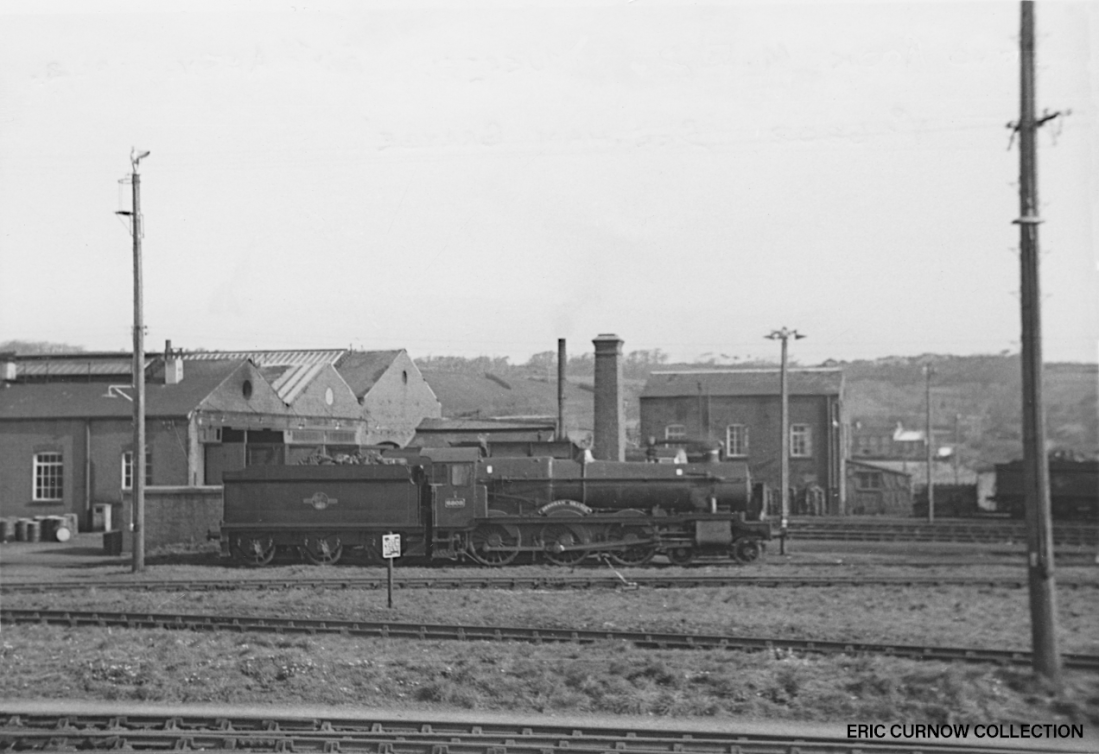
Parked on the oil tanker road at Long Rock depot is 6808 “BEENHAM GRANGE” on 24th April 1962. Behind it is a ‘Warship Class loco, the sanding hut, its chimney, water crane and worn brake blocks stacked before the Pump House. The roof of the diesel shed is being replaced and the smoke hole has been bricked up. A warning notice is before the engine on the turntable road. 620424A01-LRK-s6808-PARKD
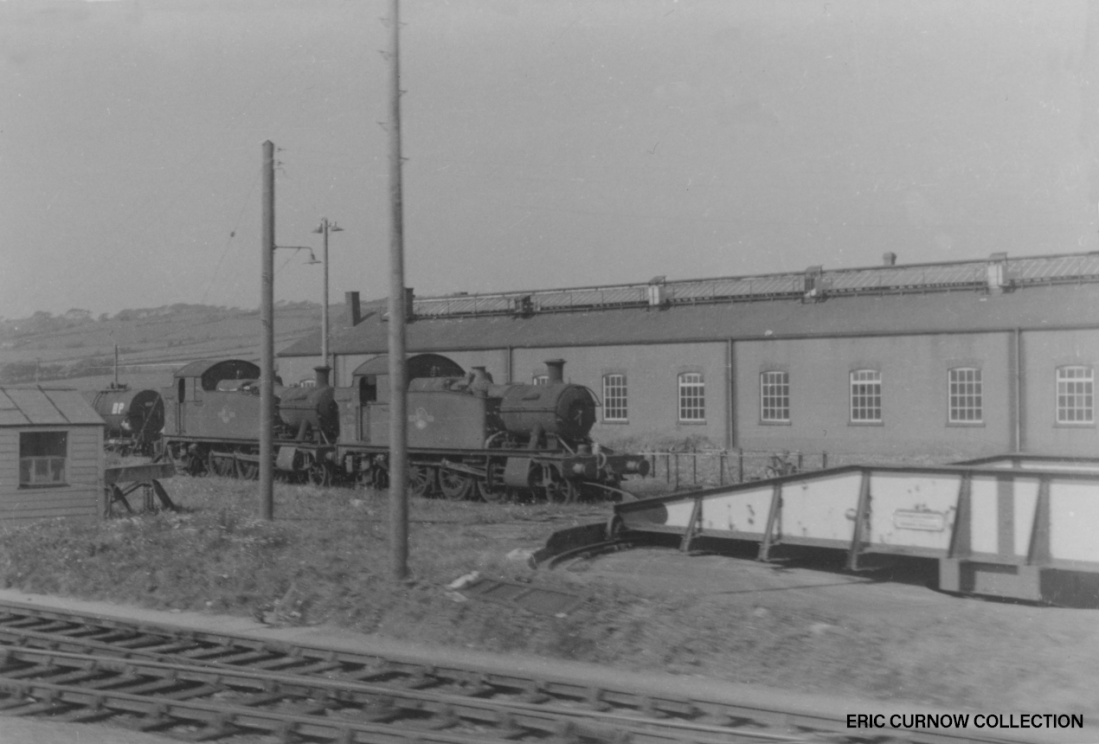
Numberless 5537 and 5562 are out of use at Long Rock depot, close to the turntable and beside a roped-off walkway beyond them. A set of stop blocks from a short spur off the turntable is still in situ, beside them and a shunters’ hut that has a window wide open for ventilation. The depot roof has several different types of extractor fans, none of which presumably worked well. 6####IY19-LRK-S_LCO-PARKD
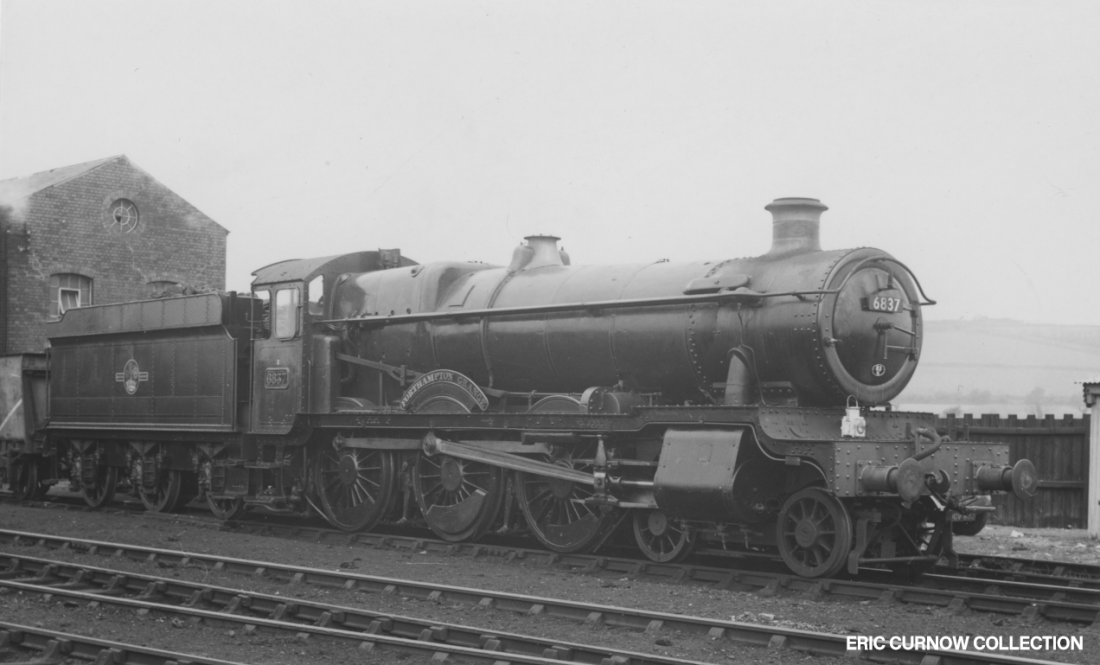
A mist drifts over 6837 ‘NORTHAMPTON GRANGE’, in A1 condition, parked before the commonly positioned mineral wagon on the Firring Bay road at its home Long Rock depot of 83G, as displayed by the oval shed plate on its front end. The wooden palisade fence is clearly discernable before it with the edge of the stores building to the right, but the hillside beyond is indestinct. 6####IY18-LRK=s6837-PARKD
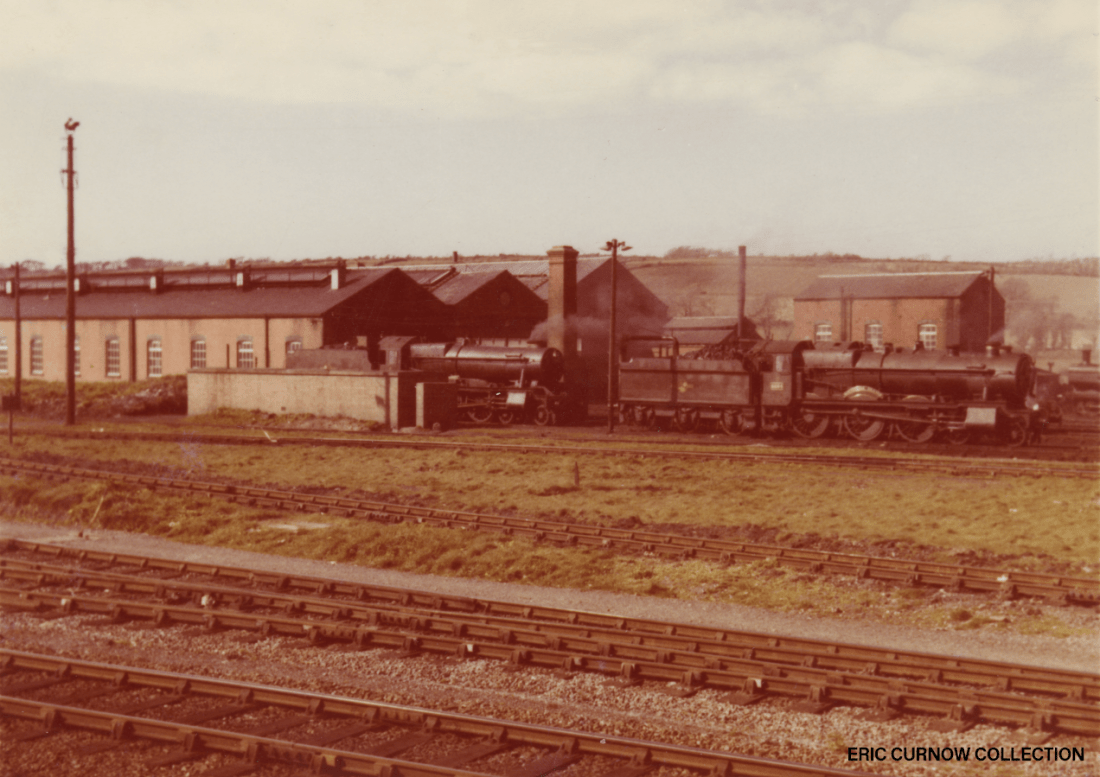
This is the clearest view I’ve seen of what I take to be an air raid shelter at Long Rock depot, demolished before my first visit. Among the locomotives present, 6864 “DYMOCK GRANGE” and a “County Class’ loco smoke away as a south easterly wind blows their exhaust away. A pile of debris to the west of the shelter suggests levelling of the site before building. 6####IY17-LRK-S_LCO-PARKD
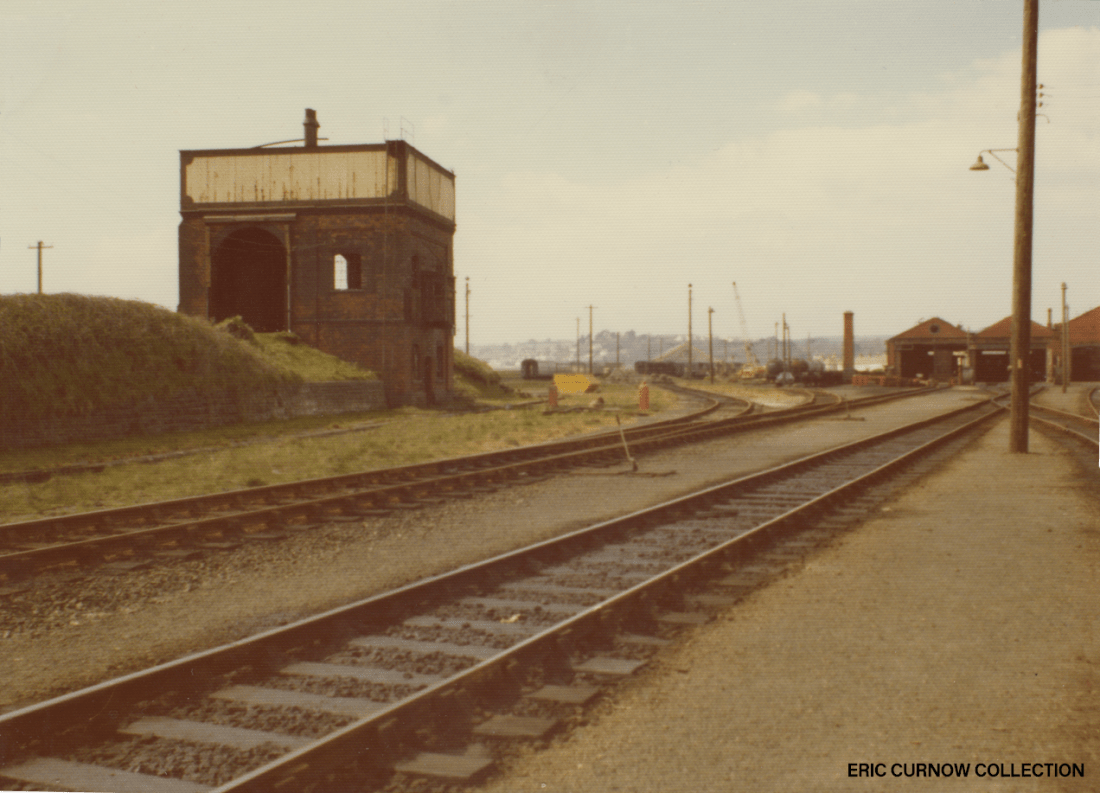
Part of the curved stantion above the Water Tank has been removed, there is a crane in the background, and nearby are gas bottles for cutting metal and a skip. The depot building looks empty and forlorn, though doubtless locomotives were still visiting as there are still fuel tankers, and oil drums not far away, and no temporary access track runs across the other side of the mound. 7604##A02-LRK-L_SHD-VI__W
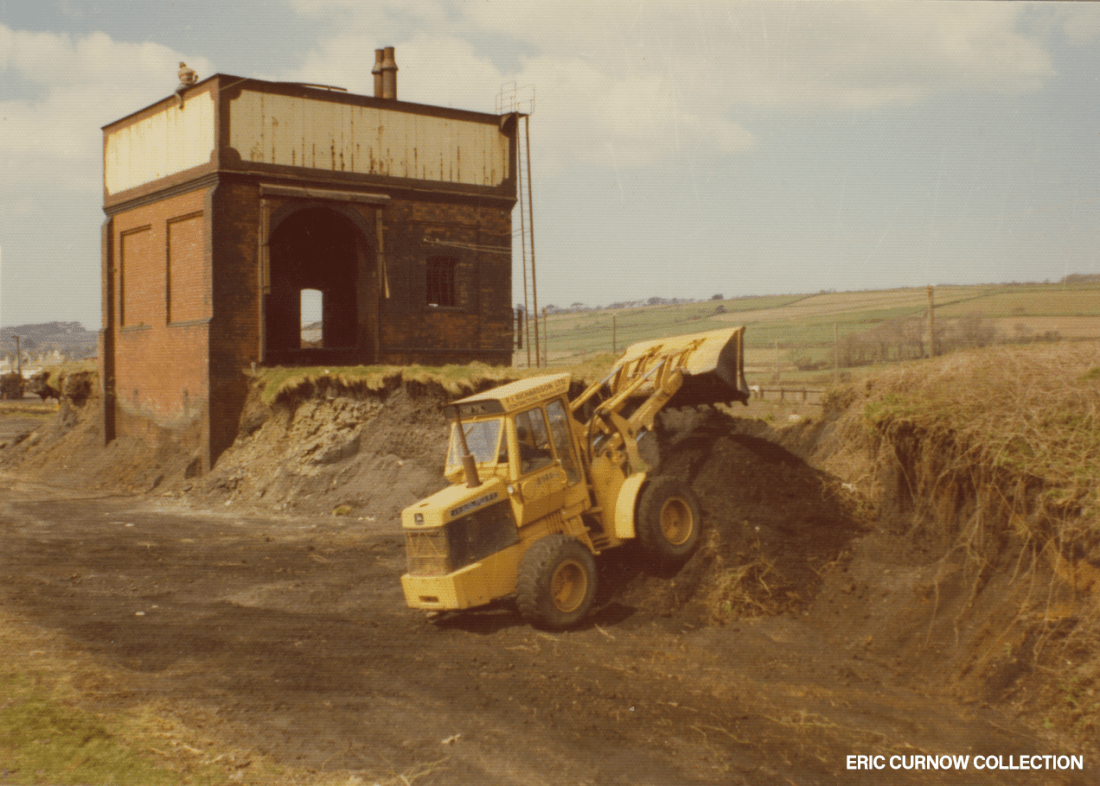
A workman sits precariously on the Water Tank wall, cutting stantions prior to demolition while a digger continues to gouge away at the access road mound beside it. I had often wondered what was below grass level, and was a bit surprised that it was only earth, though the material closest to the building seems to consist of something more substantial – possibly rubble. 7604##A01-LRK-DIGGR-WORKG
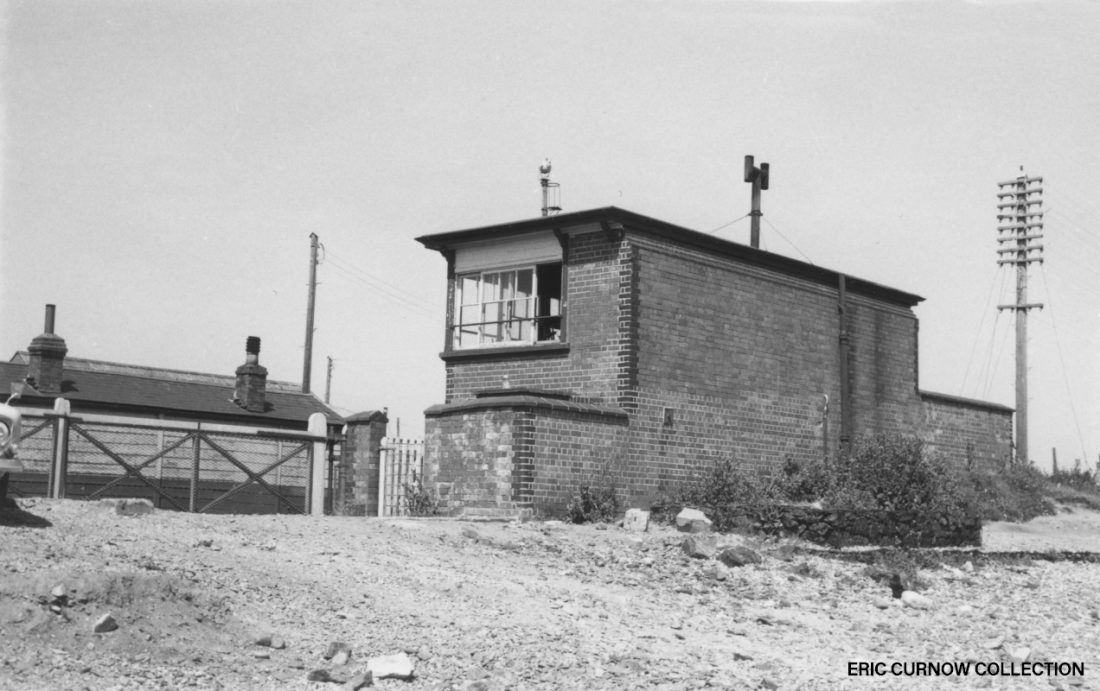
The area behind Ponsandane Signal Box was always “messy”, with uneven ground, loose rocks, the foundations of previous buildings and former access arrangements – including a World War 2 machine gun emplacement. However, the ‘Box’ made a convenient reference point on the long sinuous journey to Long Rock, and was certainly useful in deciding change of route home. 6####IY16-PDN-S_BOX-VI__N
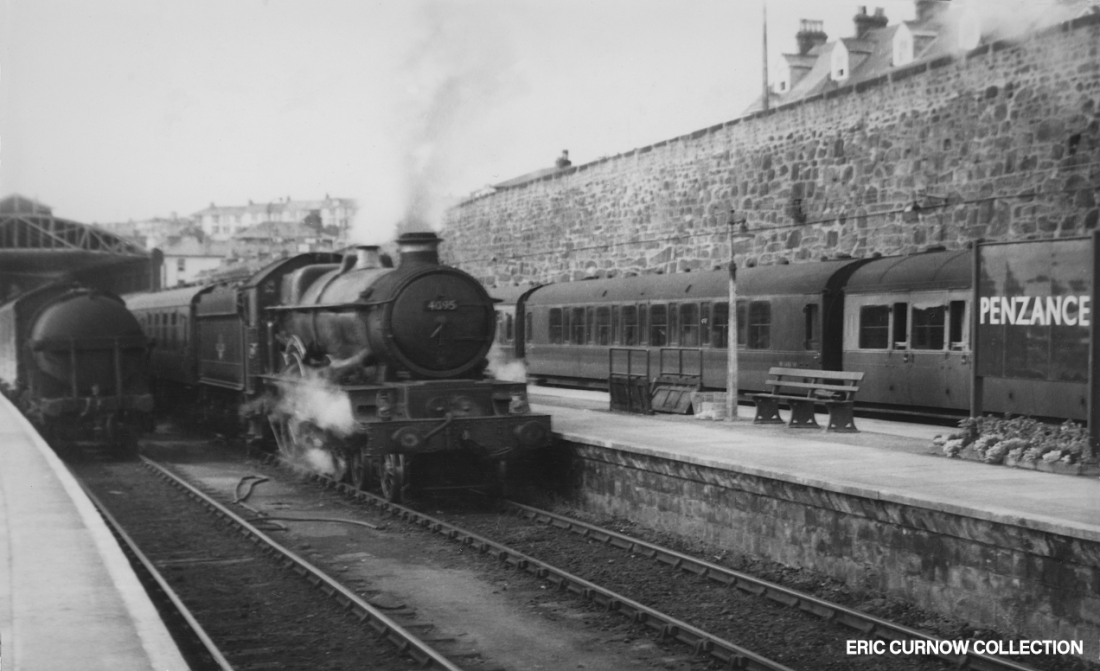
4095 “HARLECH CASTLE” powerfully chuffs away from Penzance Platform 2, between a van train with milk tank, and a rake of maroon coaches. To its left are railings where carriage final connection doors are stored, and the flower bed around the running-in board uprights show beautiful, well tended plants, that add to the welcoming and attractive condition of the station. 6####IY15-PNZ-s4095-PAS_U
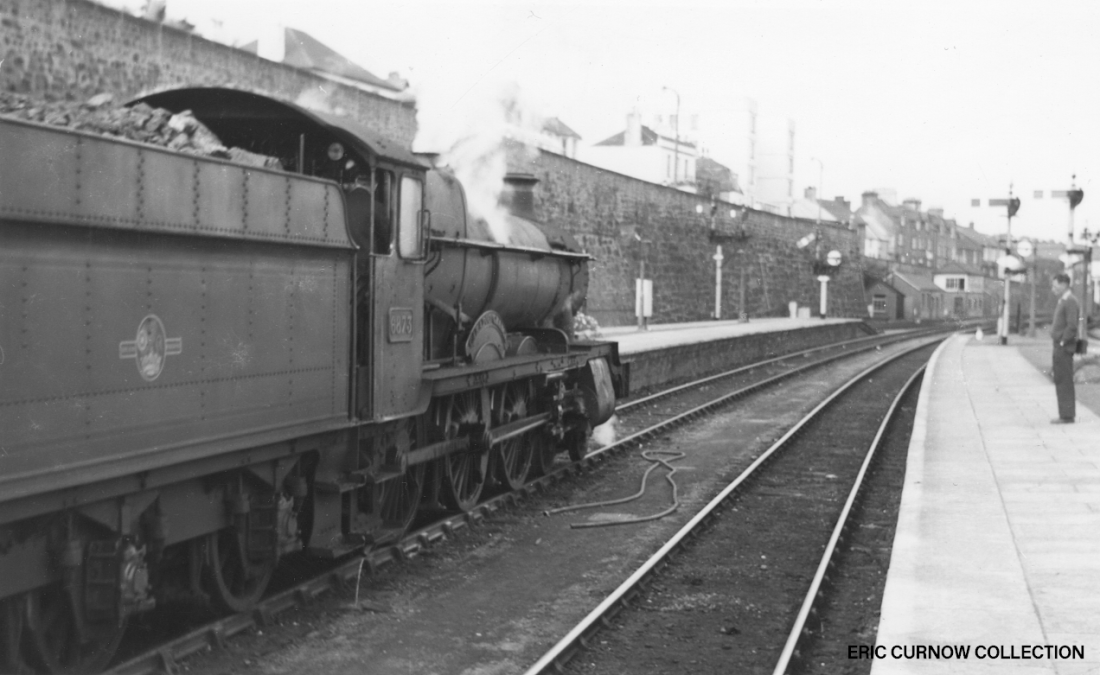
On a grey day, a rail enthusiast watches 6873 “CARADOC GRANGE”, with a clear road ahead signalled for it, about to move off from Platform 2 at Penzance Station. A water hose lies between the tracks and flowers proliferate in the running in board garden. Despite the grey weather, the Signalman has his side window wide open, and will no doubt carefully watch the train’s exit. 6####IY14-PNZ-s6873-PAS_U
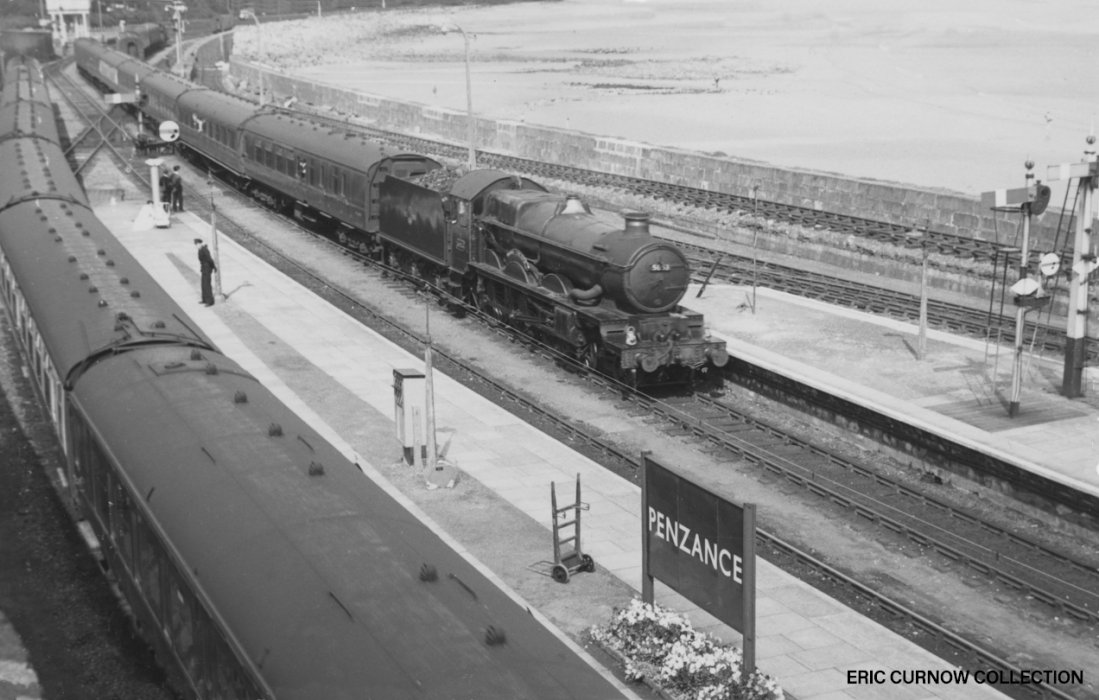 While station staff loiter for some particular reason at the end of Platform 2, 5053 “EARL CAIRNS” arrives with a down passenger service – a few people leaning from side windows towards the closest train, a long express headed by a ‘Warship’ diesel. The clam-like objects on carriage roofs are ventilators, and the various black lines access handles; the flat tops forming a walkway. 6####IY13-PNZ-s5053-PAS_D
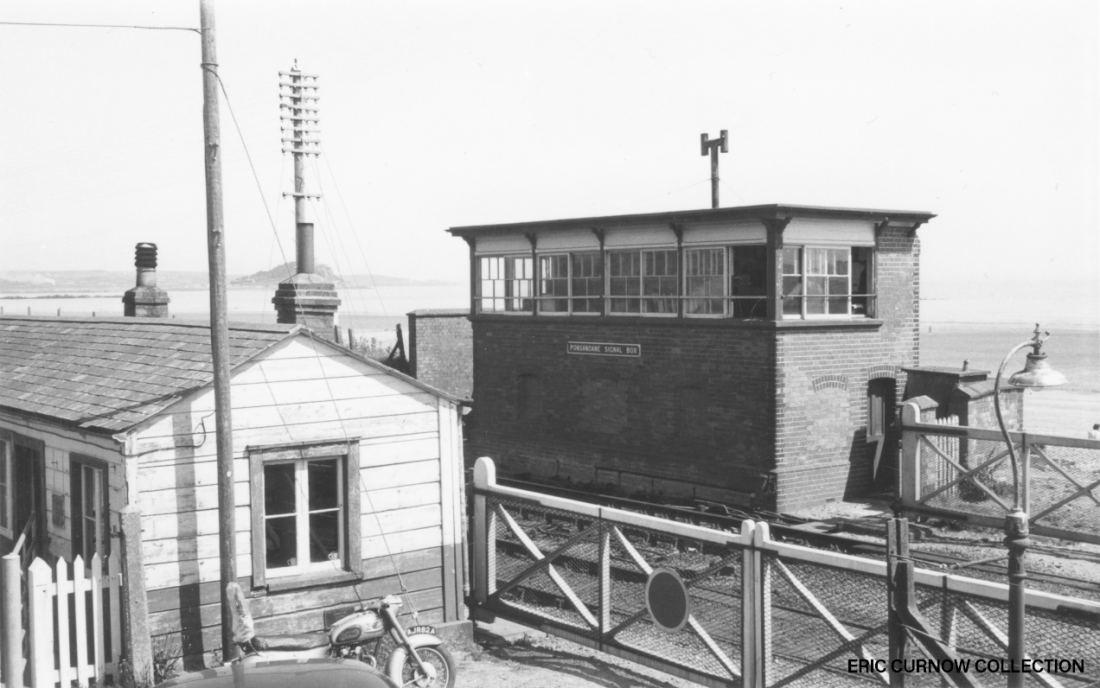
Ponsandane Signal Box was poorly positioned to appreciate the sun and beauty of Mounts Bay – possibly intentionally, so the Signalman wasn’t distracted from his duties(!) The original wooden gates are in evidence here, and alongside them a pedestrian gate, which the Signalman might be implored to open for a quick crossing if the approaching train was still some way off. 6####IY12-PDN-S_BOX-VI__S
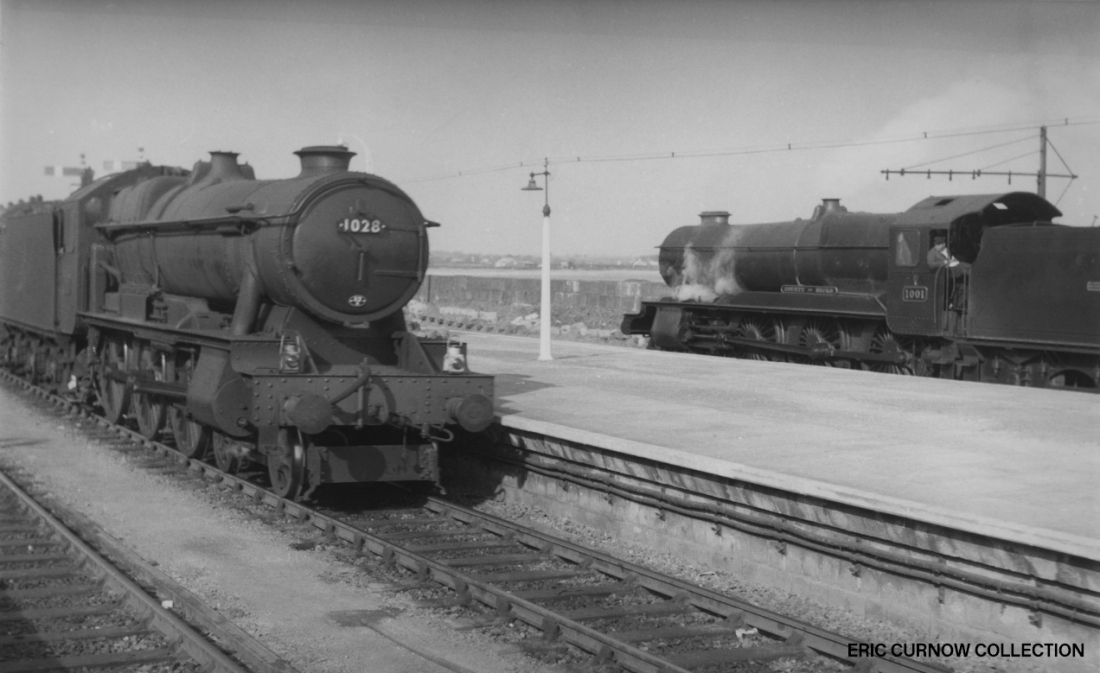
‘Counties’ meet at Penzance Station as 1028 “COUNTY OF WARWICK” passes 1001 “COUNTY OF BUCKS” – the former watched leisurely by the fireman of the latter. Double-chimneyed 1001 oozes steam: the sun is high, the cab roof shutters are open, and the beautiful cloud-less and wind-less scene is helped by the pristine platform and recently over-painted lamp post. 6####IY11-PNZ-LOCOS-PARKD
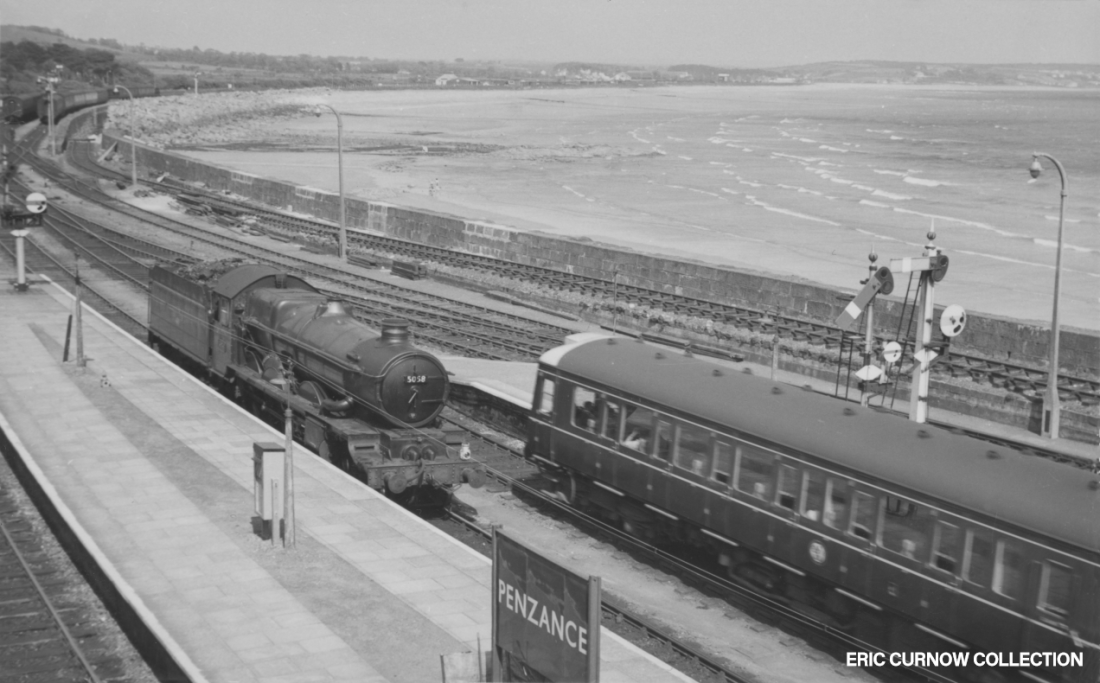
5058 “EARL OF CLANCARTY”, a Long Rock engine, waits at the end of Platform 2 to follow on to the depot after an outbound DMU leaves the platform beside it with an ‘up’ service. The box on stilts to its other side is a telephone box, and you will notice that wires run horizontally between lamp posts well above head height in connection with this, as well as power for the station lighting. 6####IY10-PNZ-LOCOS-PARKD
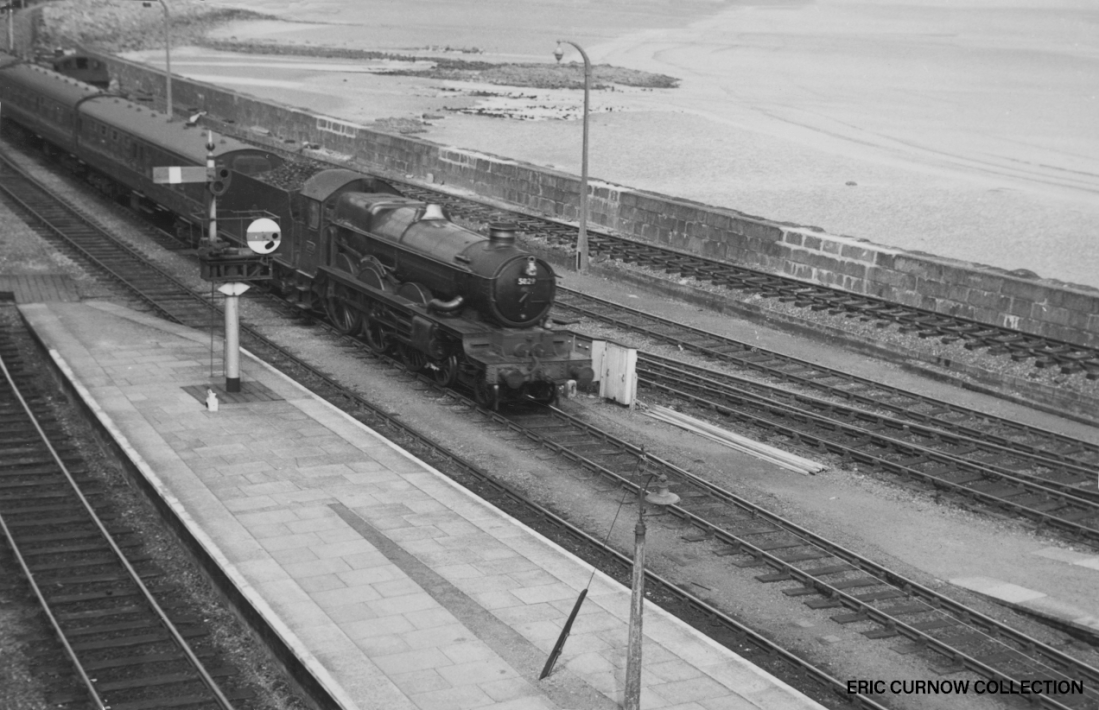
In a lifeless setting, gleaming 5029 “NUNNEY CASTLE” runs into Penzance Station hauling a down passenger service of maroon stock, with steam cut off and coasting the last part of its journey. The sea wall beside it has had blocks re-mortered at four locations, probably following storm damage, and the stantion of the lamp post array wisely has a board to stop people walking into it. 6####IY09-PNZ-s5029-PAD_D
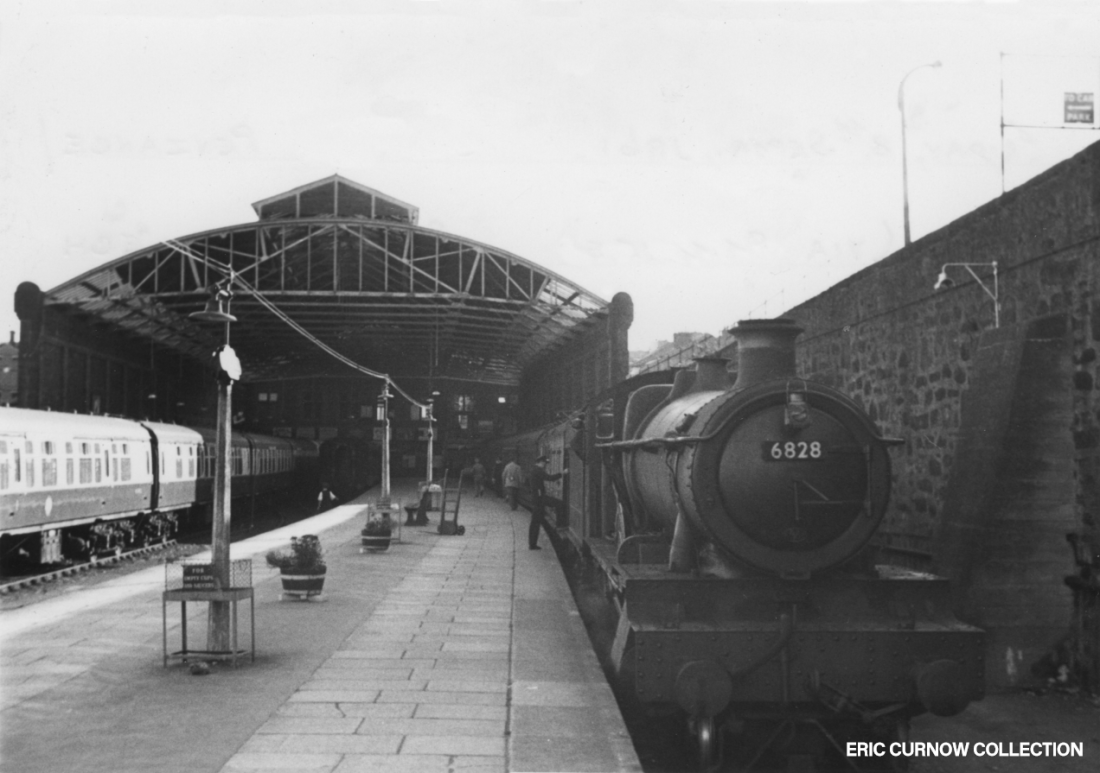
Possibly making a quick departure, the attention of the driver of 6828 “TRELLECH GRANGE” is on the rear of the loco as his fireman supervises its coupling to the carriages beyond – a few passengers make their way further back along the train as a porter waits with open door. A nice detail to this picture is the wire mesh bins for refreshment room empty cups by the lamp posts. 610908A01-PNZ-s6828-PAS_U
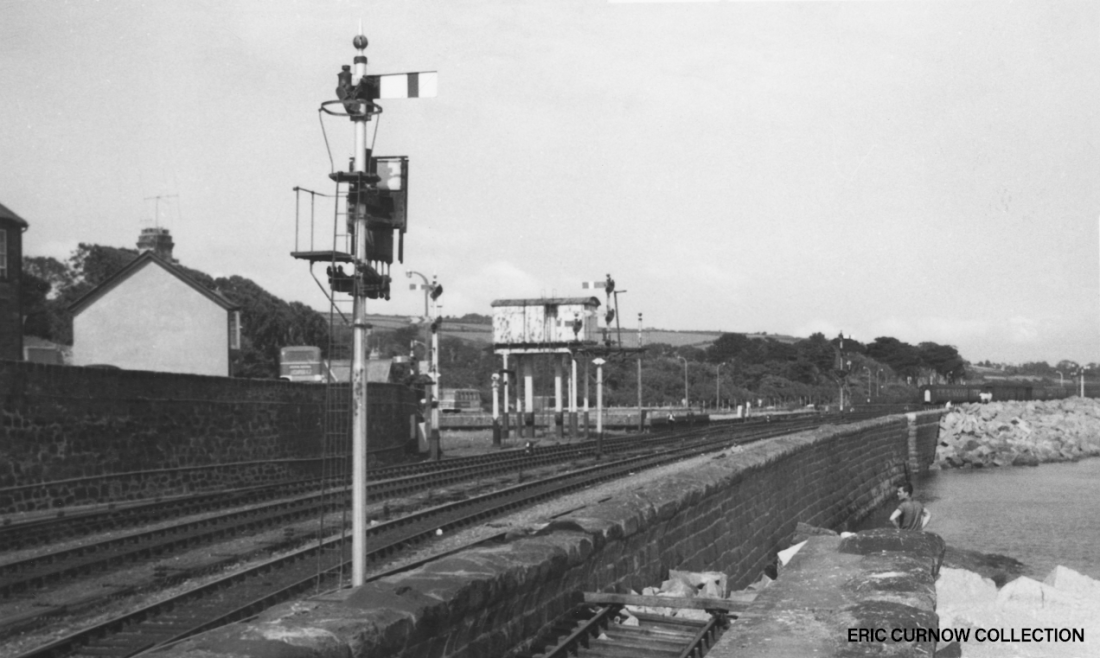
Beside the end of the sea wall crane road, terminated with a wooden sleeper, was a signal with interchangable boards that indicated where the movement off the siding would end up – PLTFM 2, or whatever. Beyond it across the track there are more signals, the Water Tank and a water crane – as a car came up the slope behind them, the nearest signal would dominate the view. 6####IY07-PNZ-SGNLS-VI__N
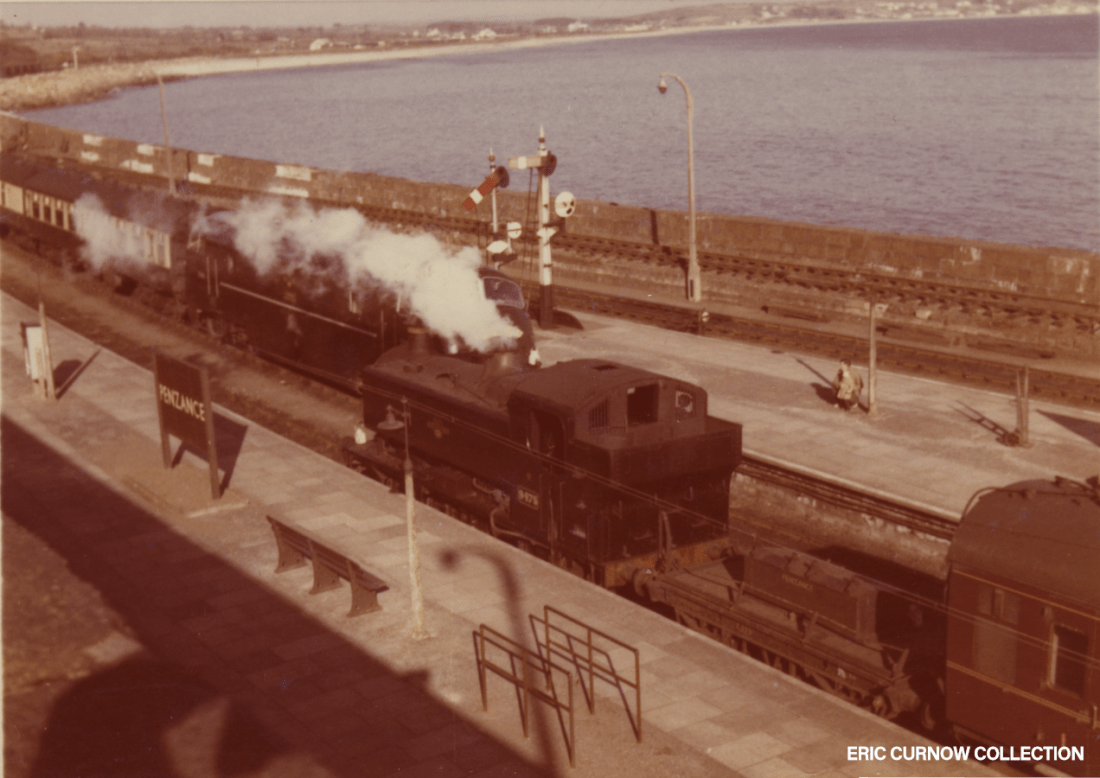
Steam from shunter 9475 partially obscures a ‘Warship Class” diesel, backing out chocolate and cream stock on a sunny early evening at Penzance Station, watched by a man and child. The station “chariot” for shunting staff accompanies it, and maroon stock that will be temporary stored elsewhere. The old and new signals beside it show faded and glossy paint finishes. 6####IY06-PNZ-s9475-SHNTG
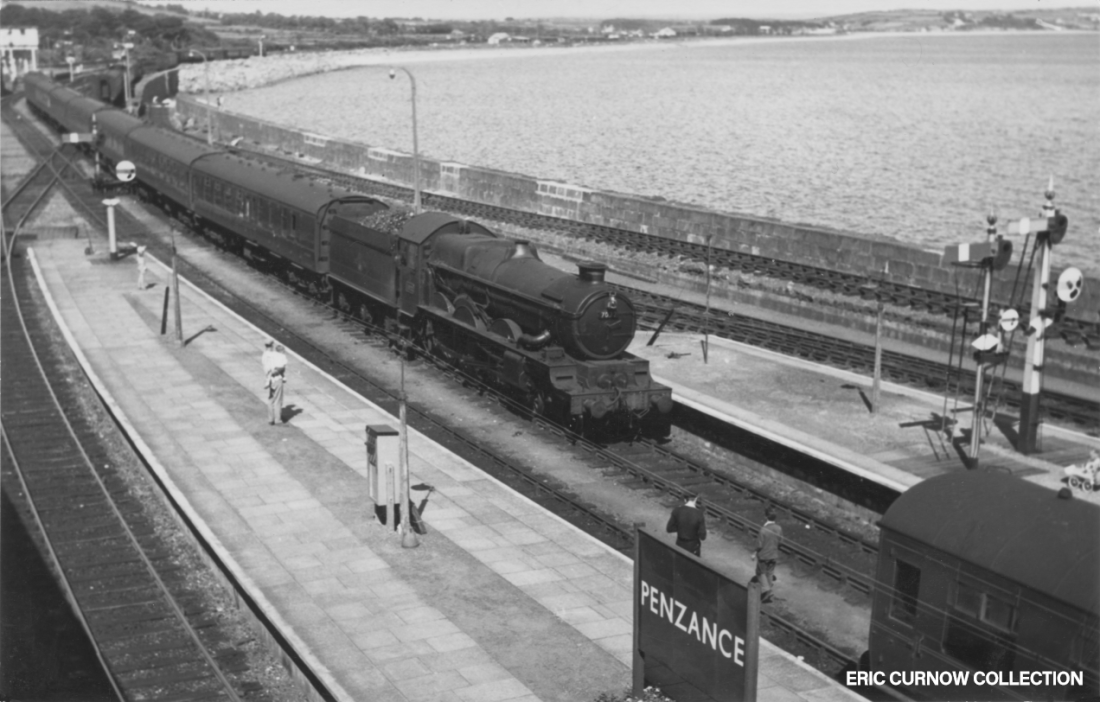
With the sun high overhead and watched by family members and staff, 7022 “HEREFORD CASTLE” with a seven coach maroon-finished train enters Platform 3 of Penzance Station. The platform has both a wooden and a tubular steel signal, suggesting a transition from the first to the latter; the difference in size of the shunting discs beside each can also be clearly seen. 6####IY05-PNZ-s7022-PAS_D
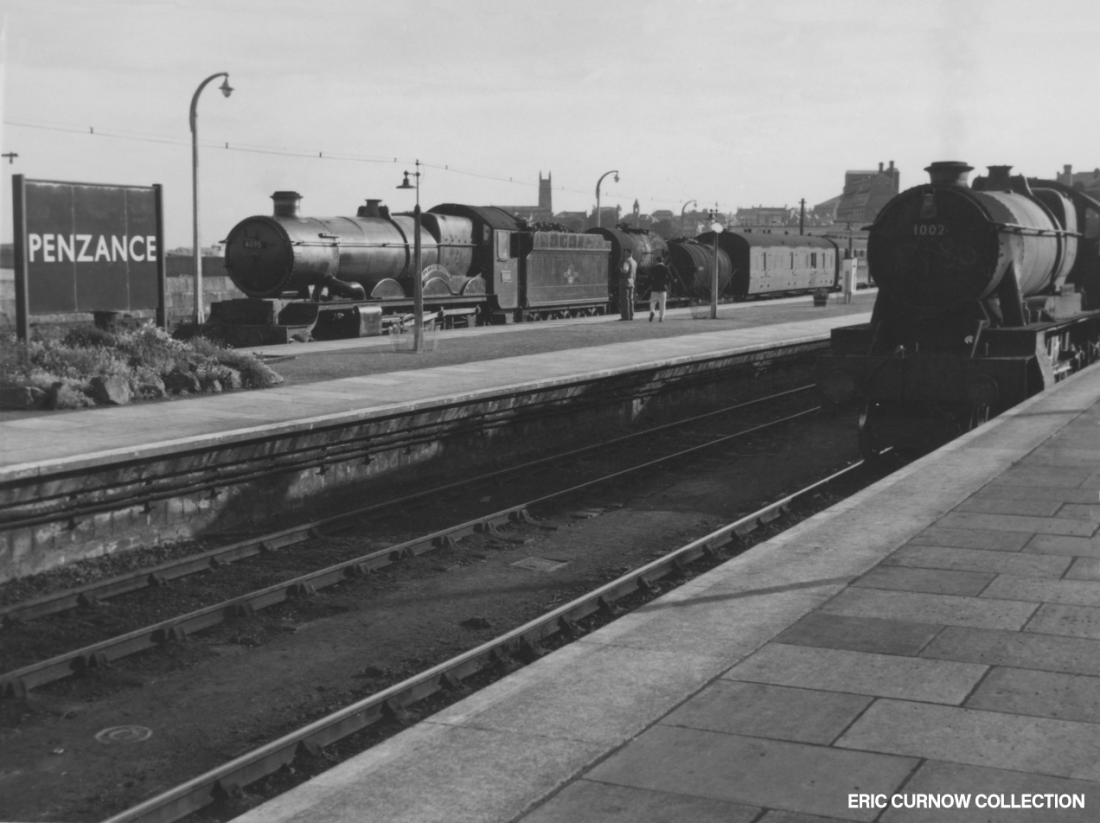
4095 “HARLECH CASTLE” catches the evening sun as it waits with a mixed ‘up’ service, its construct including a rather unusual tank before the normal milk tank, van and carriages. Opposite on Platform 2 is 1002 “COUNTY OF BERKS” – an indistinct service number chalked on its front end. Between the two trains, the three segments of the running in board can be clearly discerned. 6####IY04-PNZ-s4095-GDS_U
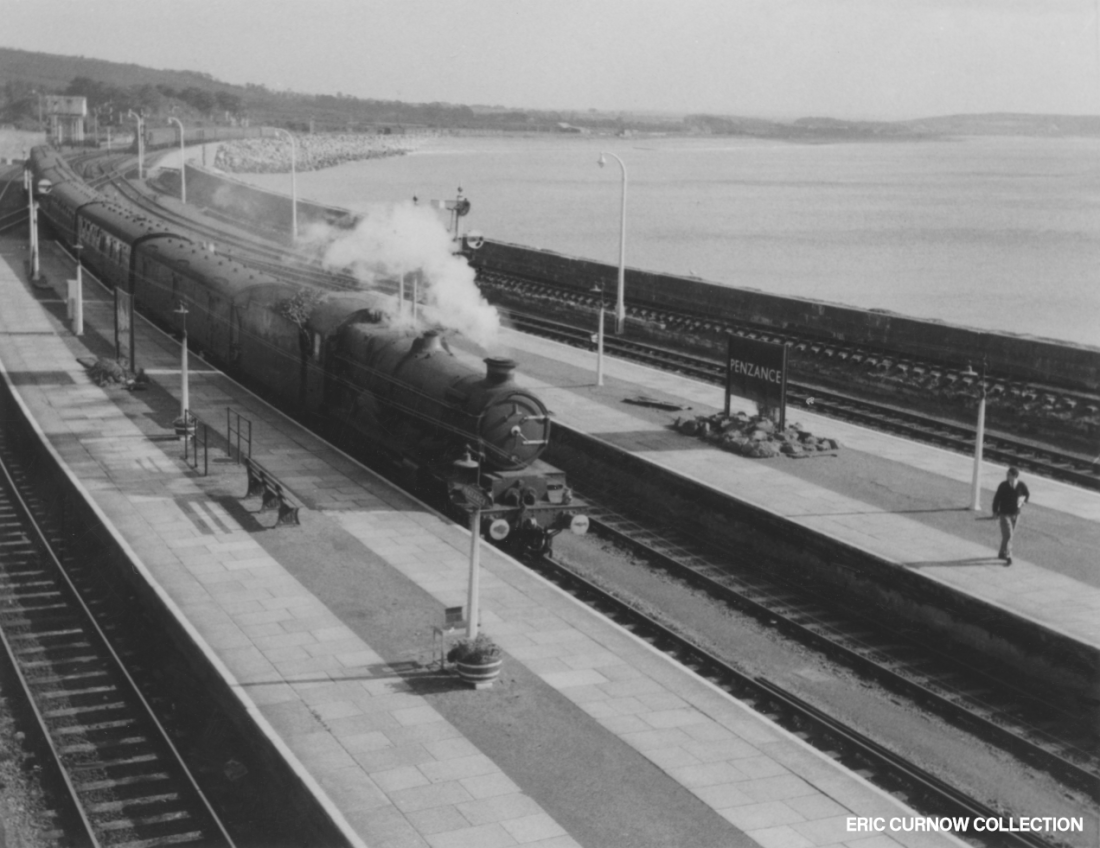
With shiny buffers, and possibly released from the Works too early as it lacks its smokebox numberplate, a ‘Castle’ Class locomotive slows as it enters Platform 2 of Penzance Station with a local passenger service. Around it, matching the calm sea, the Station is commendably clean and orderly, with the flower beds around the nameboard and tub by the lamp neatly attended to. 6####IY03-PNZ-S_LCO-PAS_D
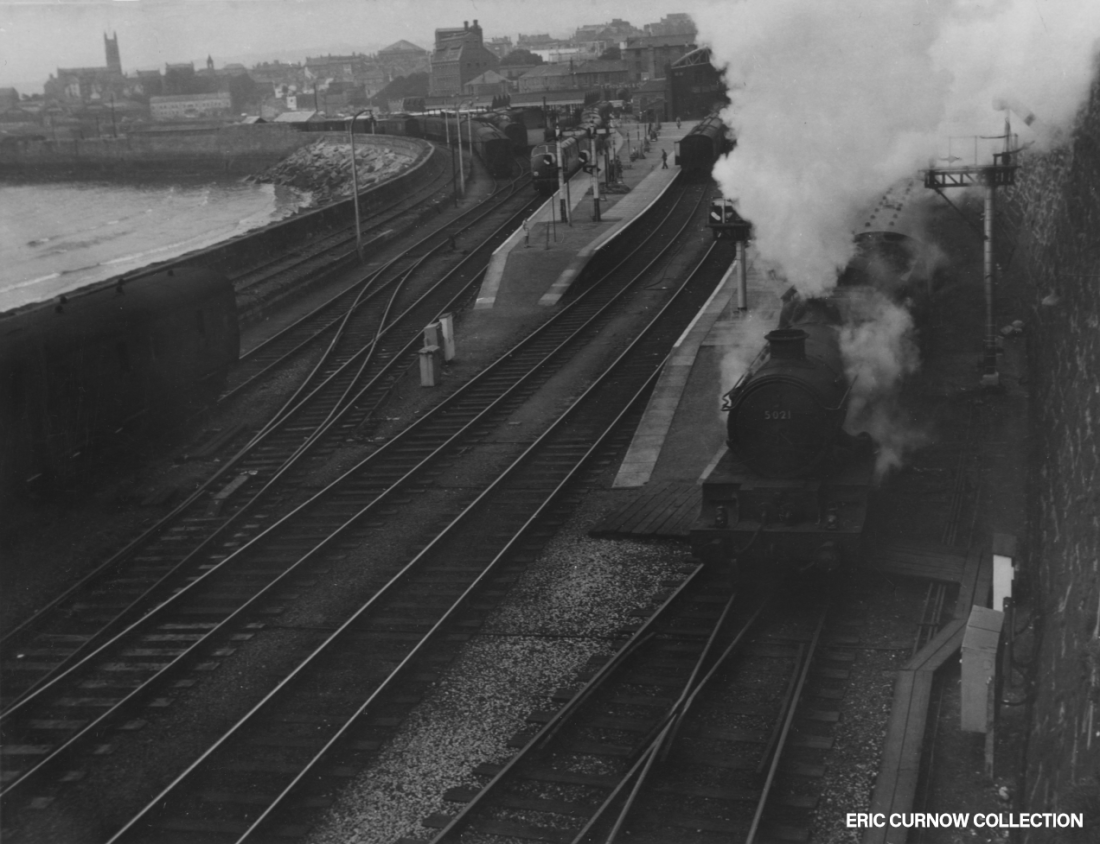
5021 “WHITTINGTON CASTLE” commences a passenger service eastwards, crossing the boardwalk at the end of Penzance’s Platform 1 while an early ‘Warship’ waits with a train of vans being filled from trolleys on Platform 4, to follow at some time in its wake. The station yard is filled with stock, and the isolated carriage to the left waits to be added to its appropriate service. 6####IY02-PNZ-s5021-PAS_U
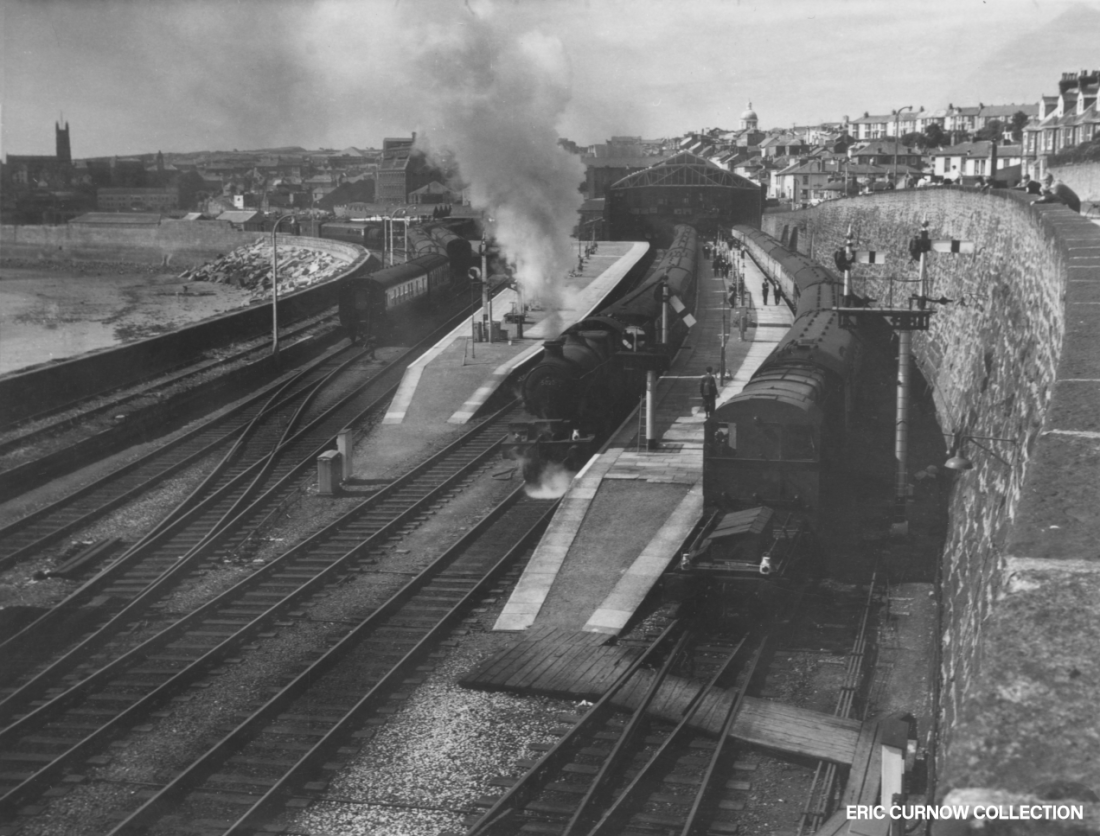
The pillar of steam shows power is being applied as 5021 “WHITTINGTON CASTLE” eases out of platform 2 at Penzance Station with a long passenger service – non-travellers turn and walk back down the platform to the station entrance. Beside it an 08 shunter and truck have brought in coaching stock – the scene being overlooked by many watchers on the station wall. 6####IY01-PNZ-s5021-PAS_U
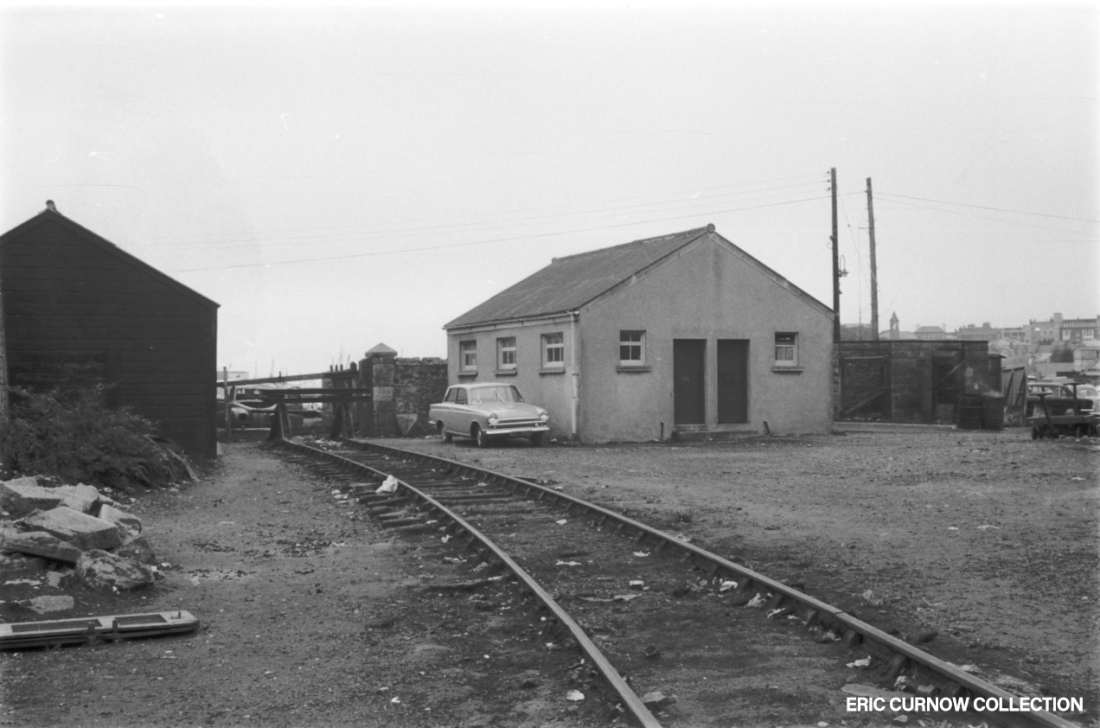
These buildings at the south western tip of the station yard were demolished shortly before my interest in railways began – replaced by a wall of pre-cast concrete uprights and slats, where the granite wall is shown here. The track here once ran onto Albert Pier, where embedded rail remains can still be seen. The main building seems to be a social area for station staff. 6####IX01-PNZ-BLDNG-VI_SW
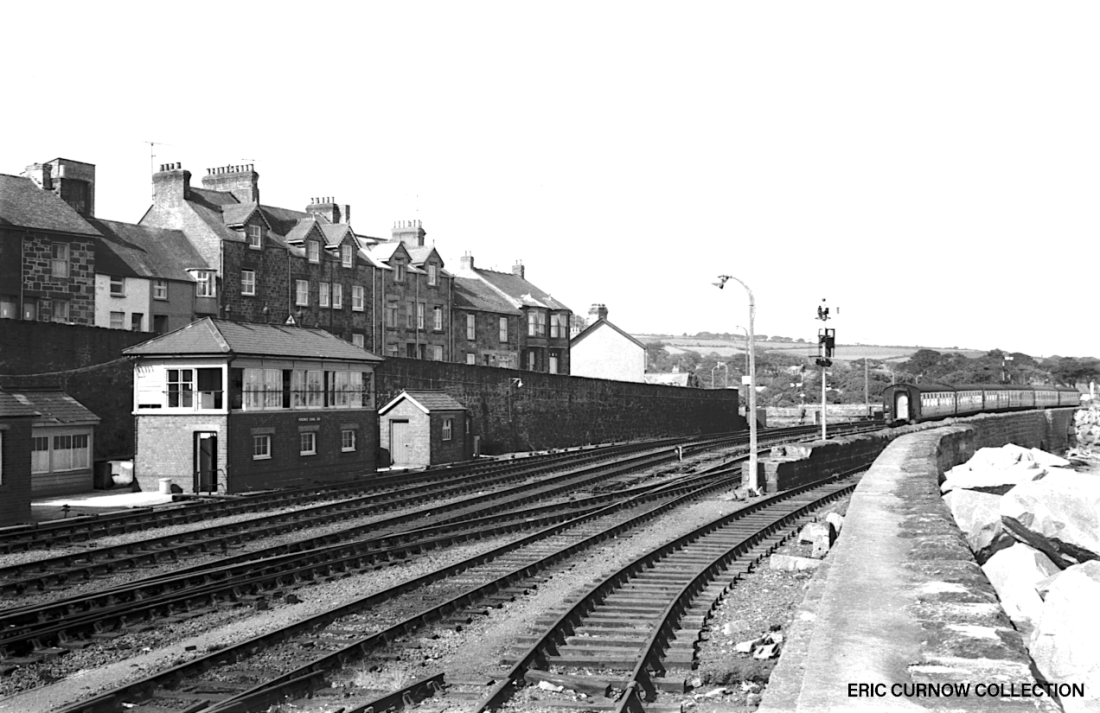
The windows of Penzance Signal Box are wide open for ventilation on a fine day of high cloud overlooking a tranquil scene between train movements. The box’s nameboard has not had its white surround reinstated after painting, something that always seemed to me to detract from its authentic GWR origin, and its entry door shows the side of a flight of steps to the first floor. 6########-PNZ-S_BOX-VI__N
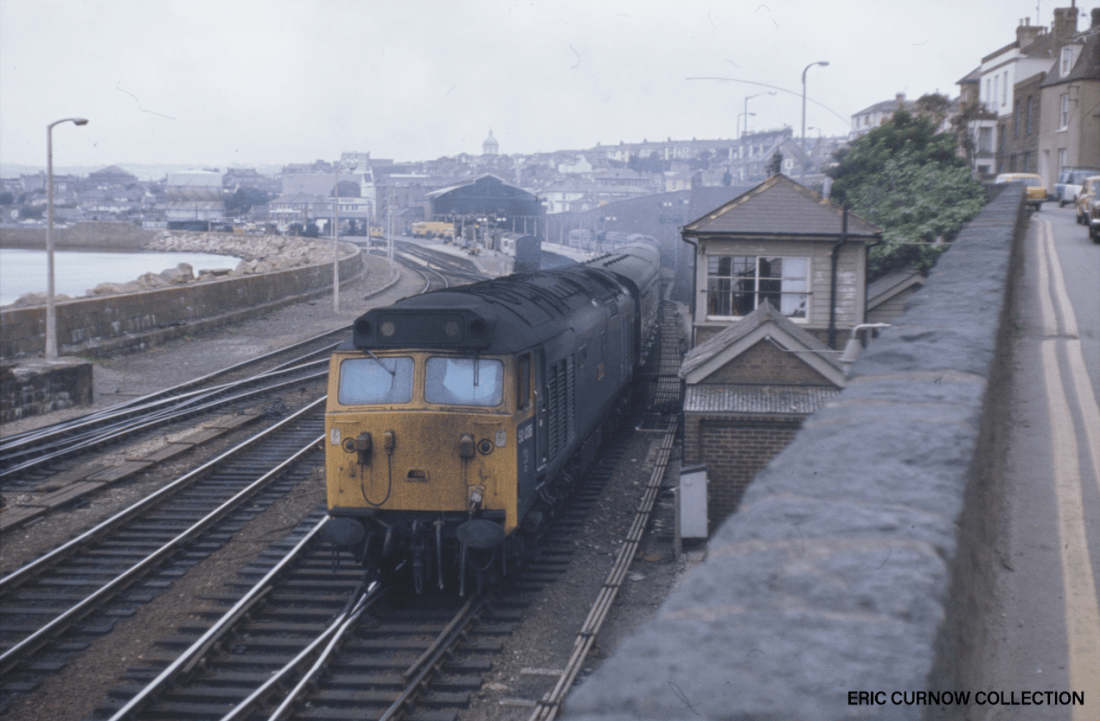
The photographer ‘dices with death’ as he presses himself against the wall to quickly take this image while the A30 traffic passes within feet, close by to his right. 50038 “Victorious” passes Penzance Signal Box, associated outbuildings and a tree, with an outbound train in the late 1970s, in rather unkempt condition(!) The sea wall line debris has been completely removed by this time. 7####HU01-PNZ-50036-PAS_U

Passengers make for the car park at Lelant Saltings Station – opened in the 70s as a “park and ride” facility to take road traffic away from St Ives – while a Swindon DMU in white and blue livery prepares to roll onwards up the slope to the main line at St Erth, The River Hayle estuary beside it, fringed here with gorse, is largelly untouched by development, and a magnet for waterfowl. 7####HT01-LEL-3XDMU-PAS_U
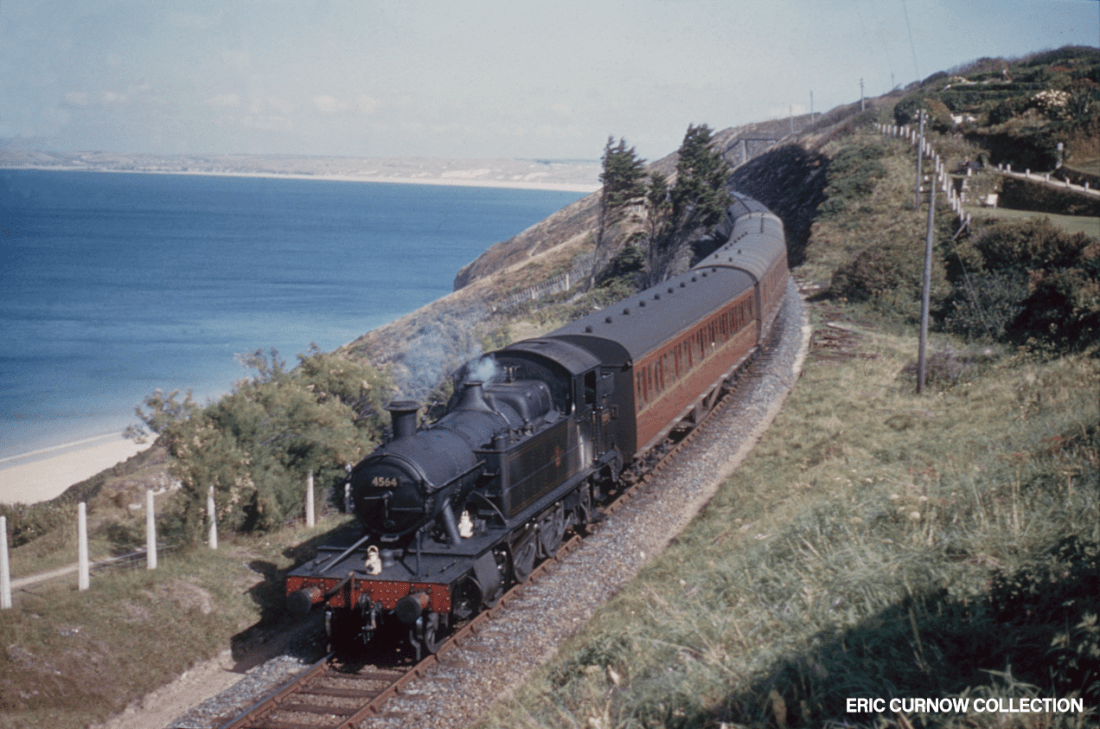
Apparently black, but actually with green side tanks, 4564 rolls down the gentle incline into Carbis Bay from the east with a 5-coach branch service to St Ives. Hazy blue sky, deep blue sea, and bright sandy beach – no wonder this line became the most dominant holiday image for the GWR / BR promotional departments – though the windswept trees also indicate another reality! 6109##A01-CBB-s4564-PAS_O
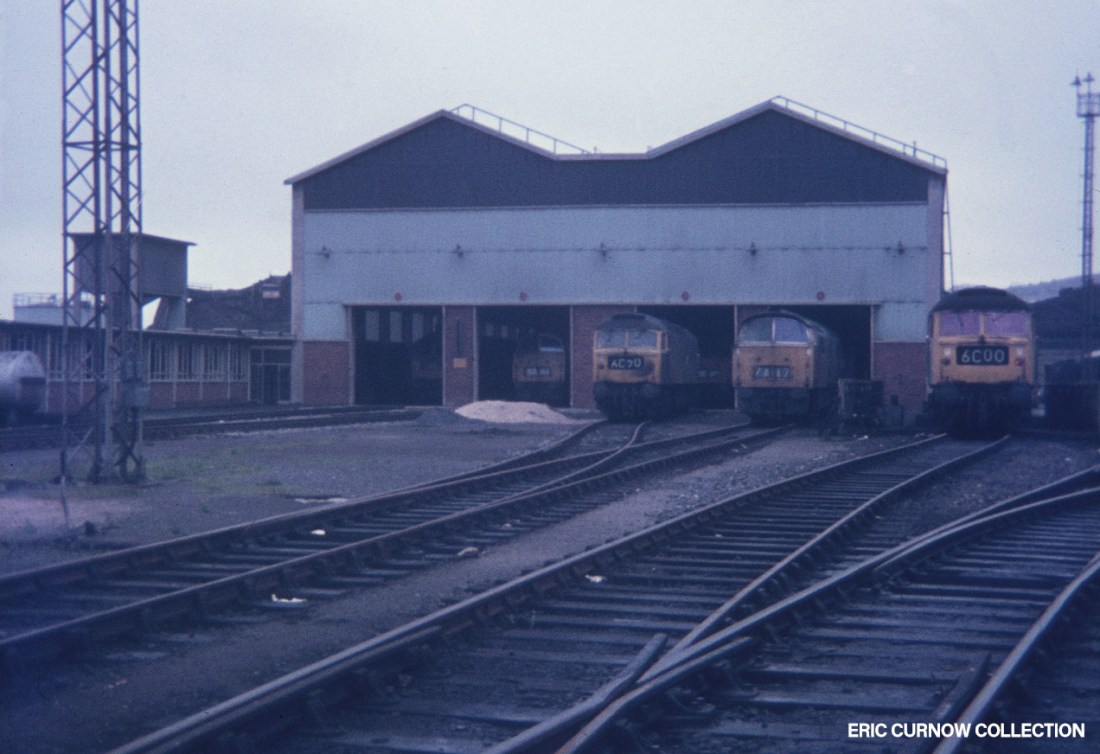
I only once made it to Landore depot, and the person in charge took pity on me as I’d travelled so far and let me wander around quickly as long as I didn’t overstay my welcome. Locos visiting Penzance sometimes had metal shedplates or Landore’s code (87A) stenciled by the cab doors, so I was intrigued by this Swansea location. This 1971 view shows Westerns and Class 47. 710829A01-LRE-D_LCO-PARKD

Two Class 22s are parked on the Ash Road beside the Coaling Tower at St Blazey depot in the early 1960s. Both are pretty similar in appearance, even down to the oil staining, and have grey roofs that have not yet been blackened with exhaust – which along with the glossy green suggests original livery. Behind them, the roofs of the half-roundhouse feature new exhaust extractors.6####IV01-BZY-D6312-PARKD
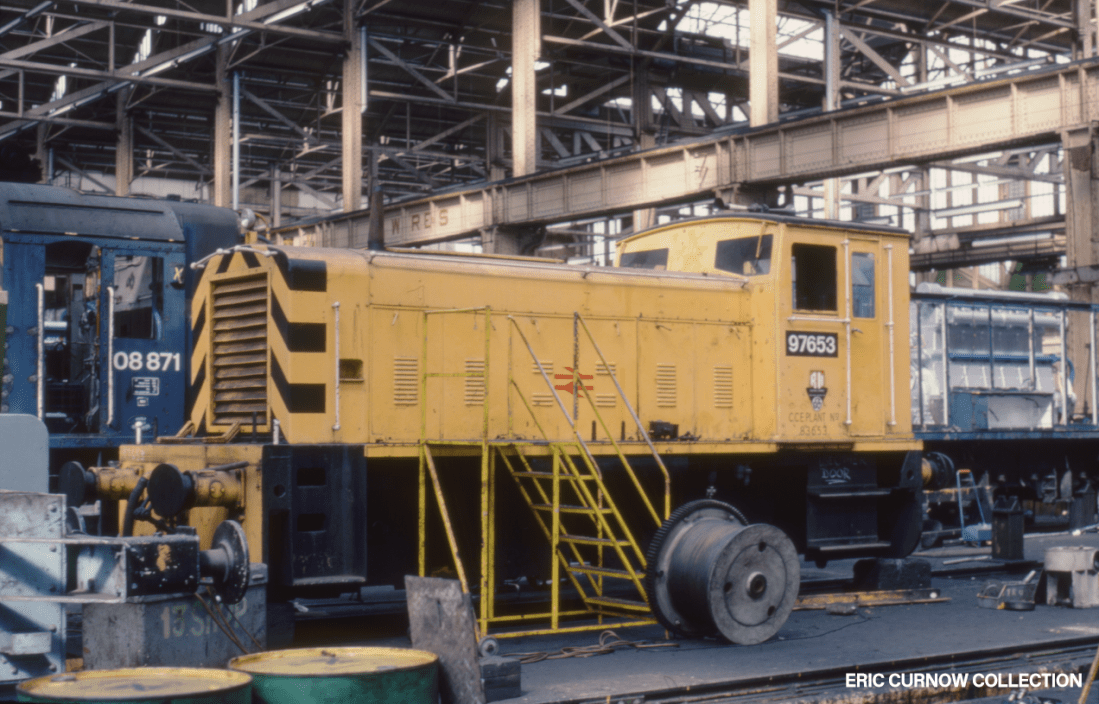 Ruston & Hornsby Permanent Way Machine 97653 is in Swindon Works for attention in April 1983. This loco was based at Taunton and Reading for long periods of its life, and has a dark panel behind the lettering as, being white, the numerals wouldn’t show up on the yellow livery. The writing below the RH loco says, “CCE PLANT No. 83635”, and 08871 is in the background. 8304##A01-SWW-97653-REPAR
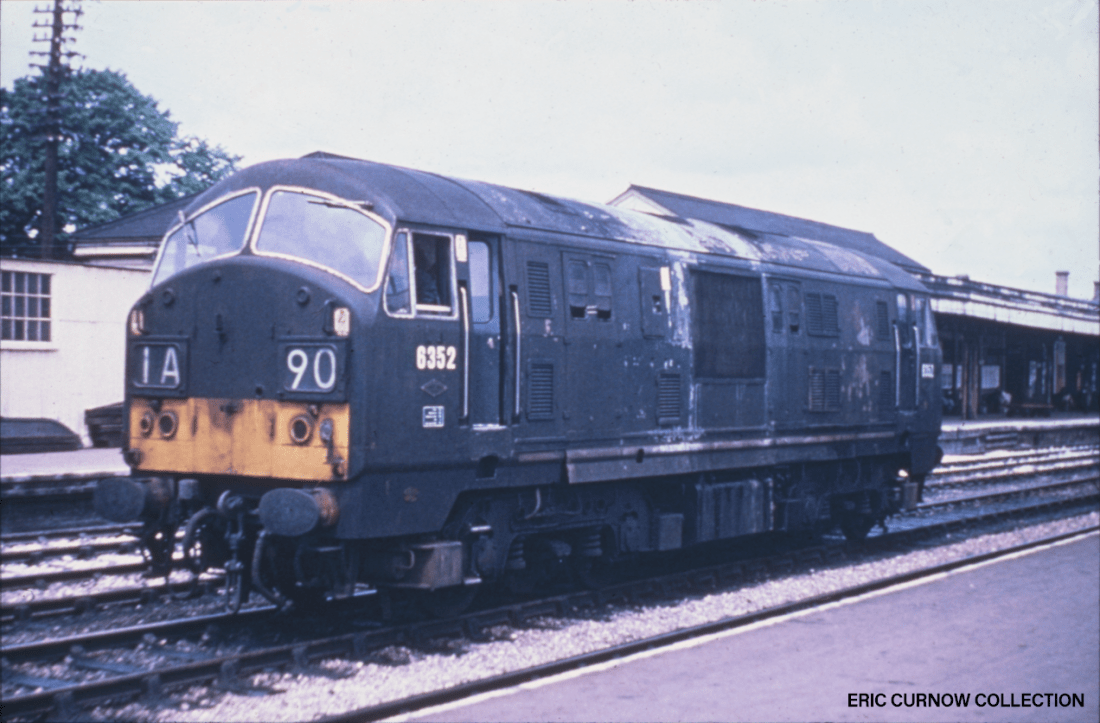 6352 possibly at Totnes Station on the down through road, on pilot duties. In original livery, badly damaged by caustic damage from an overflowing boiler at various times, it has had its numeral lettering replaced without prefix, still wears a diamond North British builder’s plate, and has had a blue information panel added – and there is a metal red painted Laira shed plate below these. 6####IU01-TOT-d6352-PILOT
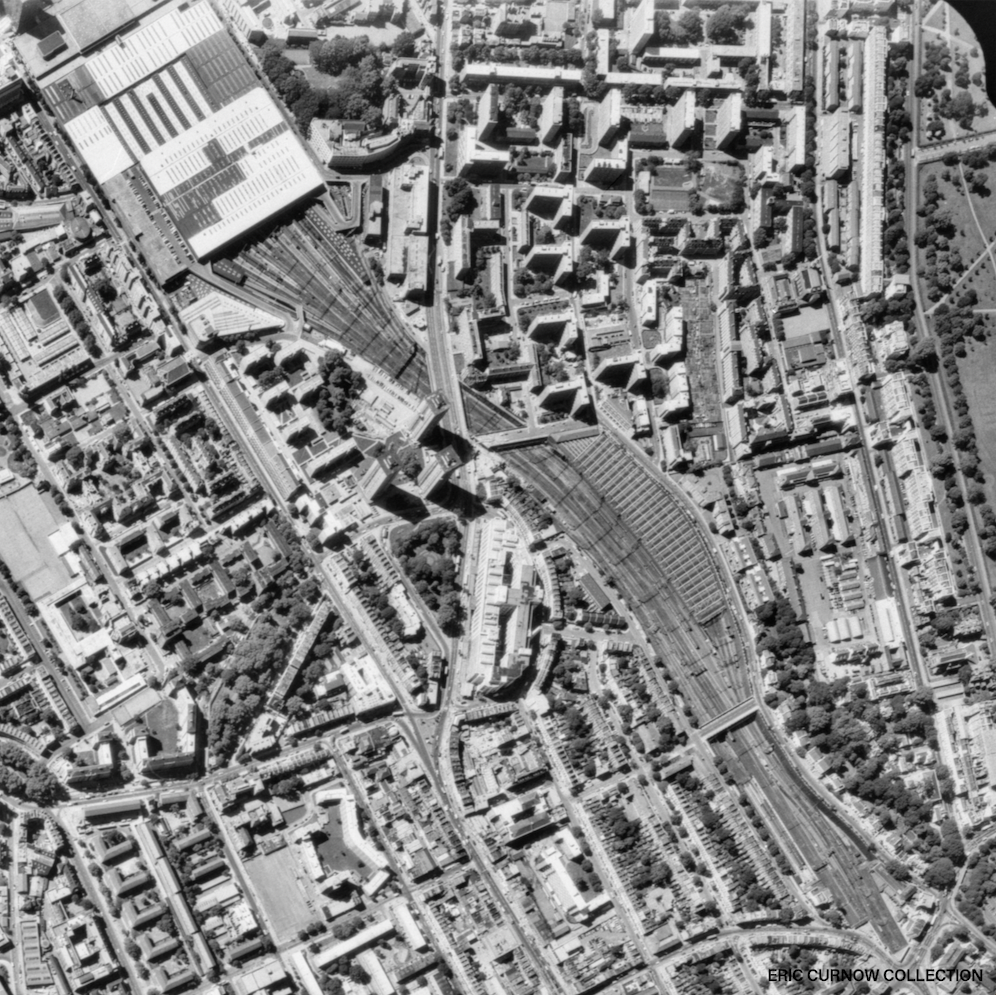
London Euston as seen from the air on 30th June 1987, facing south.The station is at top left; the main lines out diagonal across the picture, and the carriage sheds roof to the right of the lines. On the north (lower) edge of the station is the parcels depot over the tracks. and just south of this are the skylights giving light above the slopes down from the concourse, above the arriving locos. 870630A01-LDN-STATN-VI__D
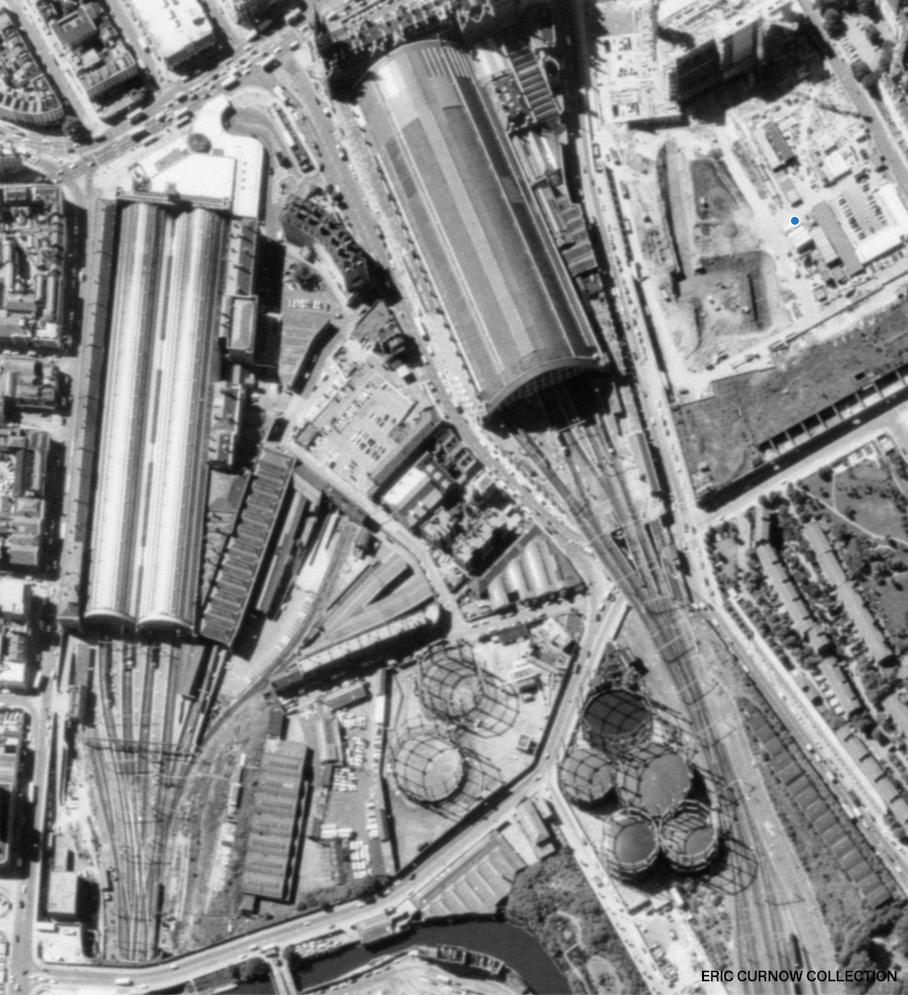
Kings Cross and, more dominantly, St Pancras Stations, with the famous gas holders near the bottom. At this time the area to the right of St Pancras – previously a goods area – was being redeveloped for the new British Library, and the concourse at the front of Kings Cross was covered, with its Stabling Point closed now the fixed formation HSTs didn’t require its services. 870630A03-PAN-STATN-VI__D
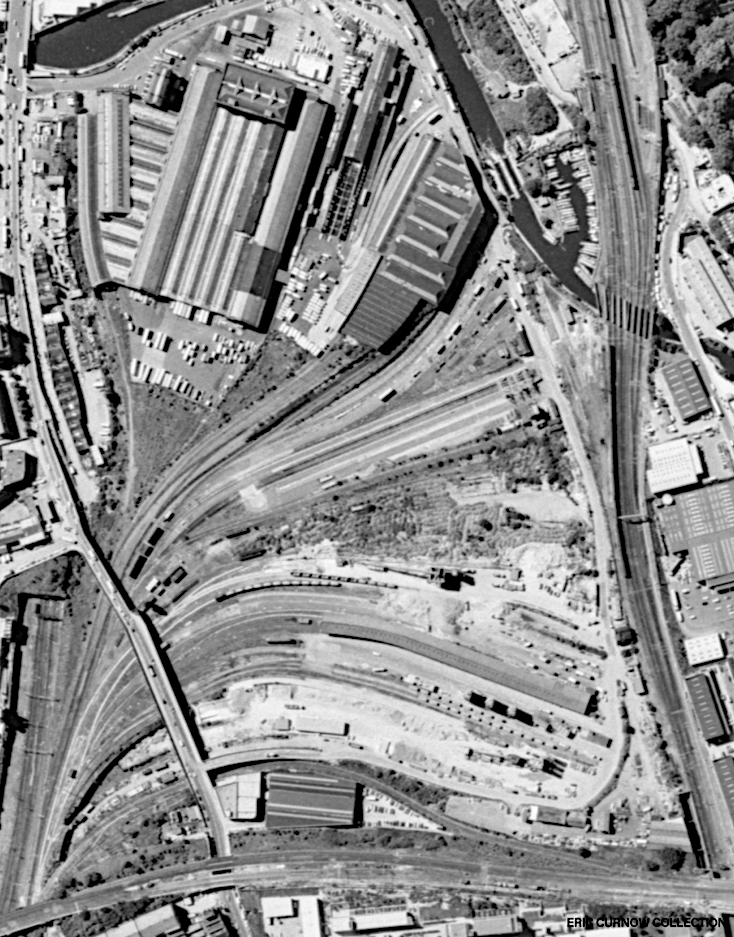
The vast area north of Kings Cross Station occupied by tracks, goods sheds, redundant land and concrete terminal – largely hidden from public view apart from the occasional glimpse from York Way. The lines at bottom left are from Kings Cross tunnels; the lines down the right hand side are from St Pancras; and those across the bottom are the North London lines. 870630A02-KGX-G_YRD-VI__D
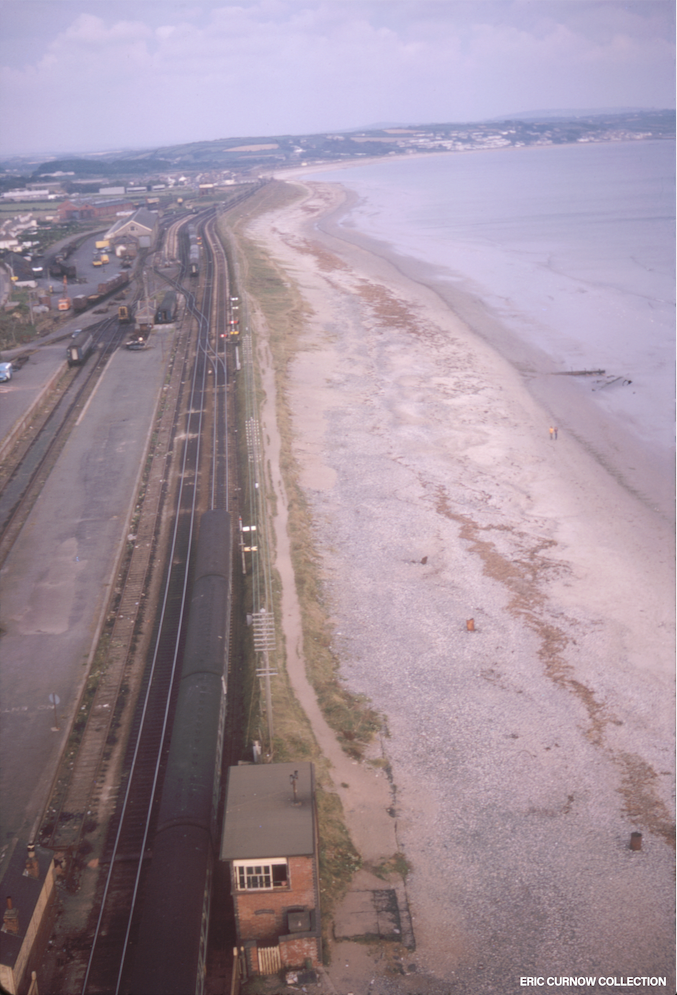
A wealth of detail in this picture from the Scilly helicopter, showing the seashore between Ponsandane Signal Box (bottom right) and Long Rock in October 1972, before rationalisation changed much substantially. The sand dune tracks along the lineside are still lined with semaphores; the double track is in situ, and the Goods Shed and old Steam Shed are still in use. 7210##A01-PDN-COAST-VI_NE
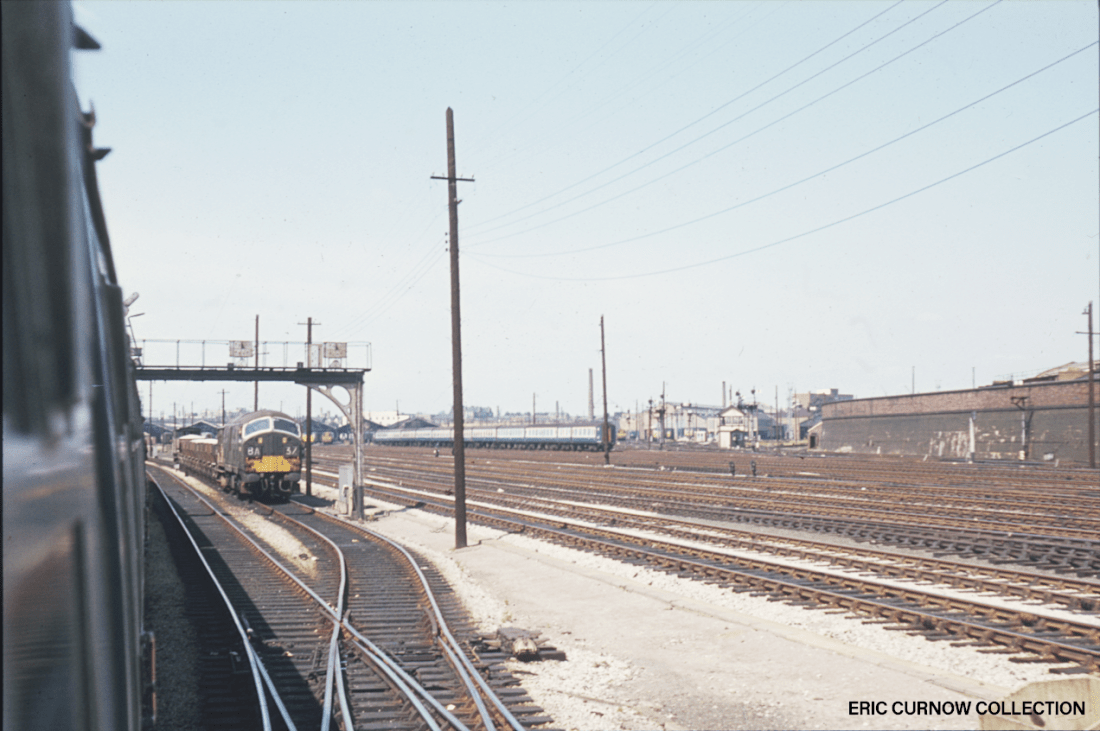
Sometime in the late 60s a D63XX with an engineers train of ballast hoppers waits to gain the main line towards Paddington opposite Old Oak Common depot. The gantry above it has a rather attractive curved brace at its corner and signs of some sort, if not the backs of signals. The rake of carriages carry yellow metal destination boards amidships below the windows. 6####IT01-OOC-D63##-HOPRS
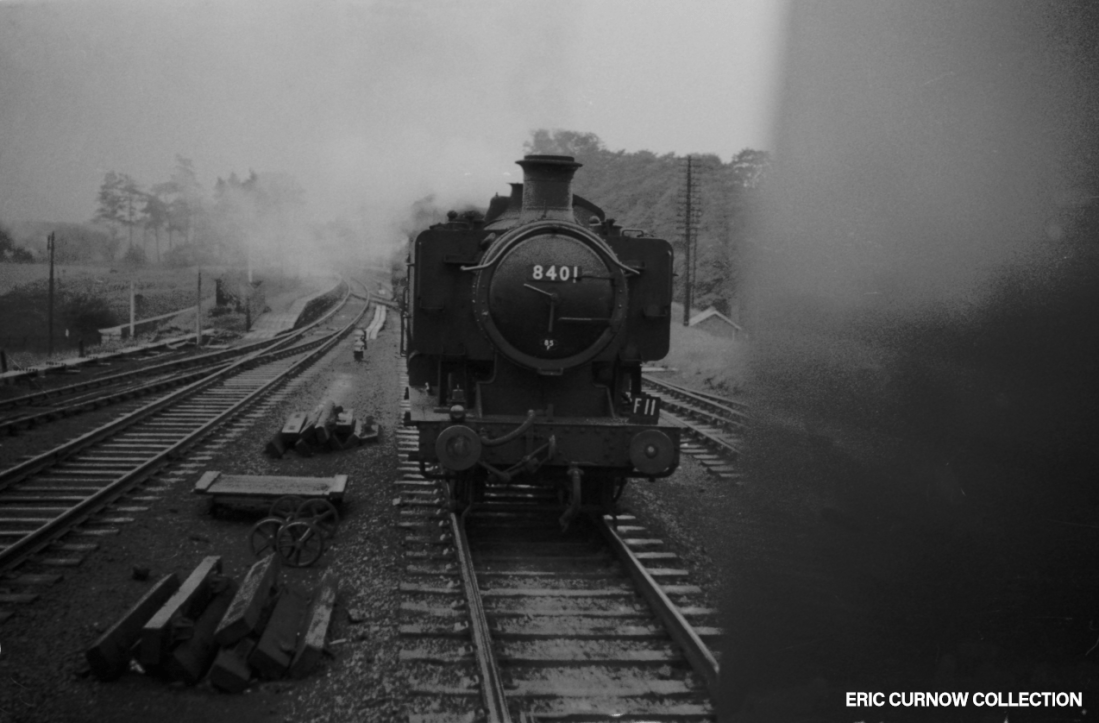
BR (WR) No. 8401 0-6-0PT seems to have been the lead banker behind the photographer’s carriage as it crosses the watershed of Lickey Incline at Blackwell Station in 1965, here seen falling away from the tail of the train. The trees and fields seem similar today, though electrification masts and the occasional appearance of the inevitable urban sprawl have since arrived. 65####C01-LKY-s8401-BANKR.
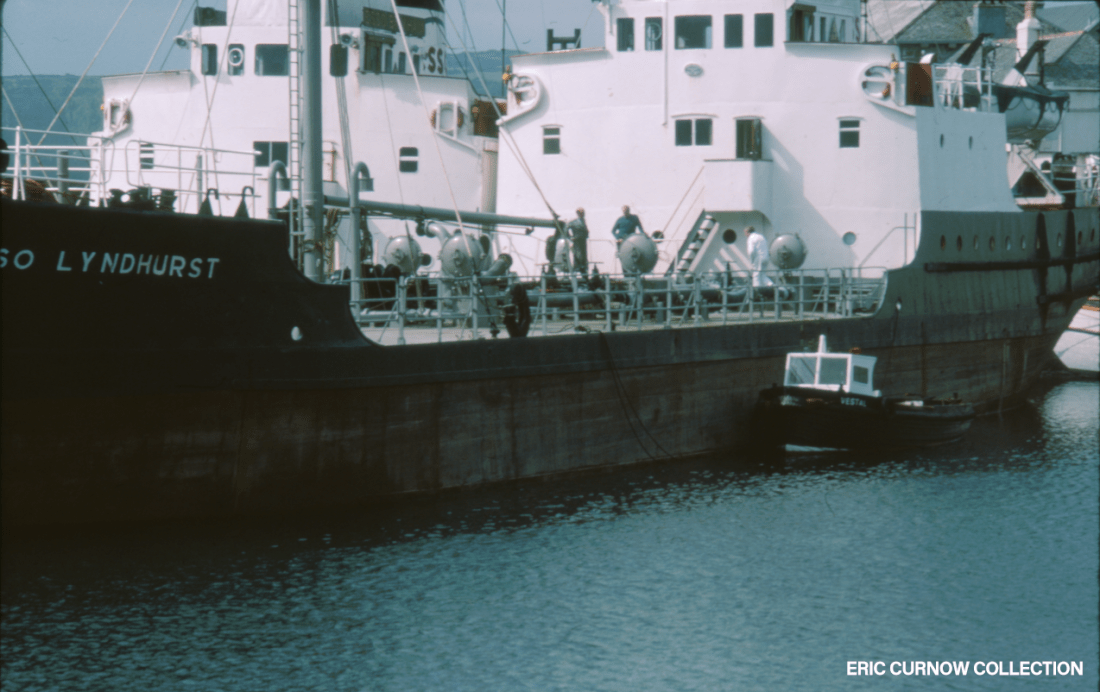
“ESSO LYNDHURST” was a frequent visitor to Penzance in my childhood, and is pictured here with a sister tanker, and the Pilot Boat which my father worked as boatman, among other jobs he undertook after leaving the railway. Dad would often have use of it on Sundays and the family would have trips around the bay – mainly westwards in the lee of the headland. 75###AS01-PEN-P_TKR-MOORD
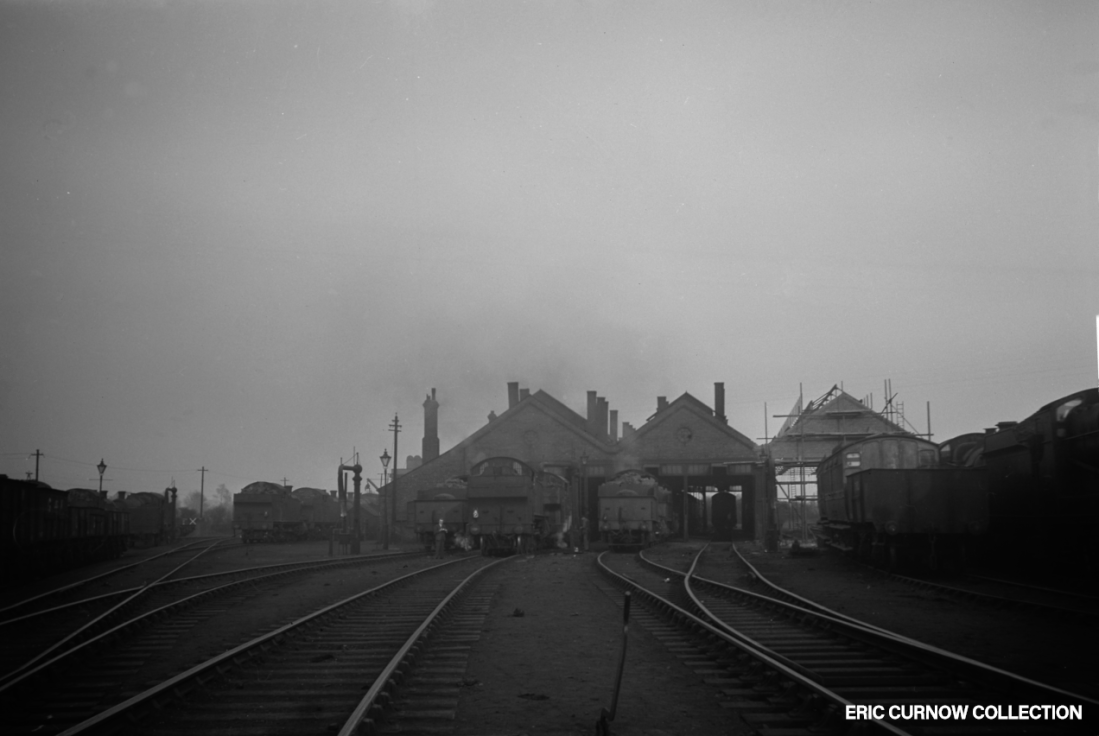
This picture of Severn Tunnel Junction shed in 1938 shows the construction of an extension to the right hand side – a very rare photographic record indeed. Lines of out-of-use locos flank the shed, while coaled locomotives are on centre roads, and above them on the building’s front walls are ventilation aids, which judging from photos of other sheds weren’t really very successful. 38####A01-STJ-S_SHD-VI__W
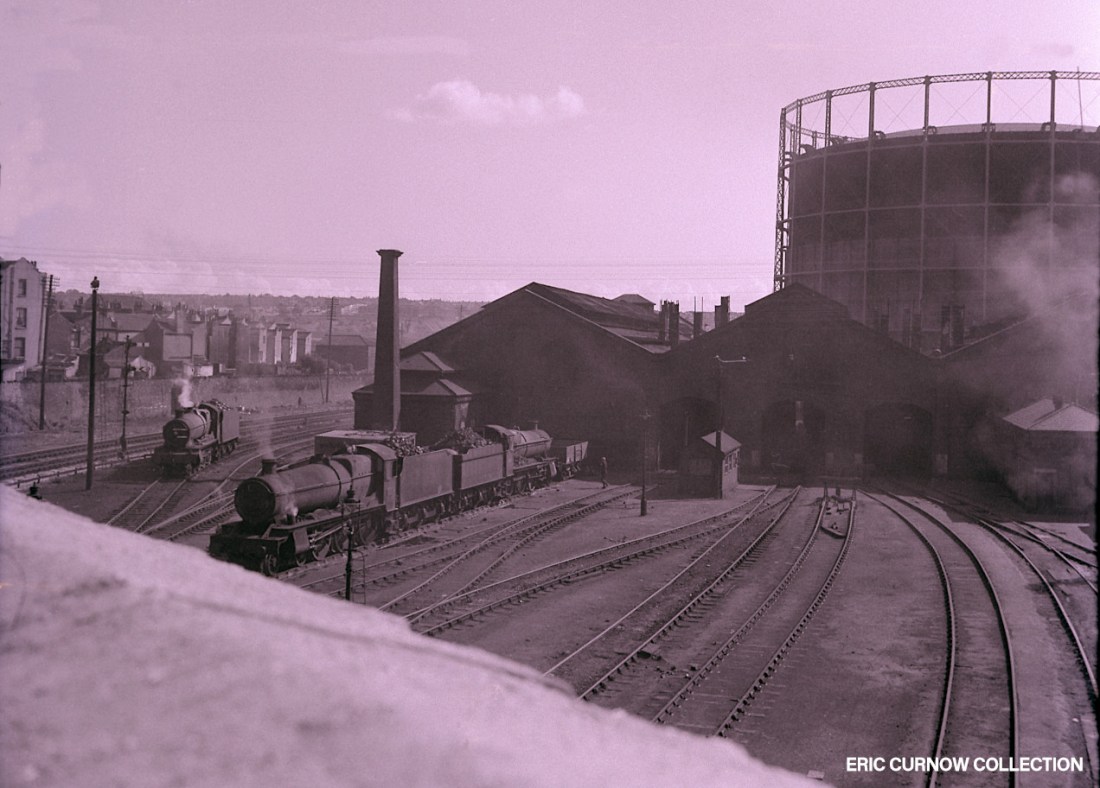
Bristol Barrow Road shed was somewhere I wasn’t really aware of for many years, though its flattened site suggested some sort of railway facility was previously there. 6910 “”GOSSINGTON HALL”, 6872 “CRAWLEY GRANGE and 6857 “TUDOR GRANGE” are seen here together on the last day of July in 1965. Photo: Ben Brooksbank, licensed for reuse. 650731A01-BBR-S_SHD-VI_NE
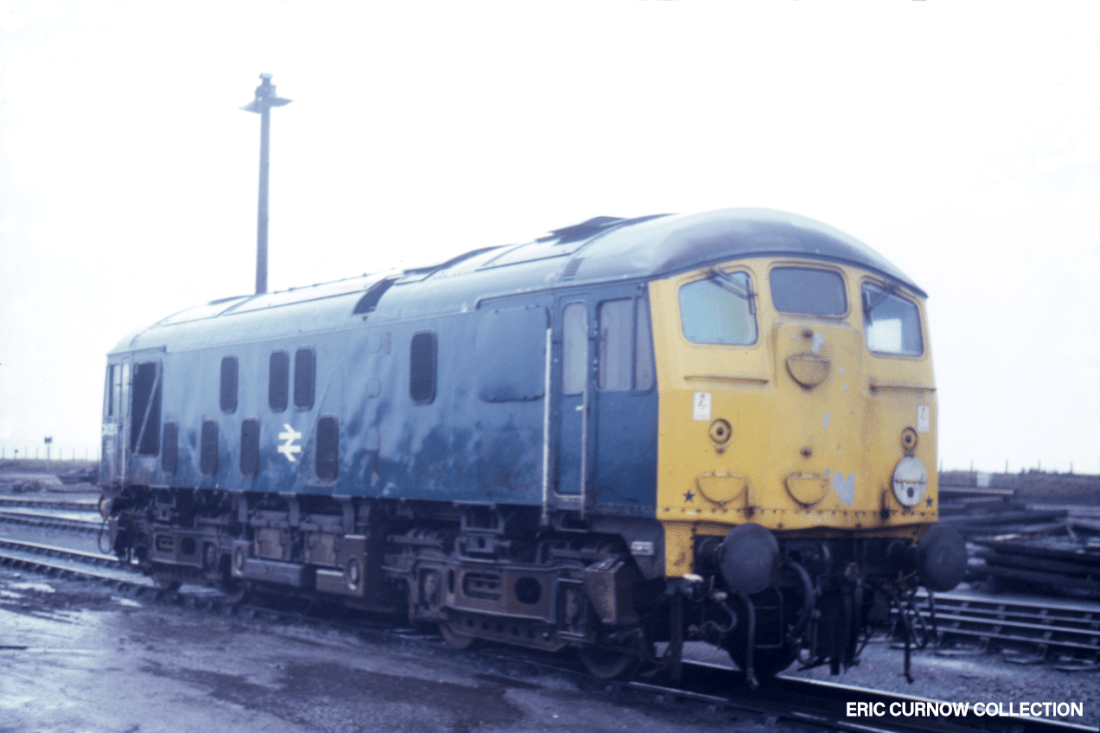
24054 was a very surprising visitor to, and eventual resident of, Penzance for a short period seen here on its arrival day, 14th October 1976, No other of its class came this far west, and although its appearance is similar to the later-built Class 25s that were already commonplace, the most obvious visual variance was the lack of a 4-digit headcode box above the windscreen. 761014A01-LRK-24054-PARKD
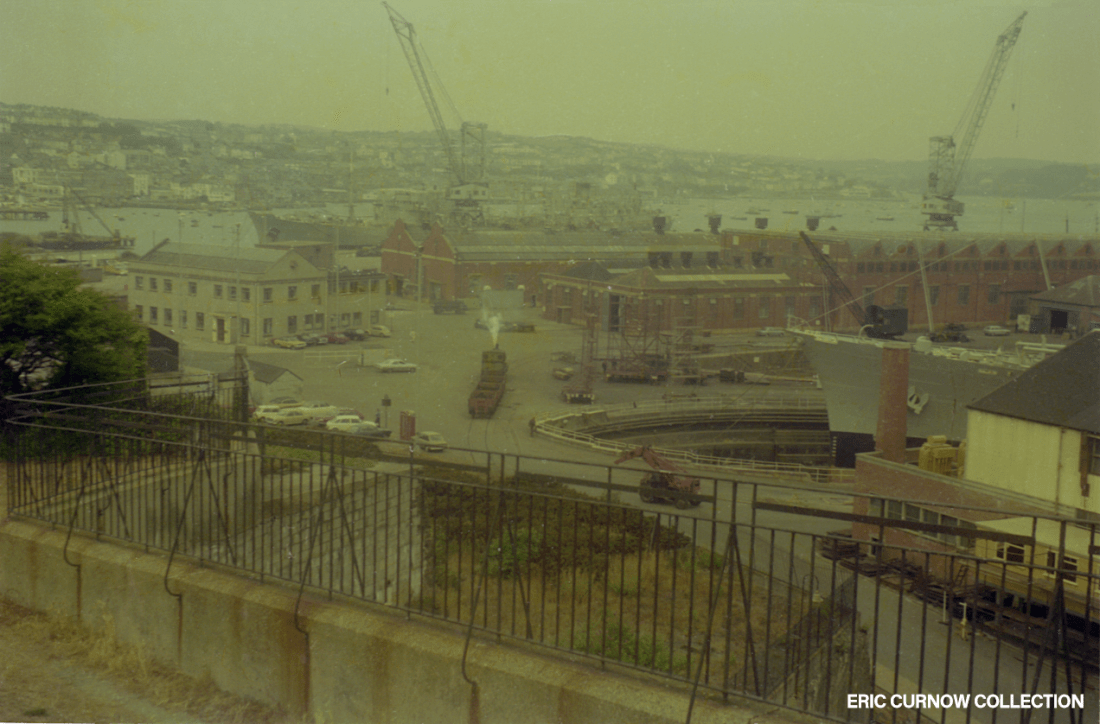
A familiar view to me of Falmouth Docks looking north from a vantage point on the road to Pendennis Castle, being shunted here by Peckett 0-4-0ST No. 6. The Town Quay is in the left background and the estuary leading upriver on the right. The disorder of the rust staining, disjointed masonery, misaligned fencing and gorse, always saddened me at this important location. 760702A01-FAL-PEC_6-SHNTG
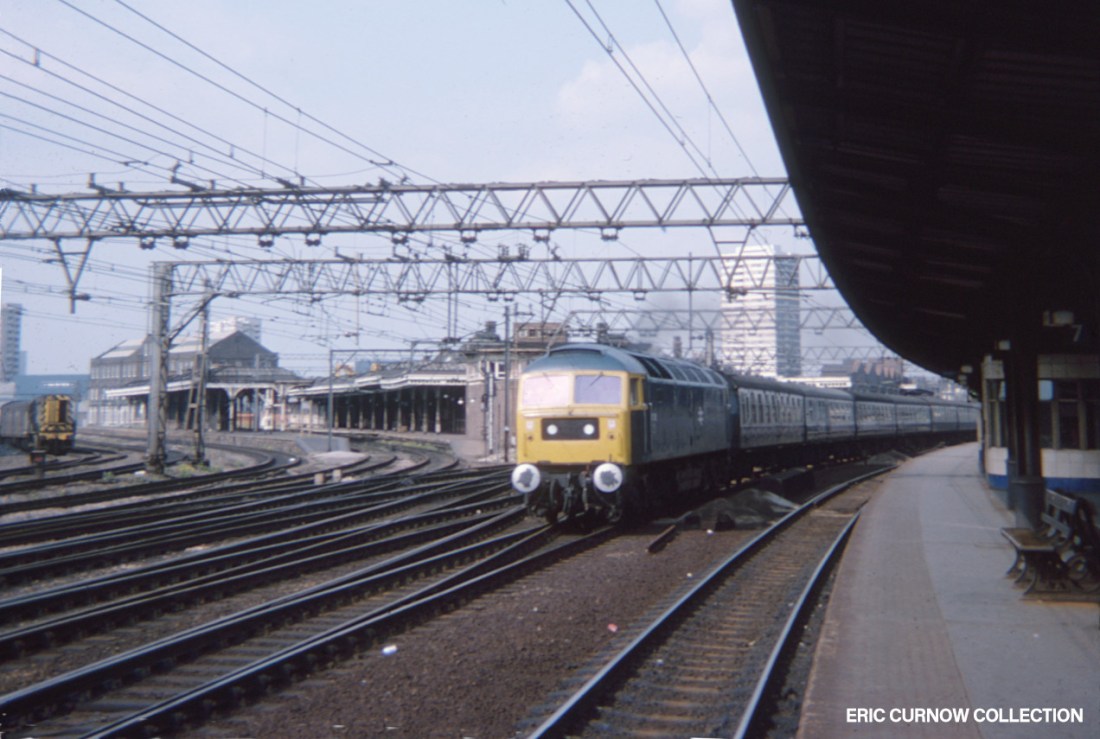
Ex-works and locally allocated 47135 passes through Stratford Station with an up passenger service on 5th June 1976. To the left beside it is the curving track to Temple Mills Yard and the North London Line, and beside the 08 shunter is the depot, and sidings, out of sight. The architecture of the platform building and roofing suggest rebuilding since the Second World War. 760605A01-SFD-47135-PAS_I
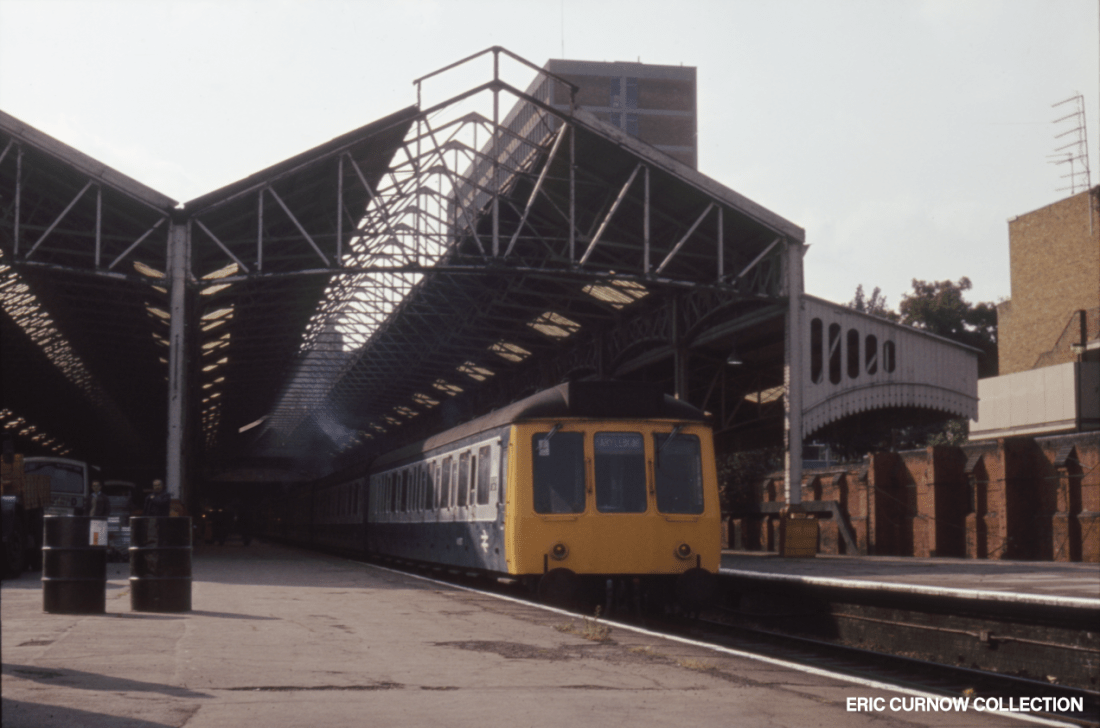
In 1986 a DMU waits in the shade of Marylebone Station, whose roof is wisely open to the air to dispel exhaust fumes – though clear corrugated panels dirtied to some degree, block out daylight, on portions of the station where passengers walk. Marylebone was seldom worth a visit as I passed nearby twice each day walking to work, just entering now and again out of curiosity. 86####A01-MBN=STATN-VI__S
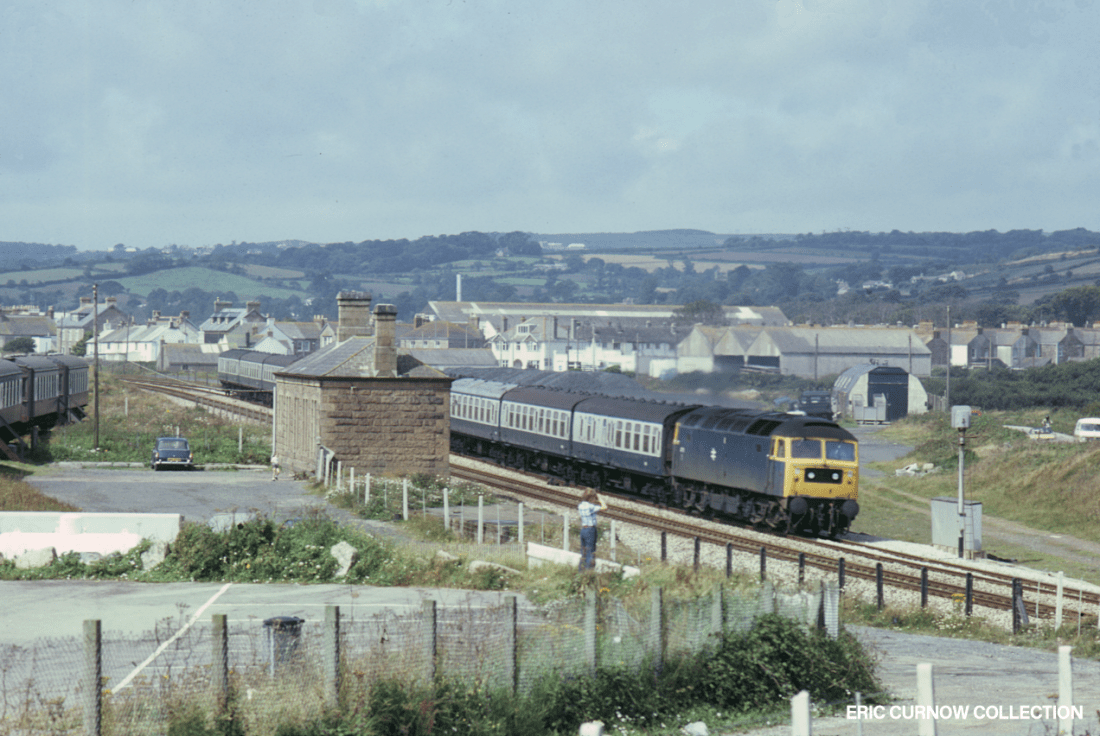
A Class 47 with glass domino headcode puts on the power to take the curve beyond Marazion Station in Summer 1980 hauling a nine-coach train of MkIs. The old Station building stands starkly, and is adjacent to a messy area of tarmac, chain-link fencing and weeds – exactly what is not required at such a beautiful location, just the other side of the camping coaches to the left. 80###AJ01-MZN-47###-PAS_U
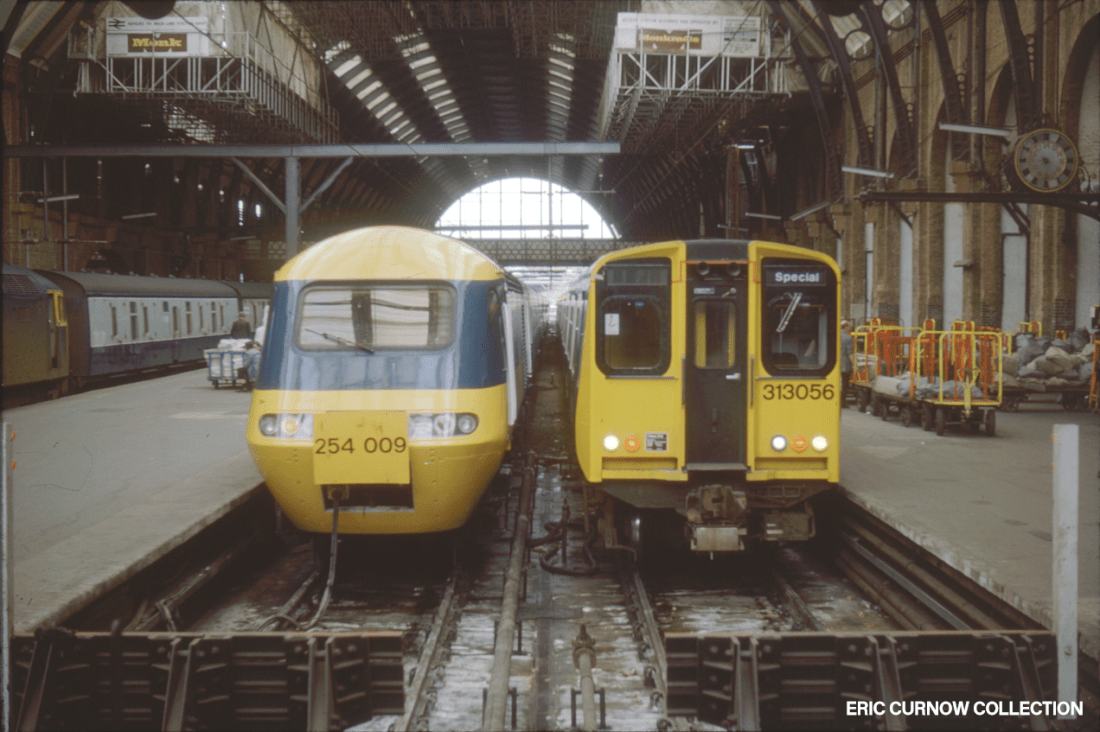
A common view to me at Kings Cross stop blocks was of 254 units with their front end access door raised while connected with a jumper cable to the land power supply. Here 254009 waits with 313056, displaying a “SPECIAL” destination code, as above them the station roof is cleaned – a ’47 waits on the platform to the left and red postal trolleys line the platform beside the EMU. 78###AG01-KGX-TRAIN-PAS_U
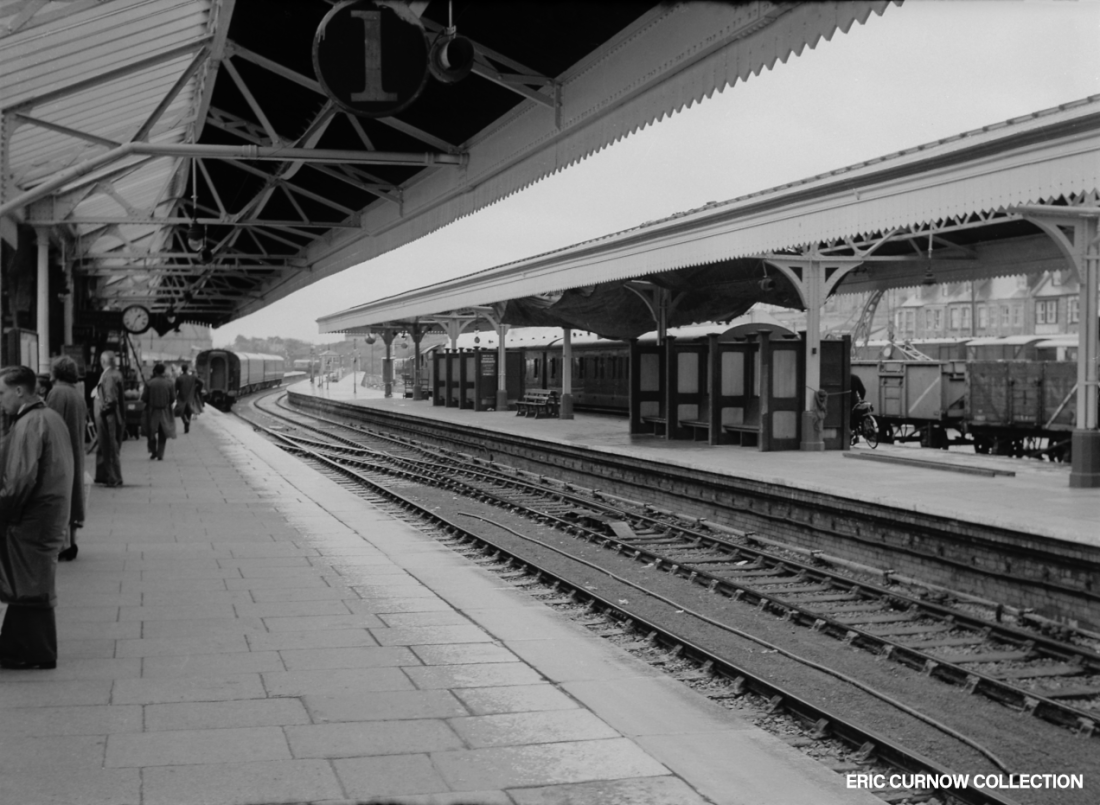
Newquay Station in its heyday – an appropriate size facility for the thousands of holiday-makers who still visited by train in August 1958. It is raining, and Platform 2 has had a temporary repair made to its canopy with tarpaulins. The yard is full of wagons and vans, overlooked by a terrace of granite-fronted buildings in the traditional style of holiday accommodation in Cornish seaside towns. 5808##B01-NQY-STATN-VI_SW
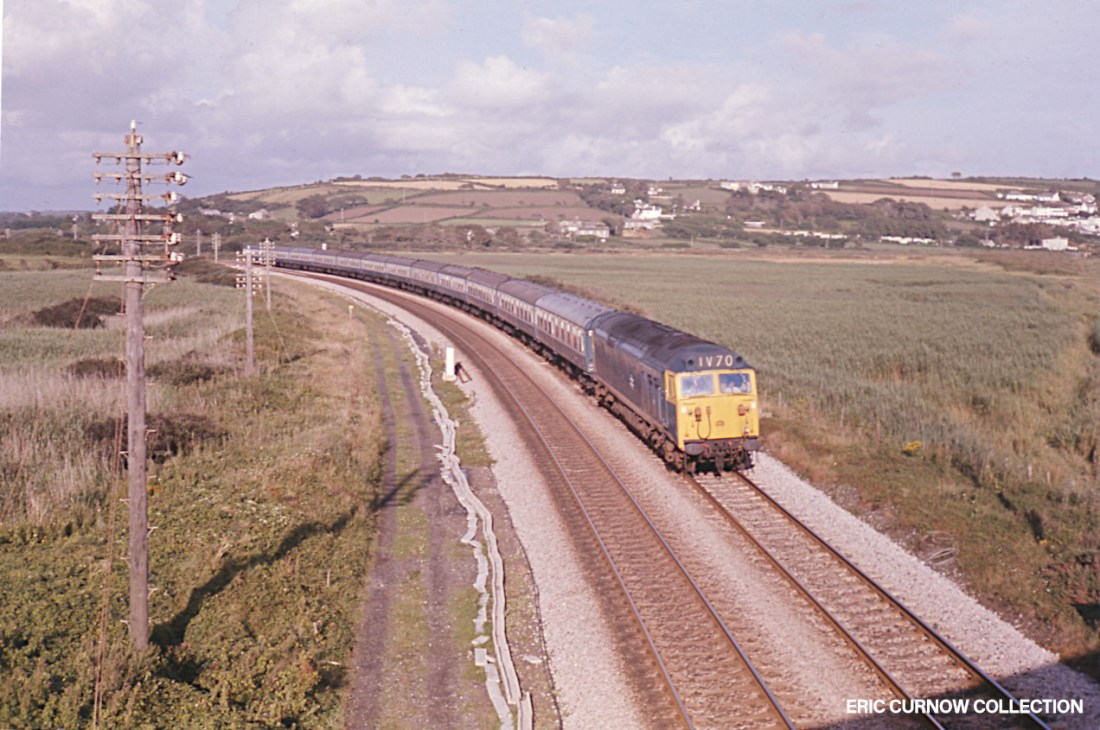
Long shadows from the setting sun and rippling reeds from the persistent breeze surround 50007 “HERCULES” as it crosses Marazion Marshes with an inter-regional express in September 1974. Telegraph poles still flank the trackside, though concrete conduit lying in order nearby – for cabling the electric signal partially hidden behind the ninth coach – forbodes their demise. 7409##A01-MZN-50007-PAS_D
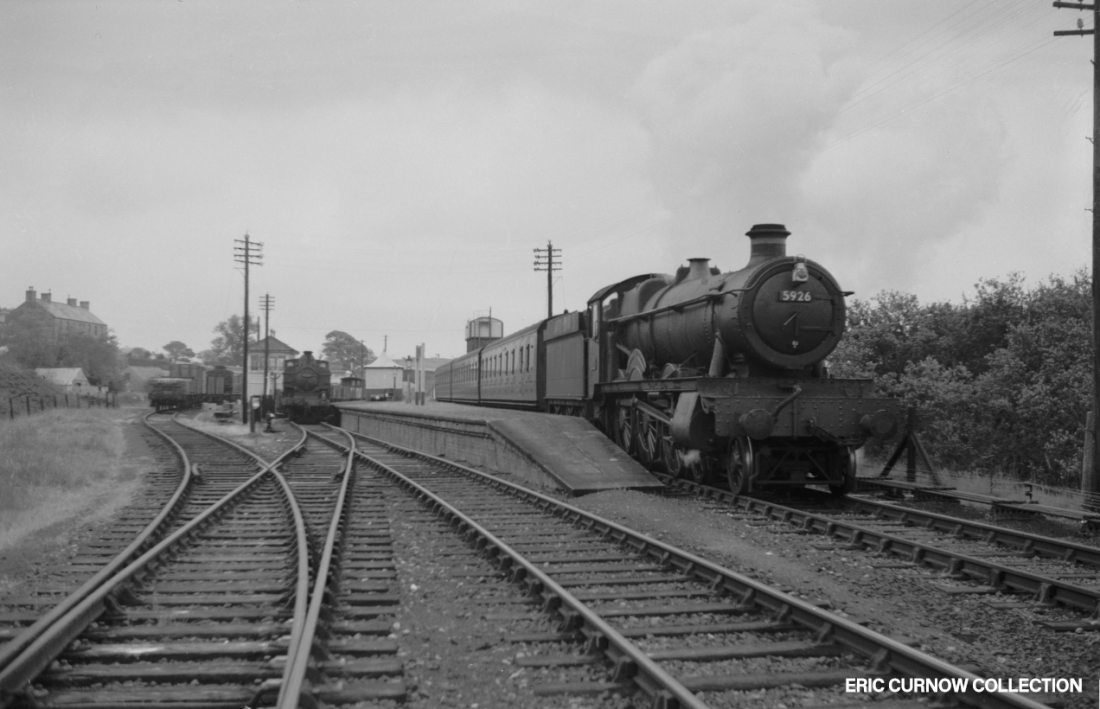
What a rich contrast with its spartan condition of today! Luxulyan Station on the Newquay Branch in 1960 features two sidings, a Camping Coach, the Signal Box, a short freight headed by an 0-6-0 Pannier Tank, platform and Pagoda Shelter, with a Water Tower on the opposite side of the image. Between them is 5926 “GROTRIAN HALL” on a three-coach Newquay Service. 600617A01-LUX-s5926-PAS_O
 The Eric Curnow Collection