This sequence is of a journey from Bristol to Penzance in the mid 1970s. They were acquired from Ian Langhorn and consisted of short strips of 35mm films, without any added information, and have been entered in frame number sequence.
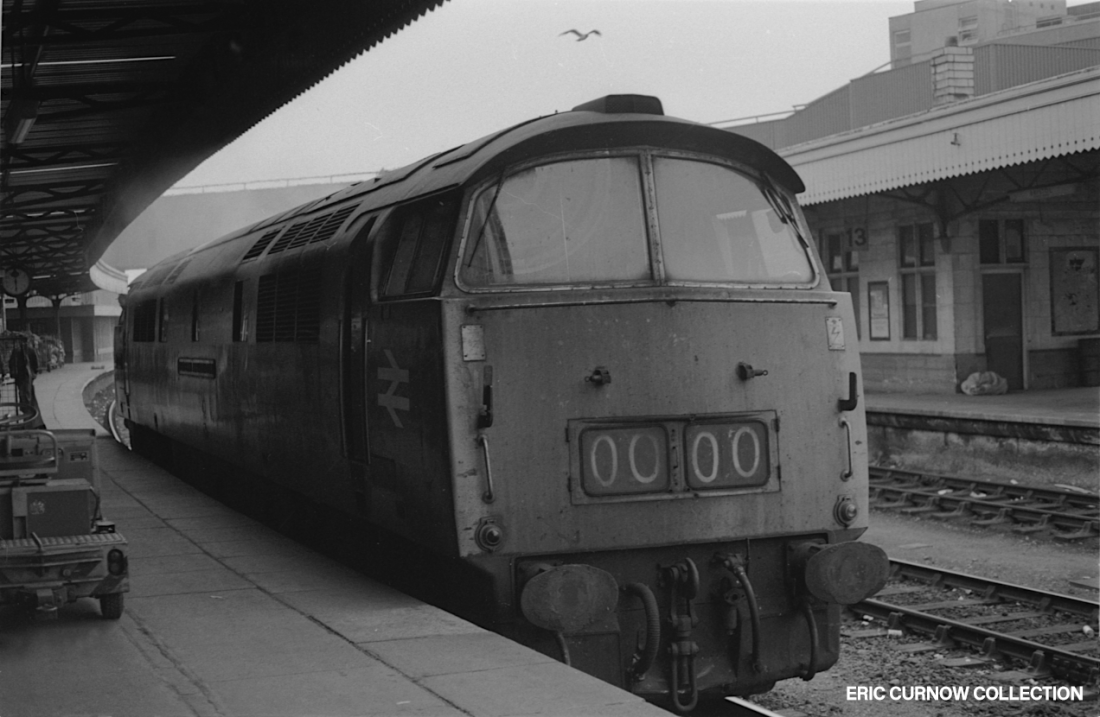
Judging from the clock in view – which is unlikely to be wrong at such an important station as Bristol Temple Meads – this is 6am, when a ‘Western’ has come off shed and judging by the driver in the cab, is being propelled into position to head a train westwards from platform 12. It’s 0O00 headcode suggests this is in the mid 70s, as does the general appearance of the locomotive. 7####IA01-BTM-D10##-LIG_U
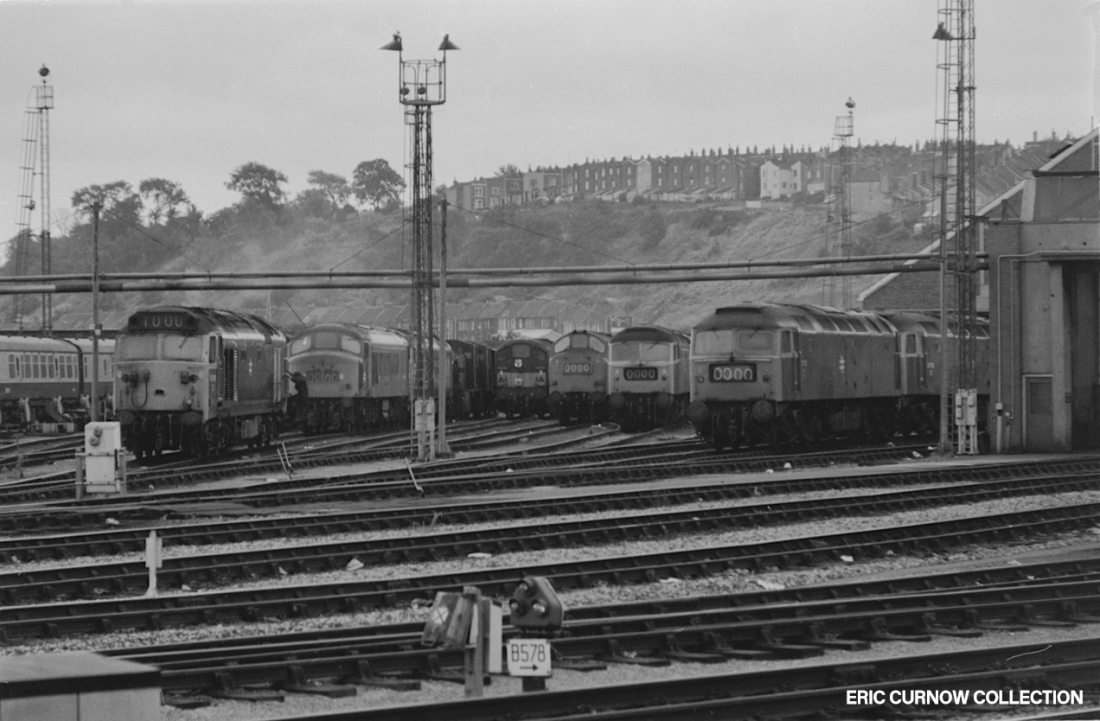
Bath Road depot is packed with locomotives and a dmu set, where D5705 (now in departmental service) is positioned at the centre with a couple of 03 shunters beside it, and 50s, 47s and a 37 and 46 are also in view. It is hard to think that such a long established and vital facility has been levelled and removed, but understandable now long fixed-formation trains are the norm. 7####IA02-BBR-D_LCO-PARKD

Meanwhile, back at platform 12, carriages have been connected to the ‘Western’ and it awaits departure time – driver and second man are sitting at the control desks. Much of the station is a rebuild from the Second World War, and there has been minimal change since then, apart from new corporate identity signage. Wall tiles with brown ‘Century Old Style’ typeface are still in place, too. 7####IA03-BTM-D10##-PAS_D
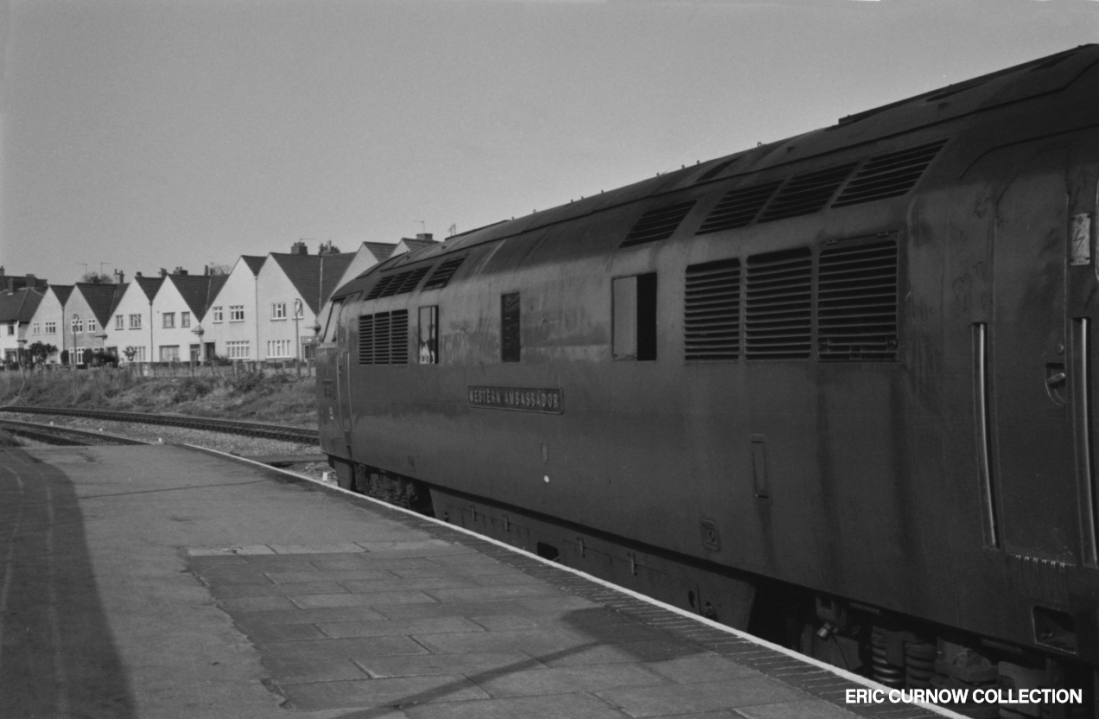
The engines of D1051 ‘WESTERN AMBASSADOR’ throb as it awaits movement back onto the main line from a “down” platform at Weston Super Mare station – the deviation suggesting this is not an express service. Extensive sidings for holiday traffic, out of sight and to the left of the loco, here have been removed, and since then foliage has encroached, softening the scene. 7####IA04-UNK-D1051-PARKD
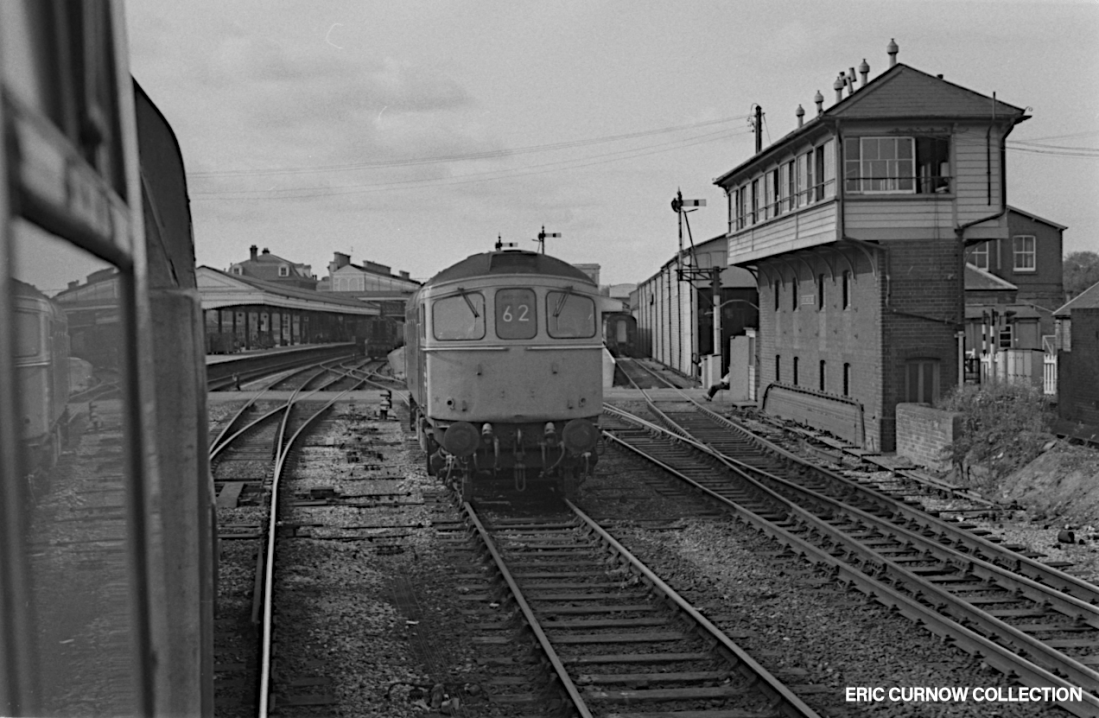
D1051 is guided by pointwork from the through road onto the down main platform at Exeter St David’s Station, passing a Class 33 diesel temporarily parked between services by Exeter Middle Box, just clear of Red Cow Crossing. Behind the signal box is the GWR Broad Gauge Goods Transit Shed that was sadly later burned down, so put beyond the reach of any preservation attenpt. 7####IA05-EXD-33###-PARKD

The cabside numberplate of “WESTERN AMBASSADOR” is a detail testimony to the great design of this class of locomotive, as even the wider than normal spacing of the characters made it easier to read at speed from the lineside. The font selected was virtually that of the eventual British Rail typeface. and the round cornered backplate sat well amid those of GWR steam locomotives. 7####IA06-UNK-D1051-PARKD
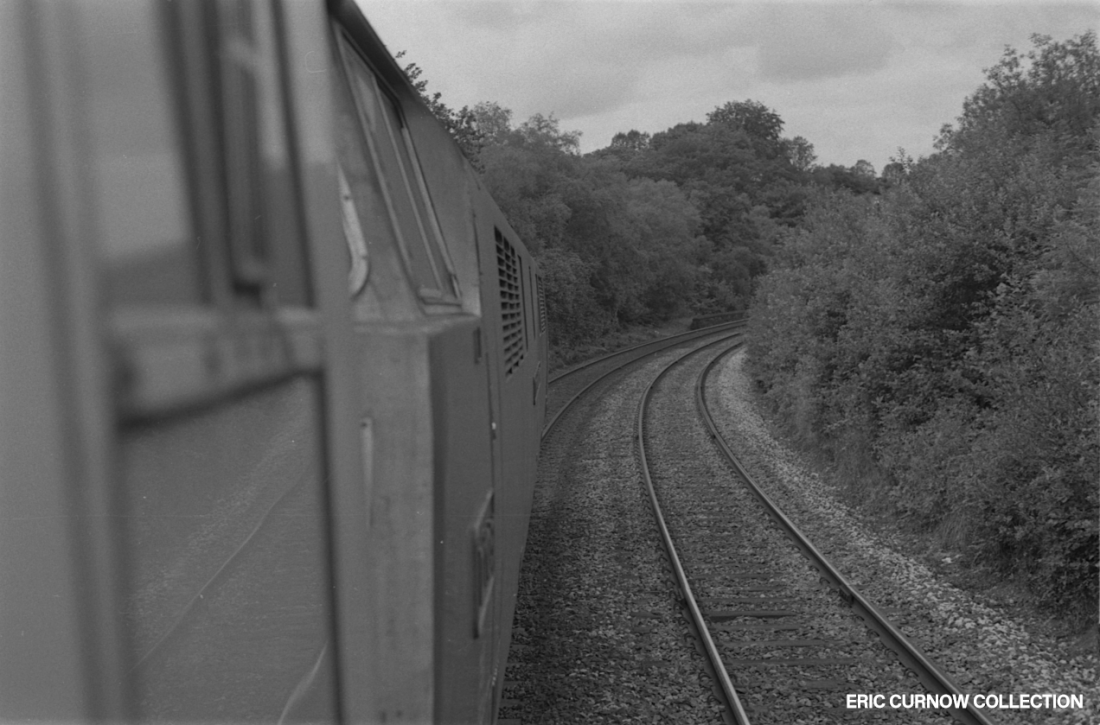

These two images suggest the ‘Western’ is temporarily held up before St Pinnock viaduct, the track singled before it to just beyond Largin Viaduct to avoid the weight of two trains at the same time on their more delicate structures. In densely wooded country, while waiting for the line ahead to clear, a class 47 with an up passenger service rounds the bend towards the photographer. 7####IA07-UNK-D10##-PAS_D
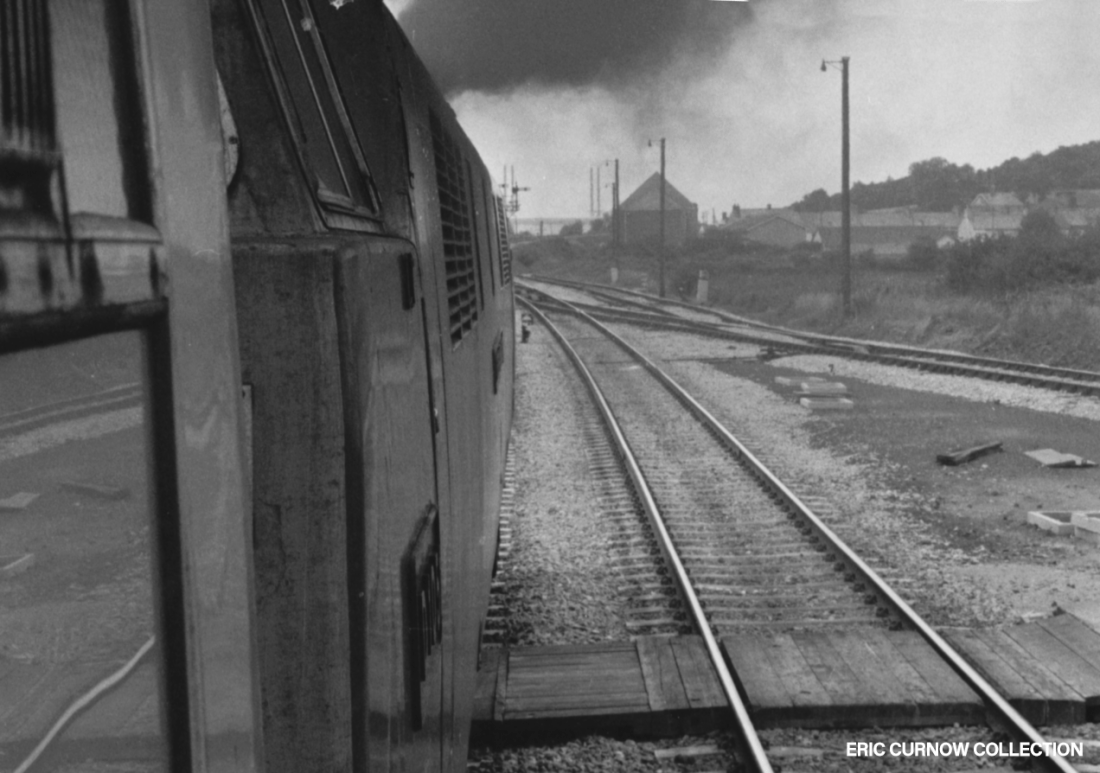
With a plume of exhaust pumping away, D1051 lumbers across the foot crossing at the west end of Par Station, rocking a bit as it gathers momentum. Centrally ahead is the Wesleyan chapel, and running towards it, Chapel Siding. Between the building and “WESTERN AMBASSADOR” on the skyline is the huge china clay dries, plus its chimneys, and to the right, the village of St Blazey. 7####IA09-PAR-D1051-PAS_D
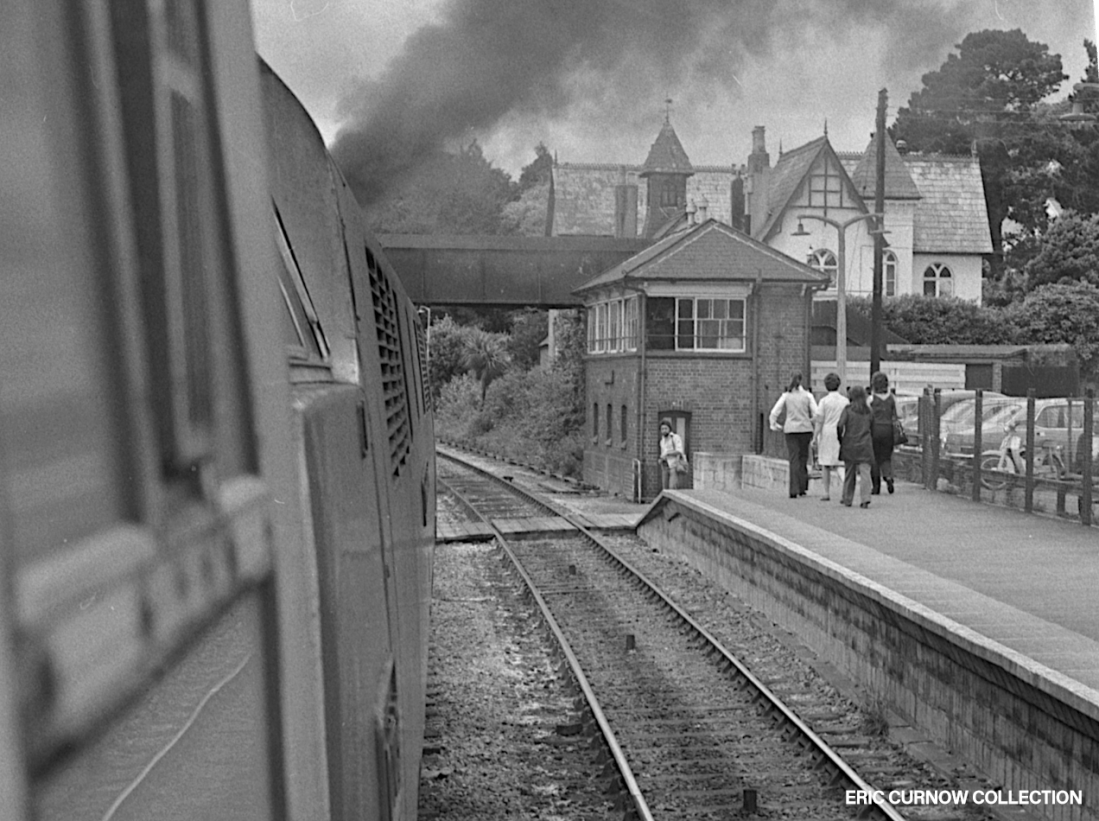
Watched by a no doubt concerned yet pragmatic Signalman, passengers from an up service risk using the foot crossing by the signal box at St Austell Station, but are paused by the exit of “WESTERN AMBASSADOR” as it powers away with a Penzance train. Under the bridge a dracanea palm peeps through luxuriant vegetation exemplifying the normally mild yet wet climate. 7####IA10-STA-S_BOX-VIS_W
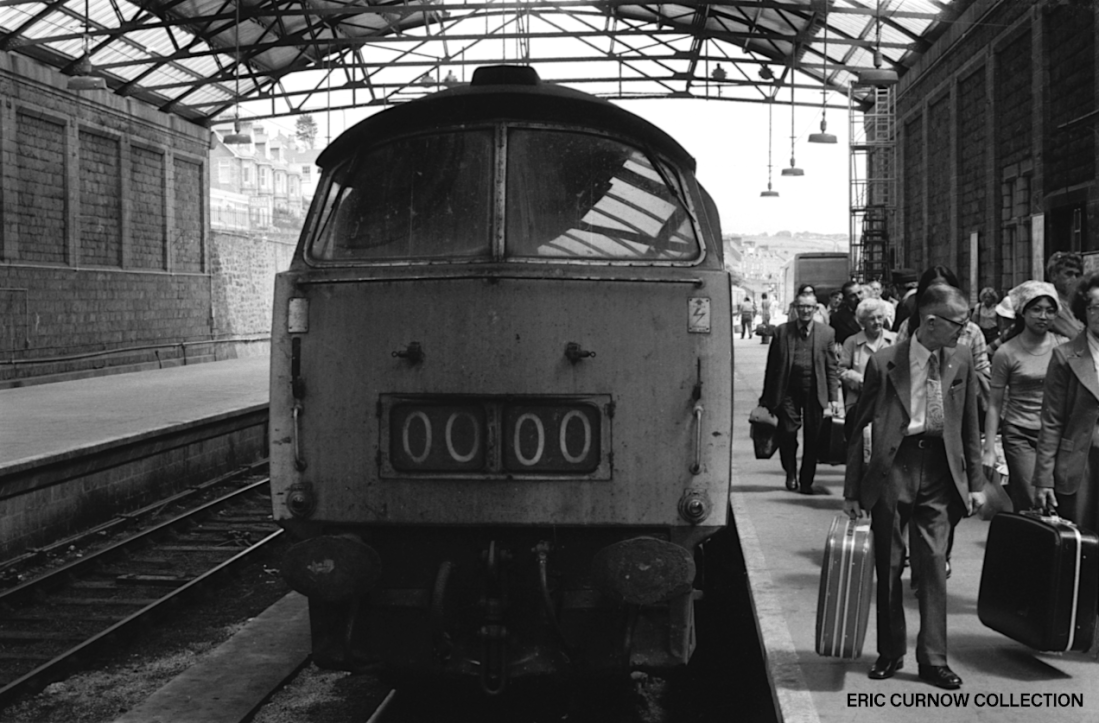
A group of mainly elderly passengers with suitcases pass the locomotive that has brought them to Penzance Station, with their attention no doubt focussed on getting to their accommodation and away from the confines of their railway carriages. The nearby tracks are empty and behind the crowd is a delivery trailer acting as a store and the tower for changing overhead light bulbs. 7####IA12-STA-D1051-PAS_U

It seems that the headcode of “WESTERN AMBASSADOR”, opposite to the end displaying 0O00, usefully showed its fleet number, and suggests that some time has passed between its former arrival, now Platform 2 is occupied, and it is backing onto carriages at the other end of Platform 3. Rather than Mk1 coaches, these Mk2s are disgorging passengers from a Paddington service. 7####IA12-STA-D1051-PAS_U
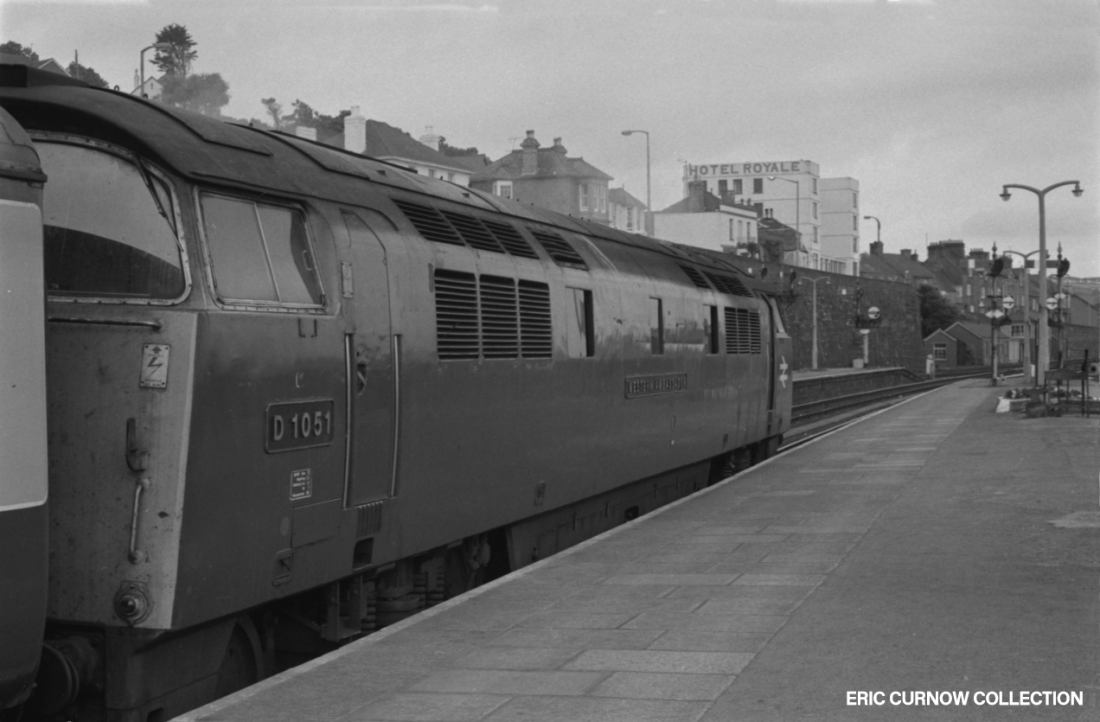
Now awaiting return east, “WESTERN AMBASSADOR” is at the head of an outgoing train, emiting light exhaust. The loco is in good external condition, and the only slight detraction is an incomplete Laira allocation sticker above its numberplate, and a scar from a bodyside “swipe” between the windows. The array of signals at the platform end all indicate a lack of movement of any kind. 7####IA13-STA-D1051-PAS_U
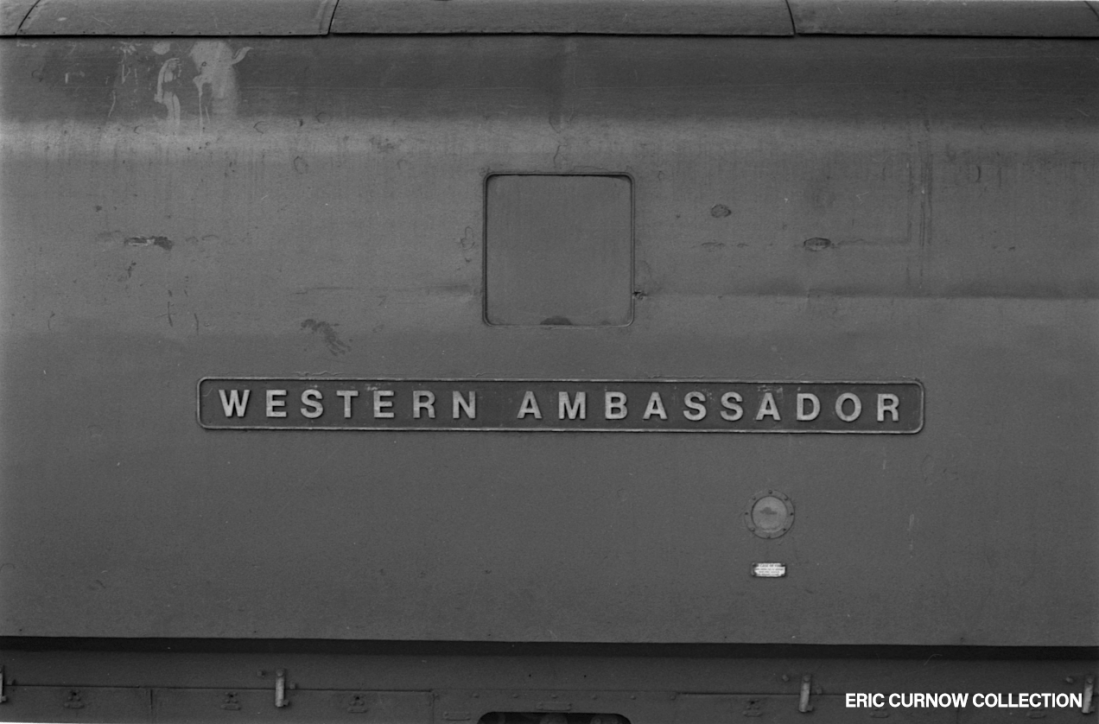
The nameplate of D1051 is captured for posterity, the letters’ wide spacing and simple design helping recognition, though numberplates are vertically deeper. Below the overhang vertical yellow catches double seal the battery boxes as a result of a serious derailment at Ealing where an unsecured battery box cover swung down to the horizontal and led to its train’s derailment. 7####IA14-STA-D1051-NMPTE
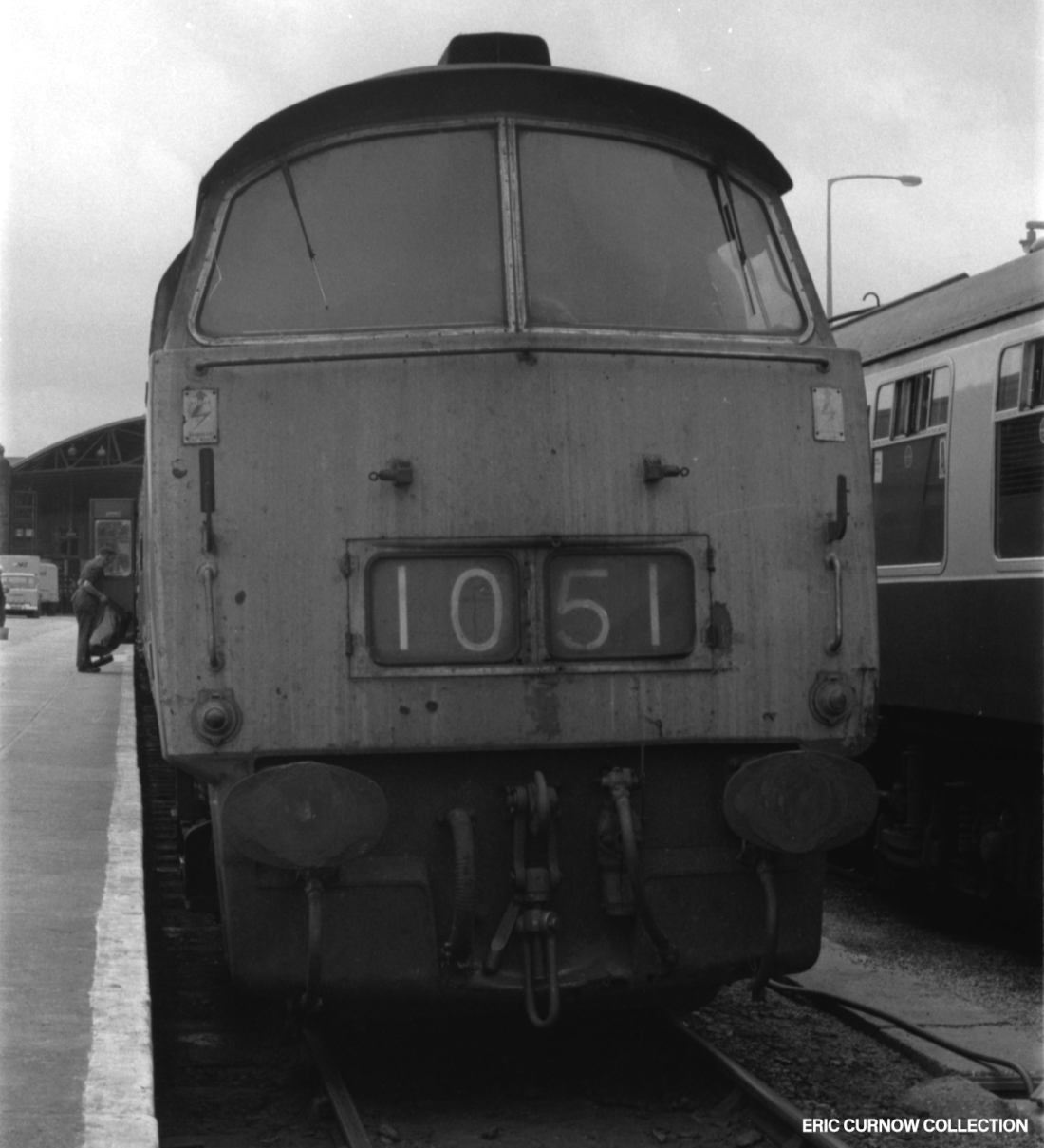
A final view of “WESTERN AMBASSADOR” as it awaits departure. ‘Westerns’ still normally retained their headboard clips and lamp irons for most of their lives, though both were redundant features soon after fixing. The large windscreen windows made cabs hot in summer, not helped by poor performing cabside windows nor various front end experiments to improve ventilation. 7####IA15-STA-D1051-PAS_U
 The Eric Curnow Collection